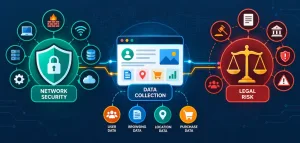
The cybersecurity landscape is evolving at an astonishing pace, driven by the relentless advances of technology and the innovative tactics of cyber adversaries. As a consequence, businesses need to be ever more vigilant and proactive in their security approach. Enter the managed SOC solutions, a robust way to counteract the myriad of threats that organisations face daily. This article delves into four compelling reasons to consider integrating a managed Security Operations Centre (SOC) solution into your enterprise.
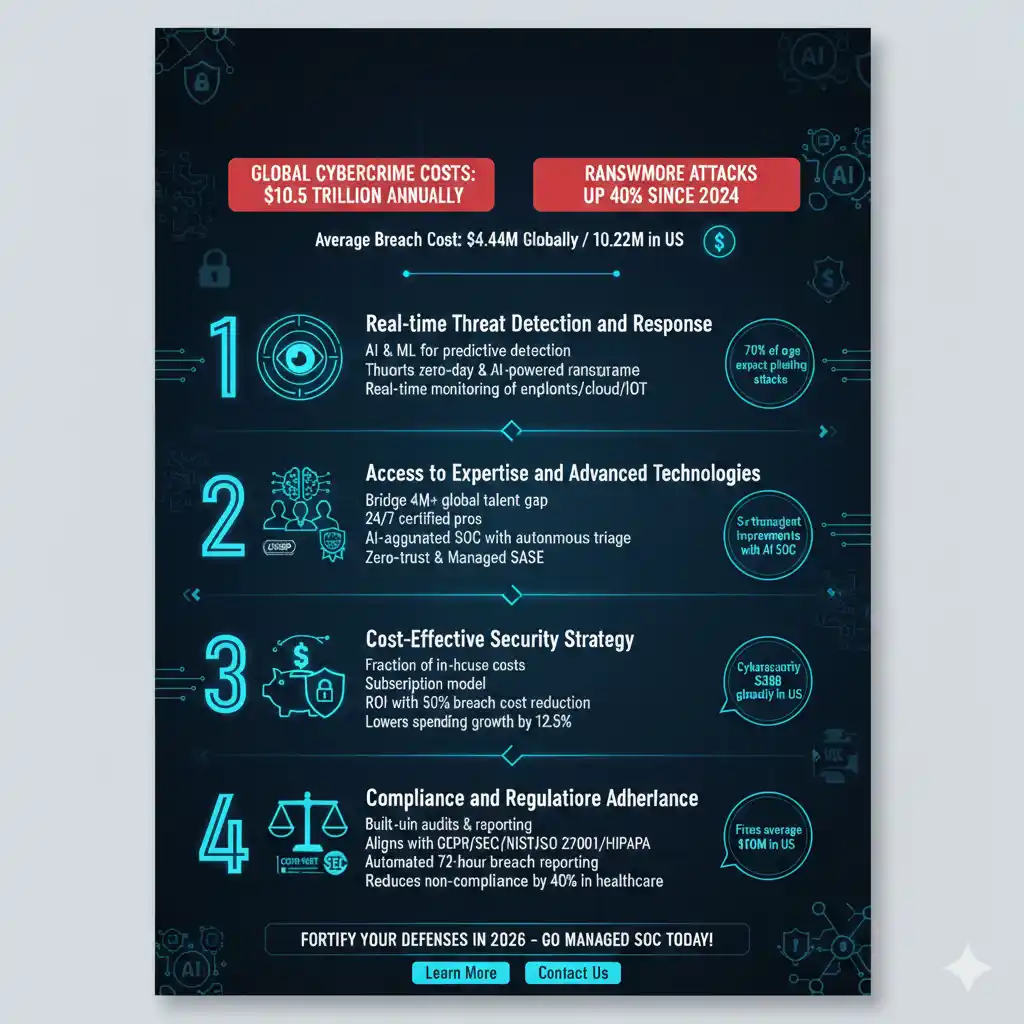
In 2026, the stakes are higher than ever. According to recent reports, global cybercrime costs are projected to exceed $11 trillion annually, with ransomware attacks increasing by 40% compared to 2024 levels. Organizations worldwide faced an average of 1,968 cyber attack attempts per week in 2025, a 70% rise since 2023. These statistics underscore the urgency for advanced, outsourced security operations. Managed SOC solutions have become essential, leveraging AI-driven automation and continuous threat exposure management to stay ahead. As geopolitical tensions and AI-powered threats escalate, businesses must adapt or risk devastating breaches that could cost an average of $4.44 million globally—or $10.22 million in the US—per incident.
1. Real-time Threat Detection and Response
Given the speed at which threats can infiltrate and damage systems, having a team continuously monitor security is vital. Traditional security measures, like firewalls or antivirus software, are essential but often reactive. A managed SOC solution offers real-time monitoring of network traffic, system activities, and other vital touchpoints. The moment an anomaly is detected, the SOC team can act, mitigating potential threats before they escalate. This proactive approach ensures that threats are nipped in the bud, protecting your systems and data from potential breaches.
In 2026, real-time detection has evolved with the integration of AI and machine learning, enabling managed SOCs to predict and prevent attacks at machine speed. For instance, AI algorithms now analyze behavioral patterns to identify zero-day threats, which accounted for 20% of breaches in 2025. Consider the rise of AI-driven ransomware, where attackers use generative tools to craft sophisticated phishing campaigns or automate exploit chains. Managed SOCs employ advanced threat intelligence feeds that process billions of data points daily, reducing mean time to detect (MTTD) from hours to minutes. As AI adoption grows, Managed SOC teams are adding AI Security Posture Management (AI-SPM) protocols to monitor models and training pipelines, helping detect risks like data poisoning, model theft, and data leakage.
A practical example is the healthcare sector, where managed SOCs have thwarted supply chain attacks like those seen in recent high-profile incidents. By monitoring endpoints, cloud environments, and IoT devices in real-time, these solutions provide layered defenses. Businesses adopting managed SOCs report a 50% reduction in incident response times, according to 2026 industry surveys. This is crucial as hybrid work models persist, expanding attack surfaces. Furthermore, with the convergence of cloud security and SOC operations, managed providers now offer unified platforms that eliminate silos, ensuring seamless visibility across on-premises and multi-cloud setups.
To implement this effectively, organizations should assess their current monitoring tools and integrate them with managed SOC services. This includes deploying endpoint detection and response (EDR) systems that feed data directly to the SOC for immediate analysis. In an era where 70% of organizations expect phishing attacks, real-time response isn’t just beneficial—it’s a survival strategy against evolving threats like deepfake-enabled social engineering.
Expanding on the benefits, managed SOCs in 2026 incorporate predictive analytics to forecast potential vulnerabilities based on global threat trends. For example, if a new vulnerability is exploited in Asia, the SOC can proactively patch or isolate similar systems in your network before it spreads. This level of foresight is powered by big data and collaborative intelligence sharing among providers, making managed solutions far superior to in-house efforts constrained by limited resources.
2. Access to Expertise and Advanced Technologies
One significant advantage of utilising a managed SOC service is that businesses gain access to a team of cybersecurity experts. These professionals are trained to recognise, assess, and counteract the latest threats. Their in-depth knowledge ensures your organisation’s security measures remain several steps ahead of potential attackers. Additionally, these services are equipped with advanced technological tools tailored for threat detection and response. With the expertise and tools combined, a managed SOC offers a formidable defence against both known and emerging threats.
By 2026, the cybersecurity talent gap has widened, with over 4 million unfilled positions globally, making in-house expertise harder to secure. Managed Security Operations Centre providers bridge this by offering 24/7 access to certified professionals, including CISSP and CEH holders, who specialize in AI-augmented defense. Trends show a shift toward autonomous SOCs, where AI agents handle routine triage, allowing human experts to focus on complex investigations. This “AI SOC” model reduces analyst burnout and improves efficiency, with leading providers reporting 3x throughput improvements.
Advanced technologies in managed SOCs now include AI security platforms that centralize control over third-party AI applications, mitigating risks from generative AI tools that could be weaponized. For instance, preemptive cybersecurity uses AI to block threats before execution, a key trend in 2026 amid rising nation-state attacks. Businesses benefit from tools like next-gen SIEM (Security Information and Event Management) systems integrated with SOAR (Security Orchestration, Automation, and Response) for automated remediation.
Case studies from 2025 highlight how managed SOCs helped mid-sized firms repel ransomware variants that evolved mid-attack using AI. Providers like those offering Managed Detection and Response (MDR) ensure continuous updates to counter fragmented ransomware groups, which increased by 50% in 2025. Moreover, with the rise of Managed SASE (Secure Access Service Edge), SOCs now incorporate zero-trust architectures, verifying every access request regardless of origin.
Organizations should evaluate providers based on their adoption of these trends. Look for those with agent-based architectures that support high-speed AI processing, ensuring your defenses scale with business growth. This access democratizes top-tier security, especially for SMEs lacking the budget for dedicated teams.
3. Cost-Effective Security Strategy
Setting up an in-house SOC requires significant investment in both infrastructure and human resources. You’d need to procure the latest technologies, hire skilled security professionals, and continually invest in training and updates. However, with a managed SOC solution, businesses can avail of top-notch security services at a fraction of the cost. The service provider bears the brunt of the technological investments and ensures their team remains up-to-date with the latest in cybersecurity. By opting for a managed SOC service, organisations can enjoy high-end security without draining their resources.
In 2026, global cybersecurity spending is forecasted to reach $520 billion, yet managed SOCs offer ROI by reducing breach costs by up to 50%. With average downtime from attacks costing $1.85 million per ransomware incident, outsourcing avoids the $10-15 million setup fee for an in-house SOC. Providers handle economies of scale, spreading costs across clients while delivering customized services.
Emerging trends emphasize operational resilience, where managed SOCs integrate with business continuity plans to minimize disruption. For example, only 24% of organizations in 2026 allocate more to proactive measures than reactive ones, but managed services flip this by embedding monitoring and testing as core functions. This cost-effectiveness extends to compliance, avoiding fines that averaged $10 million in the US last year.
Small businesses, in particular, benefit from subscription models that include AI-driven tools without upfront capital. A 2026 report notes that managed SOC users see 12.5% lower overall security spending growth compared to in-house setups, thanks to shared threat intelligence and automation that cuts manual labor by 21 minutes per incident.
To maximize value, conduct a total cost of ownership (TCO) analysis comparing in-house vs. managed. Factor in hidden costs like talent retention, where turnover rates hit 30% in cybersecurity roles. Managed SOCs provide predictable budgeting, freeing resources for core business innovation.
4. Compliance and Regulatory Adherence
With cyber regulations becoming stricter by the day, organisations face the dual challenge of not only protecting their data but also ensuring they adhere to these regulations. Non-compliance can result in hefty fines, not to mention the reputational damage that can ensue from breaches. Managed SOC solutions are designed with compliance in mind. These services ensure your security measures are up to par with industry standards and regulations. Regular audits and assessments are carried out, and any discrepancies are addressed promptly. Thus, not only do businesses benefit from enhanced security, but they also remain compliant, avoiding potential legal repercussions.
By 2026, regulations like GDPR updates and new US SEC rules mandate faster breach reporting—within 72 hours—driving demand for managed SOCs with built-in compliance tools. Providers conduct automated audits, ensuring adherence to frameworks like NIST and ISO 27001, which 60% of executives prioritize amid geopolitical risks.
With AI governance emerging as a regulatory focus, managed SOCs include controls for AI risks, such as data privacy in machine learning models. In sectors like finance and healthcare, where breaches led to $16 billion in losses in 2025, SOCs provide audit trails and reporting that simplify compliance demonstrations.
Examples include HIPAA-compliant monitoring for healthcare, where managed services reduced non-compliance incidents by 40%. As geopatriation trends rise—shifting data to sovereign clouds—SOCs help navigate international regs without operational overhead.
Businesses should partner with providers certified in relevant standards, ensuring seamless integration with existing compliance programs. This proactive stance not only avoids fines but enhances trust with stakeholders.
In Conclusion
Cybersecurity is not just a technological concern but a business imperative. With cyber threats becoming more sophisticated, businesses cannot afford to be complacent. By integrating a managed SOC solution, organisations can ensure they are prepared and protected against the ever-evolving landscape of cyber threats. The benefits – real-time response, access to expertise, cost-effectiveness, and regulatory compliance – make it a compelling choice for any enterprise aiming to fortify its digital defences in 2026 and beyond.
FAQs
What is a managed SOC solution?
A managed SOC (Security Operations Center) is an outsourced service providing 24/7 monitoring, threat detection, and response using expert teams and advanced tools. It helps businesses combat cyber threats without building an in-house team, ensuring proactive defense in complex digital environments.
Why choose managed SOC over in-house in 2026?
Managed SOCs offer cost savings, access to AI-driven tech, and expert talent amid a 4 million cybersecurity job gap. They reduce breach risks by 50% through real-time analytics, making them ideal for scaling security without high infrastructure investments.
How do managed SOCs handle AI threats?
Managed SOCs integrate AI for predictive detection, automating triage and blocking attacks like AI-powered ransomware. They ensure compliance with AI governance regs, providing centralized control to mitigate risks from generative tools and emerging vectors.
What are the cost benefits of managed SOCs?
They cut setup costs by up to 80% compared to in-house, with subscription models covering updates and training. In 2026, they lower overall spending growth by 12.5% while averting multimillion-dollar breaches through efficient, shared resources.
How do managed SOCs ensure regulatory compliance?
They perform regular audits, align with standards like NIST and GDPR, and automate reporting for quick breach notifications. This minimizes fines and reputational damage, especially in regulated sectors like healthcare and finance.