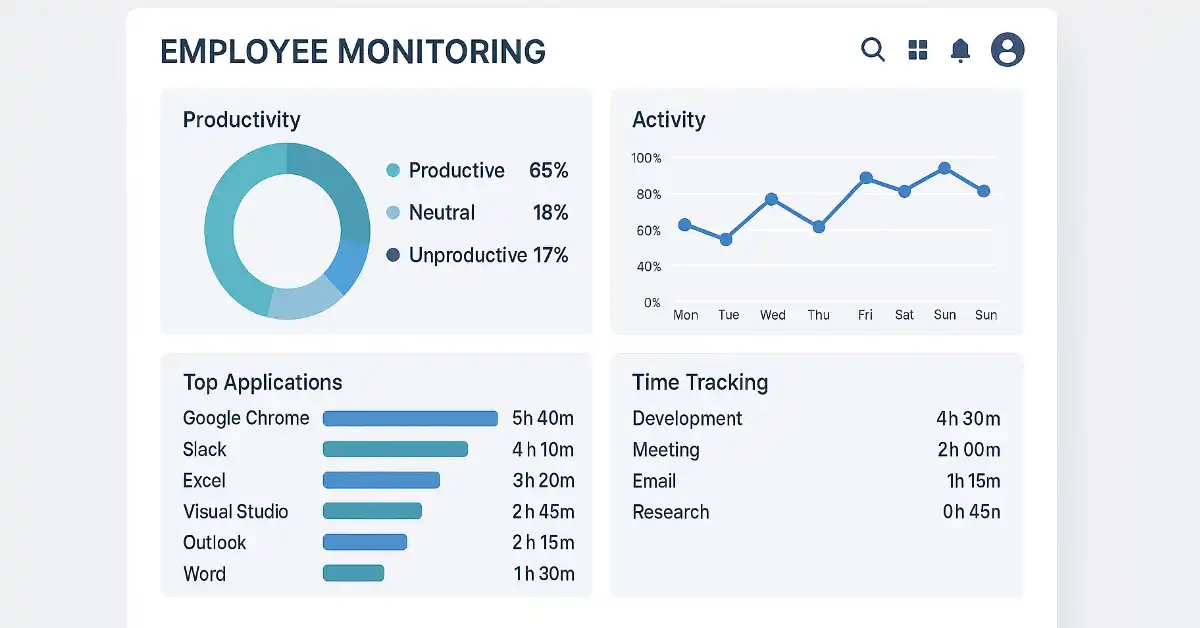
Employee Monitoring Software is a set of tools designed to track, record, and manage employee activities in the workplace. Its significance extends beyond mere surveillance, as it actively contributes to the improvement of productivity, security, and compliance within organizations.
As we enter 2026, the employee monitoring software market has seen explosive growth, expanding from $587 million in 2024 to a projected $1.4 billion by 2031, driven by the rise of hybrid work models and AI advancements. Adoption rates have surged, with 70% of large enterprises actively monitoring staff, up from previous years, reflecting the need for data-driven workforce management in a post-pandemic era. This evolution underscores the software’s role in not just tracking but also fostering a positive work culture through ethical practices.
Key Features
Time Tracking
One of the fundamental features of Employee Monitoring Software is time tracking. This functionality allows employers to monitor the time employees spend on various tasks, providing insights into work patterns and identifying areas for improvement.
In 2026, time tracking has advanced with AI integration, enabling predictive analytics to forecast project timelines and flag potential burnout. For instance, tools now automatically categorize time spent on productive vs. non-productive activities, offering granular reports that help managers optimize schedules.
Screen Monitoring
Screen monitoring enables employers to observe the computer screens of their employees in real-time. This feature is particularly valuable for ensuring that employees stay focused on work-related activities.
Modern iterations include screenshot capturing at intervals and video playback for audits, but with enhanced privacy filters to blur sensitive personal data. This balances oversight with trust, especially in remote setups where visual verification prevents misuse of company resources.
Activity Logging
Employee Monitoring Software logs various activities, such as websites visited, applications used, and files accessed. This comprehensive tracking helps in understanding the digital behavior of employees during working hours.
By 2026, activity logging incorporates machine learning to detect anomalies, like unusual data access patterns that could indicate security threats. This proactive approach not only boosts efficiency but also integrates with cybersecurity protocols to safeguard organizational data.
Reporting
The reporting feature provides detailed analyses of employee performance and productivity. It offers data-driven insights that aid management in making informed decisions.
Advanced reporting now includes customizable dashboards with real-time metrics, benchmarking against industry standards, and AI-generated recommendations for performance improvements. For example, reports can highlight trends in employee engagement, correlating activity data with output metrics.
Benefits
Increased Productivity
By providing a clear view of how employees spend their time, Employee Monitoring Software promotes accountability and encourages productivity. It helps identify bottlenecks and inefficiencies, allowing organizations to streamline processes effectively.
Studies show that monitored teams can see productivity gains of up to 20-30%, as employees become more mindful of time usage. In 2026, with AI insights, this benefit extends to personalized coaching, where software suggests workflow adjustments based on individual patterns.
Reduced Operational Costs
Efficient time management and resource allocation, facilitated by Employee Monitoring Software, contribute to cost reduction. Businesses can optimize workflows and eliminate non-essential tasks, leading to financial savings.
Cost savings can reach 15-25% through better resource utilization, such as reducing overtime by identifying idle time. Integration with payroll systems automates billing for freelancers, further trimming administrative expenses in global operations.
Improved Remote Work Management
In the era of remote work, monitoring employee activities becomes challenging. Employee Monitoring Software bridges this gap, offering a centralized solution to track remote workforce activities and ensure consistent productivity.
With 96% of companies using time-tracking tools in 2026, remote management has evolved to include geolocation for field workers and collaboration analytics to measure team interactions. This ensures equity between in-office and remote staff, fostering inclusive environments.
Compliance and Privacy
Addressing Privacy Concerns
The implementation of Employee Monitoring Software raises concerns about employee privacy. However, when used transparently and ethically, it can strike a balance between monitoring for productivity and respecting individual privacy rights.
In 2026, privacy features like data anonymization and consent-based tracking address these issues, reducing employee resistance. Risks include potential morale dips if perceived as intrusive, but benefits like protecting against data breaches outweigh them when implemented thoughtfully.
Ensuring Compliance with Data Protection Laws
Businesses must adhere to data protection laws while implementing monitoring tools. Employee Monitoring Software can be configured to comply with regulations, ensuring that sensitive employee data is handled with care.
Globally, laws like the EU’s GDPR and AI Act require impact assessments for AI monitoring. In the UAE, the Personal Data Protection Law (PDPL) mandates that monitoring be necessary and proportionate, with exemptions for tools that prioritize privacy. Companies in Dubai must obtain consent and limit data collection to work-related activities to avoid penalties.
Use Cases
Remote Work Management
Employee Monitoring Software facilitates the seamless management of remote teams. It ensures that employees working from different locations stay connected and aligned with organizational goals.
Case studies from 2025 show firms like tech startups using it to coordinate global teams, resulting in 25% faster project delivery.
Project Tracking
For project-based industries, Employee Monitoring Software provides valuable insights into project progress. It helps in identifying potential delays, allocating resources efficiently, and meeting project deadlines.
AI-enhanced tracking now predicts delays using historical data, allowing proactive reallocations in sectors like construction and software development.
Time Optimization
Understanding how employees utilize their time allows organizations to optimize work hours. This not only enhances productivity but also contributes to better work-life balance for employees.
In 2026, optimization includes gamification elements, where employees earn badges for efficient time use, boosting engagement.
Choosing the Right Software
Factors for Selection
When choosing Employee Monitoring Software, businesses should consider factors such as scalability, integrations with existing systems, and user-friendliness. A tool that aligns with the specific needs of the organization ensures a seamless integration process.
Additional factors in 2026 include AI capabilities, mobile app support, and compliance certifications. Reviews highlight the importance of trial periods to test fit.
Scalability, Integrations, User-Friendliness
Scalability ensures that the software can grow with the organization. Integrations with other business tools enhance efficiency, and user-friendliness ensures that employees can easily adapt to the new system.
Top tools like ActivTrak and Hubstaff excel here, offering API integrations with CRM and project management software like Slack and Asana.
| Software | Key Strength | Pricing (2026) | Best For |
|---|---|---|---|
| ActivTrak | AI Analytics | $10/user/mo | Enterprises |
| Hubstaff | Time Tracking | $7/user/mo | Remote Teams |
| Teramind | Security Focus | $15/user/mo | Compliance-Heavy |
| Insightful | User-Friendly | $8/user/mo | SMBs |
| Time Doctor | Reporting | $9.99/user/mo | Freelancers |
This comparison aids selection based on needs.
Implementation
Best Practices
Successful implementation of Employee Monitoring Software involves clear communication with employees. Transparency about the purpose of monitoring and the benefits it brings fosters a positive work environment.
Best practices now include phased rollouts, training sessions, and feedback loops to refine usage. Ethical guidelines emphasize monitoring only during work hours.
Importance of Clear Communication
Employees should be informed about the implementation of monitoring tools. Clear communication helps in building trust and alleviates concerns, fostering a collaborative atmosphere within the organization.
In 2026, communication extends to policy documents outlining data usage, reducing legal risks and enhancing buy-in.
Trends and Future Outlook
Current Trends
The current trends in Employee Monitoring Software include advanced analytics, AI-driven insights, and integration with collaboration tools. These trends indicate a shift toward more sophisticated and user-centric monitoring solutions.
Hybrid work models drive 17 key trends, including demand for non-intrusive tools that build positive cultures. AI agents automate routine checks, freeing managers for strategic roles.
Emerging Technologies
As technology continues to evolve, Employee Monitoring Software is likely to embrace emerging technologies such as augmented reality for task visualization and advanced analytics for predictive insights.
By 2026, VR/AR integrations allow virtual oversight in training, while blockchain ensures tamper-proof logs. Risks like AI bias require governance, but benefits include 5-10% efficiency gains.
AI in Employee Monitoring: Benefits and Risks
A new frontier in 2026 is AI’s role in monitoring. Benefits include real-time sentiment analysis from communications to detect stress, and automated alerts for productivity dips, empowering employees with self-improvement tools. However, risks encompass privacy invasions, algorithmic bias leading to unfair assessments, and job displacement fears—29% of high-performing teams worry about AI replacement. Mitigating these involves ethical AI frameworks and regular audits.
Case Studies: Real-World Success in 2026
Companies like a Dubai-based logistics firm have leveraged monitoring software to cut operational costs by 20% through AI-optimized routes. Another example is a global tech company using Insightful for hybrid teams, achieving 15% higher engagement scores by addressing remote isolation early.
Conclusion
In conclusion, Employee Monitoring Software is a valuable asset for modern businesses seeking to enhance productivity, ensure compliance, and adapt to evolving work environments. By choosing the right software, implementing best practices, and staying informed about emerging trends, organizations can effectively leverage these tools to create a thriving and efficient workplace.
FAQs
What are the top trends in employee monitoring software for 2026?
In 2026, trends include AI-driven predictive analytics, hybrid work integrations, and privacy-focused tools. Adoption has reached 70% in large firms, emphasizing ethical monitoring to build trust and boost productivity through advanced insights.
How does AI enhance employee monitoring software?
AI in monitoring software provides real-time anomaly detection, sentiment analysis, and personalized productivity tips. Benefits include efficiency gains, but risks like bias require governance to ensure fair usage and compliance with laws.
What privacy laws apply to employee monitoring in the UAE?
UAE’s PDPL (Federal Decree-Law No. 45/2021) requires consent-based, proportionate monitoring. Employers must limit data to work activities, anonymize where possible, and comply to avoid penalties, balancing security with employee rights.
Which is the best employee monitoring software in 2026?
Top picks include ActivTrak for analytics, Hubstaff for remote teams, and Teramind for security. Selection depends on needs like scalability; reviews praise user-friendly interfaces and AI features for optimal performance.
What are the risks of using employee monitoring software?
Risks involve privacy breaches, lowered morale, and legal issues if not transparent. AI adds bias potential and replacement fears (29% of teams). Mitigate with clear policies, ethical practices, and regular employee feedback.
Disclaimer: This article provides general information on employee monitoring software based on publicly available sources as of January 2026. It is not legal or professional advice; consult experts for compliance with UAE PDPL or other regulations. NetworkUstad assumes no liability for decisions based on this content.