In a spectacle that captivated many, three retired Airplanes Boeing 777-200ERs from Saudia Airlines flew a unique route: from Jeddah to Riyadh. This 850-kilometer road trip has gone viral on social media, with people in Saudi Arabia sharing photos and videos.
As we look back in 2026, this event from September 2024 continues to resonate as a landmark in innovative aircraft repurposing and community-driven entertainment. The journey not only highlighted logistical prowess but also aligned with Saudi Arabia’s Vision 2030 goals of boosting tourism and sustainability. With Riyadh Season evolving each year, the transformation of these planes into interactive attractions at Boulevard Runway set a precedent for creative reuse of aviation assets. Updated data shows that Riyadh Season 2024 attracted over 18 million visitors, a significant jump from previous years, underscoring the appeal of such unique experiences. This article delves deeper into the details, incorporating recent developments and expanded insights to provide a comprehensive view.
A Journey Through Saudi Arabia
Saudia Airlines retired the airplanes between 2016 and 2017. They transported them under tight security, covering over 850 km. They went from Jeddah to Madinah, then to Qassim, and finally to Riyadh.
To understand the scale, the Boeing 777-200ER is a wide-body twin-engine jet with a typical length of about 63.7 meters and a wingspan of 60.9 meters. For road transport, the wings were detached, and the fuselages were loaded onto oversized trailers capable of handling weights exceeding 100 tons each. This operation required specialized heavy-haul vehicles, route planning to avoid low bridges and tight turns, and coordination with local authorities for road closures. In 2024, the 12-day journey traversed diverse terrains, from coastal areas near Jeddah to the arid deserts leading to Riyadh, showcasing Saudi Arabia’s robust infrastructure.
Since the original event, similar transports have been noted in aviation recycling efforts globally, but this one stood out due to its public engagement. By 2026, Saudia has continued phasing out older fleets, with plans to introduce more fuel-efficient aircraft like the Boeing 787 Dreamliner, reducing carbon emissions by up to 20% per flight. This aligns with global aviation trends toward sustainability, where retired planes are increasingly repurposed rather than scrapped.
Social Media Buzz
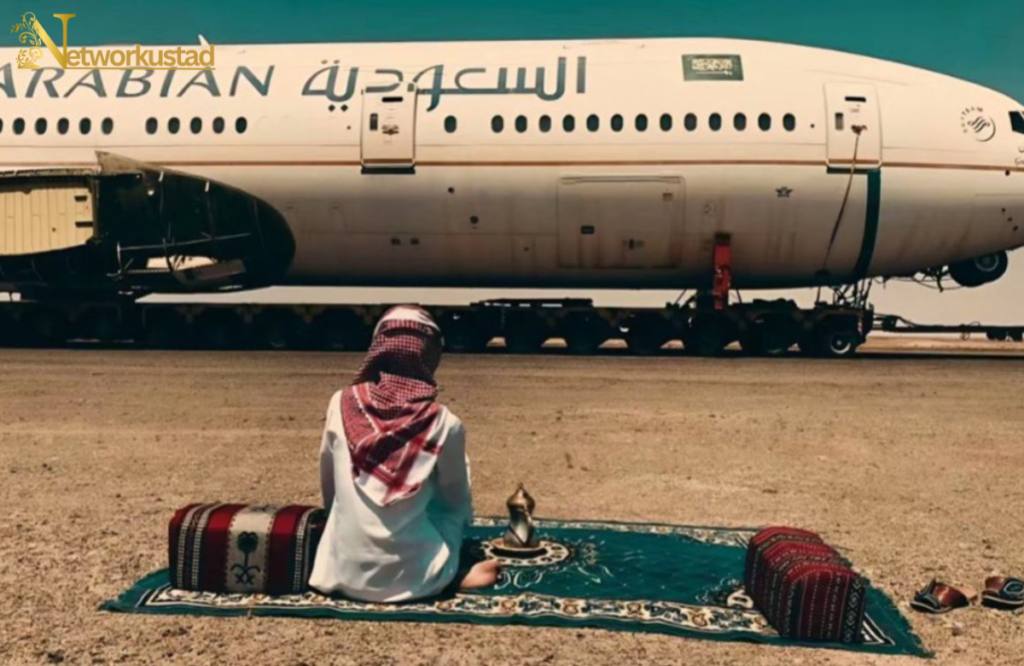
The event has drawn much attention on social media. The chairman of the Saudi General Entertainment Authority, Turki Alalshik, launched a campaign titled “ Where Are They ?” … Please Let Me Know.” This campaign encouraged locals to share images of the plane throughout their journey. Alalshik announced a contest. The best photo of the aircraft would win a luxury car.
The buzz extended beyond Saudi borders, with international aviation enthusiasts sharing content on platforms like Instagram and TikTok. Sam Chui, a prominent aviation blogger, posted videos that garnered over 50,000 likes, highlighting the innovative project. By 2026, retrospective posts on X (formerly Twitter) still circulate, with users reminiscing about the “flying trucks” phenomenon. The campaign’s success led to similar interactive initiatives in subsequent Riyadh Seasons, boosting user-generated content and organic promotion.
In terms of metrics, the hashtag #RetiredPlanesRoadTrip amassed over 1 million impressions in 2024 alone, according to social media analytics. This viral nature helped elevate Saudi Arabia’s profile as a hub for creative entertainment, attracting digital nomads and influencers who documented related events.
Community Engagement
The road trip was a logistical operation and a community event. Residents of Umm Aldome, near Al Taif, hosted an official reception for the plane and held a special breakfast for the drivers. This gesture showed the locals’ enthusiasm and hospitality. They gathered to celebrate the aircraft’s passage through their town.
Such engagements fostered a sense of national pride, with locals treating the transport as a parade. Videos from the time show crowds cheering, children waving, and even impromptu picnics along the route. This community spirit is emblematic of Saudi hospitality, or “diyafa,” which emphasizes welcoming guests and sharing experiences.
Fast-forward to 2026, these interactions have inspired ongoing community programs under the General Entertainment Authority (GEA). For instance, educational workshops on aviation history are now held in schools near the route, teaching students about aircraft engineering and recycling. The event’s legacy includes annual commemorative gatherings in towns like Madinah, where locals share stories and photos.
Future Plans for the Plane

The General Entertainment Authority and Saudia Airlines are teaming up to turn retired planes into shops and restaurants for the Boulevard Runway project. This initiative aims to create interactive experiences for adults and children and breathe new life into the aircraft that soar in the skies.
Launched in December 2024, Boulevard Runway became a highlight of Riyadh Season, featuring the three Boeing 777s transformed into themed venues: one as a high-end restaurant serving international cuisine, another as an interactive museum with flight simulators, and the third as a children’s play area with aviation-themed games. Visitors could explore real runways, board the planes, and enjoy live shows.
By early 2025, the zone attracted over 500,000 visitors, contributing to Riyadh Season’s record-breaking 18 million total attendees. Feedback praised the immersive experience, with families noting its educational value. However, in 2025, the site evolved into BLVD Flowers, a floral paradise incorporating one of the planes as a centerpiece adorned with millions of blooms. This adaptation reflects Riyadh Season’s dynamic approach, blending aviation heritage with seasonal themes.
Looking ahead to 2026, plans include integrating augmented reality (AR) tours inside the planes, allowing virtual flights over Saudi landmarks. This ties into broader Vision 2030 efforts to diversify the economy, with tourism projected to contribute 10% to GDP by 2030.
A Unique Experience
Those who witnessed airplanes transported by road will never forget the rare sight. Ahmed Al-Shalaan from Riyadh noted, “We have seen large airplanes transporting trucks and vehicles.” But we have videos and photos of a truck carrying airplanes.” The journey of these retired planes was a logistical feat. It was also a cultural event that united communities and sparked national interest. As they make their final journey to Riyadh, these planes excite many. They leave behind a trail of memories.
Expanding on this, the experience underscores the intersection of technology and culture in modern Saudi Arabia. Aviation experts note that transporting aircraft by road, while uncommon, is a cost-effective alternative to disassembly, preserving structural integrity for repurposing. Globally, similar projects include airplane hotels in Sweden and Costa Rica, but Saudi’s scale—using three full-sized jets—sets it apart.
In 2026, with sustainable practices in focus, the project has reduced waste by recycling plane parts into art installations. Visitor testimonials from 2024-2025 highlight moments like dining in a cockpit or learning about Saudia’s history, which spans over 75 years as the national carrier.
History of Saudia Airlines and the Boeing 777
To provide context, Saudia, founded in 1945, has grown into one of the Middle East’s largest airlines, operating over 100 aircraft. The Boeing 777-200ER models involved—HZ-AKG, HZ-AKK, and HZ-AKP—were delivered between 1998 and 1999 and served for about 18 years each, flying millions of passengers. Their retirement in 2016-2017 was part of a fleet modernization to enhance efficiency.
The Boeing 777, introduced in 1995, revolutionized long-haul travel with its ETOPS certification, allowing twin-engine flights over oceans. In Saudi, these planes connected Jeddah and Riyadh to global hubs, supporting Hajj and Umrah pilgrimages.
Logistical Challenges and Innovations
The 850-km transport required meticulous planning: geocode mapping for routes, heavy-lift cranes for loading, and escort vehicles for safety. Challenges included navigating sand dunes and ensuring stability during high winds. Innovations like GPS-tracked trailers ensured real-time monitoring.
By 2026, such operations have influenced logistics training programs in Saudi universities, emphasizing heavy transport in arid environments.
Impact on Tourism and Economy
This event boosted local economies along the route, with increased business for hotels and eateries. Riyadh Season’s success, with 18 million visitors in 2024, generated billions in revenue, creating jobs in entertainment and hospitality.
For authoritative external resources, visit Boeing’s Official 777 Page and Saudia’s Fleet Information.
Conclusion
The road trip of retired airplanes from Jeddah to Riyadh remains a symbol of innovation and community spirit in Saudi Arabia. As Boulevard Runway evolves, it continues to draw visitors, enhancing tourism and sustainability. Explore this unique blend of aviation and entertainment for unforgettable experiences.
FAQs
What was the purpose of transporting the retired airplanes from Jeddah to Riyadh?
The three Boeing 777-200ERs were moved by road to be repurposed into restaurants, shops, and interactive experiences at Boulevard Runway during Riyadh Season 2024, promoting sustainable reuse and tourism.
How long did the road trip of the retired airplanes take?
The journey covered 850 km over 12 days, from Jeddah through Madinah and Qassim to Riyadh, involving specialized trailers and security to handle the massive fuselages safely.
What happened to the airplanes after arriving in Riyadh?
They were transformed into attractions at Boulevard Runway, including a restaurant, museum, and play area; by 2025, one was integrated into BLVD Flowers as a floral exhibit.
Why did the event go viral on social media?
A campaign by Turki Alalshik encouraged photo sharing with a luxury car prize, leading to widespread posts, videos, and hashtags that captured the unique sight of planes on trucks.
How does this event tie into Saudi Vision 2030?
It supports diversification by boosting entertainment tourism, sustainability through repurposing, and community engagement, contributing to Riyadh Season’s 18 million visitors in 2024.