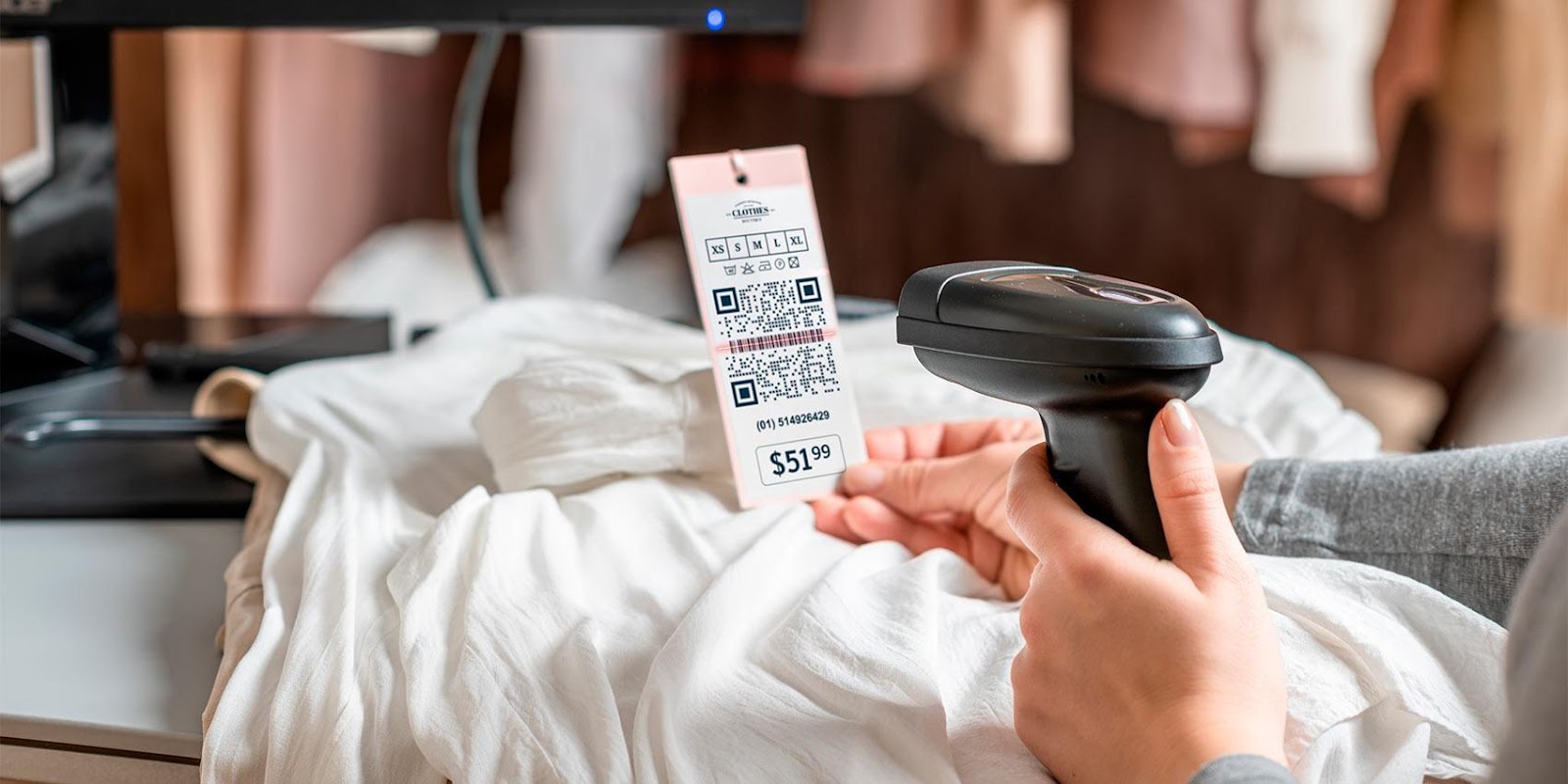
Impactful inventory management is critical in retail. It ensures that staff organizes products and makes them available to customers. Deloitte’s US Retail Industry Outlook says that retail sales will grow by mid-single digits by 2025. This means that good inventory management is more important than ever to deal with more demand and more complicated supply chains. This growth illustrates the importance of tools that minimize errors and optimize operations.
However, traditional inventory management has many challenges. It can lead to out-of-stock and overstocking issues and slow manual processes. Recent data from VDC Research indicates that 36% of companies are focusing on improving inventory management through advanced barcode technologies like GS1 standards to address these pain points.
This is where GS1 barcodes come in. They are changing how retailers manage inventory and offer a more accurate way to handle stock. As of 2025, with the GS1 Digital Link Standard updated to version 1.6.0 in April, these barcodes are enabling smarter, data-rich interactions that go beyond traditional scanning.
Find out how to revolutionize inventory management with GS1 barcodes for retail and give businesses like yours a competitive edge. By integrating these standards, retailers can achieve real-time visibility, reducing stock discrepancies by up to 30%, as seen in various industry implementations.
Who makes barcodes?
Since their introduction in the 1970s, barcodes have transformed grocery stores by speeding up checkout times and improving the accuracy of inventory tracking.
But where do these barcodes come from?
The Uniform Code Council (now part of the Global Standards 1 organization) produces the most widely used barcodes, such as the UPC (Universal Product Code).
Over two million companies rely on GS1’s new UPC, the industry standard for product identification. These barcodes provide a consistent, universal system for tracking goods and managing inventory. In 2025, GS1 reports that adoption has surged, with more than 47% of companies investing in 2D barcodes for enhanced information exchange, highlighting their role in modern supply chains.
Each GS1 code contains important product data such as brand, item type, and price. This allows retailers to monitor stock levels and keep products available when customers need them. Furthermore, with the push toward 2D barcodes like QR codes, these identifiers now support dynamic data links, allowing for updates on product details without reprinting labels.
Understanding GS1 Barcode Types
To fully appreciate GS1’s impact, it’s helpful to break down the main types of barcodes they offer. The most common include GTIN (Global Trade Item Number), which uniquely identifies products at various packaging levels; GLN (Global Location Number) for identifying locations like stores or warehouses; and SSCC (Serial Shipping Container Code) for tracking shipments. In retail, GTIN-12 (UPC-A) remains prevalent in North America, while GTIN-13 (EAN-13) is standard elsewhere.
As we move into 2025, the transition to 2D formats such as Data Matrix and QR codes encoded with GS1 Digital Link is accelerating. These allow embedding URLs, enabling direct access to online resources like allergen information or sustainability certifications. According to GS1’s 2025 guidelines, this shift supports Sunrise 2027, where 2D barcodes will become mandatory at point-of-sale. Retailers adopting early can gain advantages in traceability and consumer engagement.
How do GS1 Digital Link barcodes improve inventory management in the retail industry?
Let’s discuss how possible it is to revolutionize inventory management with GS1 barcodes for retail and other related businesses:
Improved product identification and traceability
GS1’s 2D barcodes, like QR codes, make product identification easy and accurate. With a unique product identifier for each item, these barcodes reduce the chances of human error when tracking items.
Retailers can scan the code and use tools like the GS1 calculator to access detailed information about the product, such as its origin, manufacturer, and shelf life. In 2025, with improved GS1 Digital Link features, tracking will include real-time data for each batch, which is important for recalls and can cut response times by up to 50% in food safety situations, as mentioned at GS1 Connect
This level of detail is vital in industries like groceries, where perishable goods require precise monitoring. For instance, integrating GS1 barcodes with blockchain can provide immutable records of a product’s journey, ensuring compliance with regulations like the EU’s traceability mandates.
Streamlined stock management
Many retailers struggle to manage stock levels, and overstocking cuts profits. Meanwhile, running out of stock leads to lost sales and unhappy customers.
A dynamic GS1 Digital Link maker simplifies real-time inventory tracking. Retailers can see what’s in stock, what’s low, and when to reorder. Trends in 2025 emphasize automation here; NetSuite reports that real-time analytics via barcodes can cut overstock by 20–30% through predictive reordering.
Software integrations, such as with ERP systems like SAP or Oracle, allow automatic updates to inventory databases upon scanning. This speeds up restocking and integrates with demand forecasting tools powered by AI, anticipating seasonal spikes or trends based on sales data.
Organized supply chain integration
GS1 codes are useful not only at the points of sale but also throughout the entire supply chain, from manufacturing to storage to distribution.
GS1 supply chain barcodes allow everyone in the supply chain to track goods using one standardized code, improving coordination and reducing errors. In 2025, with resilient supply chains being a top priority per Vena’s Retail Trends report, GS1 enables just-in-time fulfillment, minimizing holding costs.
Shared platforms like GS1’s Global Data Synchronization Network (GDSN) enhance collaboration among partners, ensuring product data consistency and reducing disputes over shipments.
Enhanced customer experience
Customers seek a smooth shopping experience, both in-store and online. GS1 QR codes help retailers keep the right products in stock, ensuring customers can see item availability before visiting or ordering online. Moreover, these codes can link to personalized content, such as loyalty rewards or product reviews, boosting engagement.
In 2025, as omnichannel retail grows, GS1 Digital Link allows seamless transitions between physical and digital shopping, with features like virtual try-ons or augmented reality previews accessible via scans.
Implementation Steps for GS1 Barcodes in Retail
Initially, retailers should secure a GS1 company prefix from their local GS1 member organization. Next, assign GTINs to products and generate barcodes using compliant software. Integration involves updating POS systems and scanners—Zebra’s 2025 firmware updates support GS1 Digital Link for smooth transitions.
Training staff and testing in pilot stores can mitigate issues. Costs vary, but ROI is quick, often within months through reduced errors.
How brands revolutionize inventory management with GS1 barcodes for retail
Macy’s, the U.S. retail giant, is a wonderful example of the impact of GS1 barcodes—Macy’s adopted barcodes to improve its inventory accuracy.
By implementing GS1-standardized barcodes, Macy’s improved its inventory accuracy by nearly 32%. This allowed the company to manage stock better and serve customers more successfully.
This move saved Macy’s time, reduced costs, and led to higher customer satisfaction.
Another compelling case is Decathlon, the global sporting goods retailer. By leveraging GS1 standards with RFID integration, Decathlon achieved near-real-time inventory visibility across its vast network of stores. This resulted in a 25% reduction in out-of-stocks and improved supply chain efficiency, as detailed in GS1 US case studies.
Nestlé Professional also exemplifies success. Their data quality initiative using GS1 barcodes streamlined product information sharing, saving time and building trust with distributors. Ocean Mist Farms utilized GS1-128 barcodes for better inventory control in perishable goods, optimizing sales orders and reducing waste.
GS1-powered barcodes, in general, provide the ground for integrating future technologies in retail. Such as:
- IoT and RFID integration: Combining GS1 with IoT and RFID enables precise, real-time inventory tracking. RFgen’s 2025 trends highlight how this duo can automate warehouse operations, cutting manual labor by 40%.
- Enhanced item tracking: Retailers could monitor every item’s movement within stores, making it easy to locate misplaced stock. This is especially useful in large formats like hypermarkets.
- Data-driven retail operations: Integrating these technologies offers more intelligent operations, better insights, and less need for manual tracking. AI analytics on GS1 data can predict demand with 95% accuracy in some cases.
Future Trends in Inventory Management with GS1 Barcodes for 2025
Looking ahead, 2025 brings exciting developments. AI-driven predictive analytics will use GS1 data to forecast trends, while blockchain integration ensures tamper-proof traceability. Sustainability is key; GS1 barcodes can track eco-friendly sourcing, aligning with consumer demands for green practices.
Automation via robotics in warehouses, guided by GS1 codes, will speed up picking and packing. Voice-activated systems for inventory checks are emerging, making operations hands-free. As per Retail TouchPoints, mastering these will be critical for efficiency amid economic pressures.
The competitive edge of GS1 in modern retail
GS1 codes help retailers improve stock accuracy, streamline the supply chain, and boost customer satisfaction.
Knowing how to revolutionize inventory management with GS1 barcodes for retail is a MUST for businesses in the industry.
As GS1 QR codes are set to replace linear barcodes by 2027, it’s smart to use them now to enhance inventory management systems and prepare for the promising future of retail with GS1-powered barcodes. Early adopters in 2025 are already seeing competitive advantages, with improved margins and customer loyalty.
Conclusion: Embracing GS1 Barcodes for a Future-Proof Retail Strategy
In summary, GS1 barcodes are indispensable for modern retail inventory management, offering accuracy, efficiency, and scalability. By adopting these standards in 2025, businesses can mitigate common challenges like stockouts and overstocking while integrating with cutting-edge technologies such as AI, IoT, and blockchain. This not only streamlines operations but also enhances customer experiences through better availability and transparency.
To stay competitive in Google’s search results and the evolving retail landscape, prioritize GS1 implementation today. Whether you’re a small retailer or a large chain, the benefits—from cost savings to data-driven decisions—position your business for long-term success. Start by assessing your current systems and consulting GS1 resources for a seamless transition.
FAQs
What are GS1 barcodes, and how do they work in retail?
GS1 barcodes are global standards for product identification, using unique codes like UPC or QR to encode data such as brand and price. In retail, they enable quick scanning for inventory tracking, reducing errors and supporting real-time stock updates via integrations like GS1 Digital Link.
How can GS1 barcodes reduce inventory errors?
By providing accurate, unique identifiers, GS1 barcodes minimize manual input mistakes during stocking and sales. Real-time scanning updates databases instantly, preventing overstock or stockouts, with studies showing up to 32% accuracy improvements in implementations like Macy’s.
What is the difference between 1D and 2D GS1 barcodes?
1D barcodes like UPC are linear and hold basic data, while 2D versions like QR codes store more info, including links to dynamic content. In 2025, 2D barcodes enhance traceability and are gearing up for the 2027 transition, offering better supply chain visibility.
How do GS1 barcodes integrate with supply chain systems?
GS1 codes standardize data across manufacturers, warehouses, and stores, allowing seamless tracking via shared platforms like GDSN. This integration helps prevent mistakes in communication, makes timely deliveries easier, and fits with the growing trends in automation and resilience expected by
What future trends involve GS1 barcodes in inventory management?
In 2025, GS1 barcodes will integrate with AI for predictive analytics, IoT for real-time monitoring, and blockchain for secure traceability. These advancements promote sustainability and efficiency, preparing retailers for the full 2D barcode adoption by 2027.