Most outbound campaigns fail at the planning stage. Teams build massive lists, debate messaging for weeks, and delay outreach until everything feels polished. By the time the first email goes out, the market has already shifted. Speed creates clarity. Execution creates data. Data creates direction.
Testing outbound and scaling outbound serve different goals. Testing helps validate an audience, a message, and a channel. Scaling focuses on volume, efficiency, and predictability. The first 14 days belong entirely to testing. Growth comes later, once the signal is clear.
Want support with a fast, structured outbound launch? Visit the page to see how an expert team can help to validate niches and start conversations in weeks, not months.

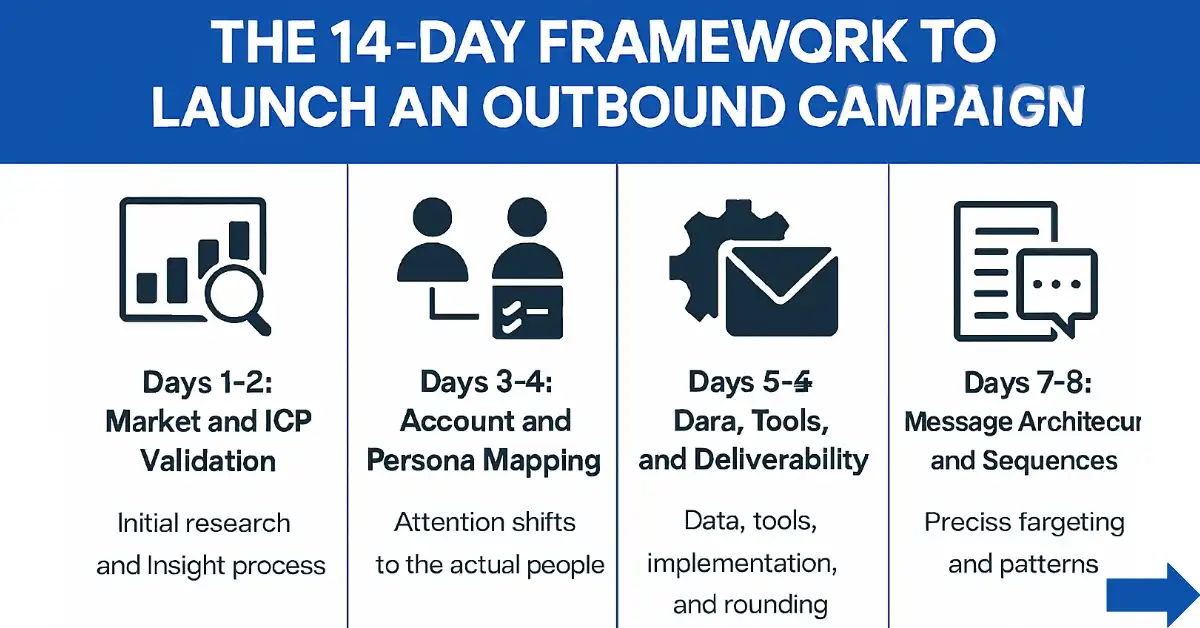
The 14-Day Framework to Launch an Outbound Campaign
This framework keeps teams focused on learning, feedback, and controlled execution. Every phase builds on the previous one, so by day fourteen, you have real data, conversations, and a clear signal about the niche.
Days 1–2: Market and ICP Validation
The first two days set the direction for everything that follows — decisions here shape list quality, messaging relevance, and response rates later in the process.
Start smaller than feels comfortable. One industry, one company size range, one core use case. This level of focus makes patterns visible fast. When every prospect looks similar, replies feel easier to interpret, and optimization becomes faster.
Examples of narrowing criteria:
- Industry with shared workflows or regulations
- Company size where buying power sits with a known role
- Growth stage tied to a specific operational challenge
Outbound performs best when timing aligns with change. Buying triggers help prioritize accounts that already feel friction.
Common triggers include:
- Recent funding or expansion announcements
- New leadership hires in revenue, marketing, or operations
- Technology changes or tool migrations
- Hiring spikes tied to growth
Days 3–4: Account and Persona Mapping
With the niche defined, attention shifts to the actual people inside target companies. These two days shape relevance at the human level.
Build a starter list designed for learning, not scale. Fifty to one hundred accounts usually offer enough signal without overwhelming analysis.
Account selection criteria may include:
- Precise fit with the ICP definition
- Presence of identified buying triggers
- Visibility of decision-makers on LinkedIn or company pages
Each role cares about different outcomes. Messages land better when they clearly reflect those priorities.
Examples:
- Executives focus on revenue impact, risk, and timing
- Managers care about efficiency, workload, and execution
- Specialists think about tools, workflows, and day-to-day friction
Days 5–6: Data, Tools, and Deliverability Setup
That starts with a clean prospect list built for accuracy, where company names and domains match, roles and seniority are correct, and each contact includes a relevant trigger or bit of context.
This kind of data supports healthy deliverability and makes outreach feel more personal without extra effort. Email and domain verification add another layer of protection by keeping bounce rates low and inbox placement stable, with checks on syntax, domain validity, real mailbox existence, and catch-all behavior helping messages reach people who can actually reply.
Days 7–8: Message Architecture and Sequences
Messaging turns strategy into conversations. These two days focus on structure, flow, and clarity rather than clever phrasing.
First-touch messages aim to spark interest, not close deals. They work best when short, relevant, and grounded in the prospect’s context.
Effective first-touch elements:
- Reason for reaching out
- Specific problem tied to the prospect’s role or trigger
- Simple question or next step
Follow-ups serve as reminders and reinforce value. Each message should add context rather than repeat the first touch.
A simple narrative structure:
- Follow-up one: gentle reminder with added insight
- Follow-up two: new angle or use case
- Follow-up three: polite close with open door
Days 9–10: Internal QA and Dry Runs
Internal review helps sharpen clarity and relevance by reading messages as a prospect would and checking whether the value comes through within the first few seconds.
Strong audience alignment, simple language, and a smooth transition from problem to question make a noticeable difference once outreach begins. Running test sequences through internal inboxes and trusted peers also surfaces practical issues around timing, formatting, subject line visibility, and mobile readability, allowing teams to fix small gaps before real prospects ever see the messages.
Days 11–12: Launch and Controlled Sending
Sending starts at a low daily volume, usually around twenty to forty emails per inbox alongside a small number of LinkedIn connection requests, which helps protect deliverability and makes early patterns easier to spot. Attention remains on key engagement signals, such as open rates, bounce rates, and the quality of replies, since these metrics indicate whether messages land in inboxes and connect with the right audience.
Days 13–14: First Results Review and Optimization
Replies become the primary source of insight, so the goal is to read them for intent and patterns rather than emotional reactions. Repeating objections, requests for clarification, and feedback around timing all point to how well the message and audience align. These signals guide practical adjustments, whether that means refining ICP criteria, sharpening the value hypothesis, or shifting follow-up timing, with every change tied directly to what prospects actually said.
Conclusion
Speed shortens the distance between assumptions and market feedback, making it easier to prioritize decisions and improvements when teams launch an outbound campaign early. A fast launch brings conversations into the open, where messaging, targeting, and timing can evolve based on actual responses rather than internal debate.
Disciplined launches also protect the budget and focus. Clear timelines, narrow scopes, and controlled volume limit unnecessary tools, oversized lists, and premature scaling. When outbound launches with structure and intent, spend stays aligned with learning, and growth builds on evidence instead of guesswork.