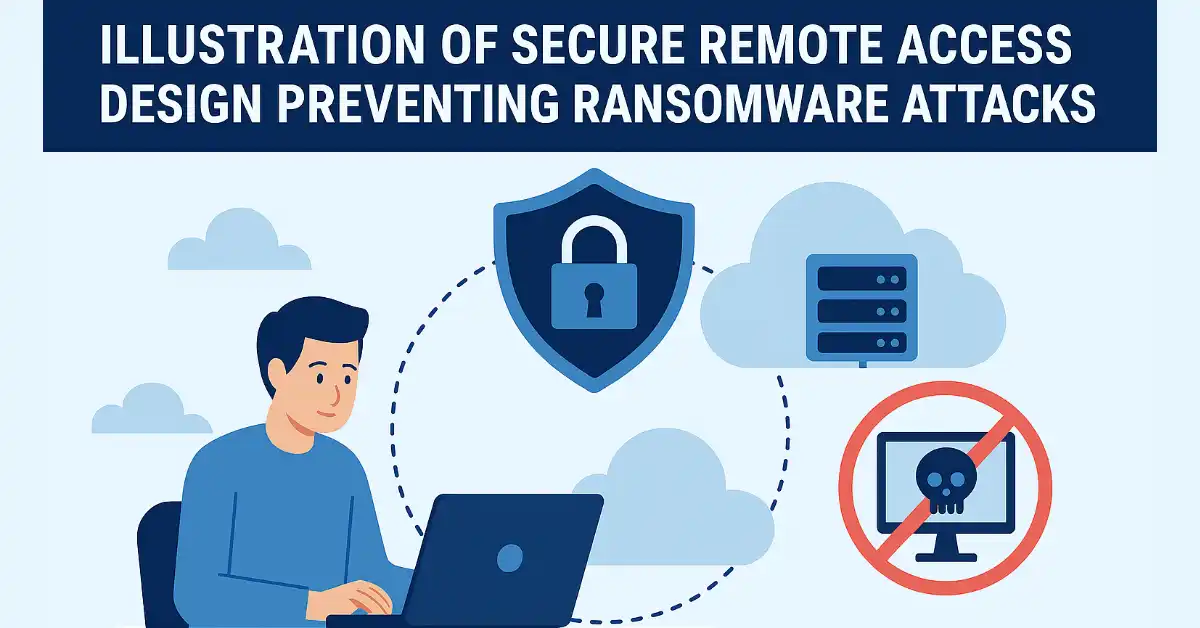
Ransomware has become one of the most damaging cyber threats facing organizations today. With remote work and cloud-based operations becoming standard, attackers increasingly exploit weak remote access points to infiltrate business networks. Without proper security design, remote connections can quickly turn into costly vulnerabilities. Building a secure remote access infrastructure is now essential for protecting sensitive data, maintaining business continuity, and preventing ransomware-driven disruptions.
Understanding How Ransomware Exploits Remote Access
Remote access technologies allow employees and administrators to connect to systems from anywhere. While this flexibility supports business continuity, it also introduces new attack surfaces if security controls are weak.
Common Entry Points for Ransomware Attacks
Attackers often rely on a small set of recurring techniques to compromise remote systems:
- Brute-force attacks targeting weak passwords
- Stolen credentials from phishing campaigns
- Exposed Remote Desktop Protocol (RDP) ports
- Outdated software vulnerabilities
Once attackers gain access, ransomware can spread laterally across networks, encrypt critical data, and disrupt operations within minutes. Preventing these scenarios requires addressing security at both the connection and infrastructure level.
Building a Secure Remote Access Architecture
Effective ransomware defense begins with a secure access foundation. Rather than relying on a single protection layer, organizations should adopt a defense-in-depth approach.
Strong Authentication and Access Control
Authentication is the first line of defense. Organizations should enforce:
- Complex password policies
- Multi-factor authentication (MFA)
- Role-based access permissions
- Limited administrator privileges
Restricting access ensures that users can only connect to the systems and resources necessary for their job functions. This principle of least privilege dramatically reduces the impact of compromised accounts.
Network Segmentation and Isolation
Network segmentation limits how far attackers can move once inside a system. By separating remote access servers, application servers, and data storage environments, organizations can contain potential breaches.
Segmented environments help prevent ransomware from spreading laterally across departments or critical systems. Even if one segment becomes compromised, attackers encounter additional security barriers before reaching sensitive data.
Proactive Threat Detection and Monitoring
Modern ransomware campaigns often operate silently before launching encryption attacks. Monitoring tools play a critical role in identifying suspicious behaviour early.
Session Monitoring and Activity Logging
Tracking user activity allows IT teams to identify unusual patterns such as:
- Repeated failed login attempts
- Unexpected access times
- Large data transfers
- Unauthorized application launches
Maintaining detailed logs also supports forensic investigations. Organizations gain visibility into remote sessions and can quickly respond to abnormal behaviour.
Automated Threat Blocking
Security platforms that provide automated protection capabilities can block malicious IP addresses, restrict geographic access, and prevent brute-force attacks in real time. Integrating a solution such as TSplus Advanced Security enables organizations to proactively defend remote environments by detecting anomalies, applying behavioural analysis, and stopping suspicious activity before damage occurs.
Hardening Remote Access Endpoints
Endpoints represent another critical vulnerability layer. Even the most secure server environment can be compromised if user devices remain unprotected.
Endpoint Security Best Practices
Organizations should implement:
- Regular operating system updates
- Endpoint antivirus and anti-malware software
- Firewall protection
- Device compliance policies
Requiring endpoint security compliance before granting remote access reduces the risk of infected devices connecting to internal networks.
Application Whitelisting
Application control mechanisms allow organizations to restrict which programs can run on remote servers. By limiting execution to approved software only, administrators prevent unauthorized scripts or ransomware payloads from launching.
Encryption and Secure Communication Channels
Encryption protects data transmitted between users and servers. Without encrypted connections, attackers can intercept credentials and session data.
Transport Layer Encryption
All remote access sessions should use modern encryption protocols to protect login credentials and transmitted data. Secure transport channels reduce the risk of man-in-the-middle attacks and credential harvesting.
Data-at-Rest Protection
In addition to transmission security, organizations should encrypt sensitive stored data. Even if ransomware attempts to access files, encrypted storage adds an extra layer of protection.
Backup Strategy as a Final Defense Layer
While prevention is the primary goal, organizations must prepare for worst-case scenarios. Backup strategies provide critical recovery options if ransomware bypasses defenses.
Best Practices for Backup Security
Effective backup systems should include:
- Offline or immutable storage
- Regular automated backup schedules
- Encrypted backup files
- Periodic recovery testing
This ensures organizations can restore systems without paying ransoms.
Training Employees to Reduce Human Risk
Technology alone cannot stop ransomware. Human error remains one of the leading causes of breaches.
Security Awareness Programs
Organizations should train employees to recognize:
- Phishing emails
- Fake login portals
- Suspicious file attachments
- Social engineering tactics
Educated users serve as an additional security layer by identifying threats before they reach critical systems.
Remote Work Security Guidelines
Clear policies should outline acceptable remote access behaviour, device usage standards, and reporting procedures for suspicious activity. When employees understand security expectations, organizations reduce exposure to accidental breaches.
The Role of Continuous Security Improvement
Cyber threats evolve constantly. Organizations must regularly review and improve security strategies to stay ahead of attackers.
Regular Security Audits
Periodic vulnerability assessments help identify:
- Outdated software
- Misconfigured access settings
- Weak authentication policies
- Unused accounts
Addressing vulnerabilities proactively minimizes risk before attackers exploit them.
Patch Management
Keeping remote access software and operating systems updated is critical. Security patches often address vulnerabilities actively exploited by ransomware groups.
Creating a Resilient Remote Access Environment
Preventing ransomware requires more than basic firewall protection. Organizations must design secure remote access environments that combine authentication controls, monitoring, segmentation, encryption, and employee education.
When these elements work together, businesses create layered defenses that make ransomware attacks far more difficult to execute. By strengthening remote access infrastructure and deploying proactive security solutions, organizations protect critical data, maintain operational continuity, and preserve customer trust.
As remote connectivity continues to expand across industries, building secure access frameworks is not just an IT responsibility — it is a strategic business priority. Investing in strong security today ensures long-term resilience against tomorrow’s cyber threats.
Conclusion
Ransomware prevention begins with secure remote access design. By strengthening authentication, monitoring activity, segmenting networks, and educating users, organizations can dramatically reduce attack exposure. Investing in layered security ensures long-term protection while supporting flexible and productive remote work environments.
FAQs
What is the role of secure remote access design in preventing ransomware?
Secure remote access design acts as a frontline defense by incorporating zero-trust principles, ensuring no implicit trust, and verifying every access attempt. It uses MFA, encryption, and least-privilege access to block unauthorized entry points that ransomware exploits, like weak VPNs or RDP, thus reducing attack surfaces and enabling quick threat isolation for overall network resilience.
How does multi-factor authentication help in ransomware prevention?
MFA adds layers beyond passwords, requiring biometrics, tokens, or apps to authenticate users, making it harder for attackers to breach via stolen credentials—a common ransomware vector. In secure remote designs, it integrates with monitoring tools to detect anomalies, revoke access instantly, and protect sensitive data, significantly lowering successful infiltration risks.
What are key best practices for implementing zero-trust in remote access?
Adopt continuous verification, segment networks to limit lateral movement, encrypt all data in transit, regularly audit access logs, and use AI-driven threat detection. Combine with endpoint security and employee training to address human errors, ensuring ransomware can’t propagate even if initial access occurs, fostering a proactive security posture.
Why is encryption crucial in secure remote access design?
Encryption scrambles data during transmission and at rest, rendering it useless to ransomware actors who intercept it. In remote setups, protocols like TLS/SSL or IPsec VPNs prevent man-in-the-middle attacks, maintain confidentiality, and comply with regulations, while also enabling secure file sharing without exposing plaintext vulnerabilities.
How can businesses audit their remote access for ransomware risks?
Conduct penetration testing, review access policies for least-privilege, scan for unpatched software, monitor logs for unusual activity, and simulate attacks. Update firmware, disable unused ports, and train staff on phishing. Regular audits identify gaps, allowing timely fixes to prevent ransomware exploitation of remote weaknesses.