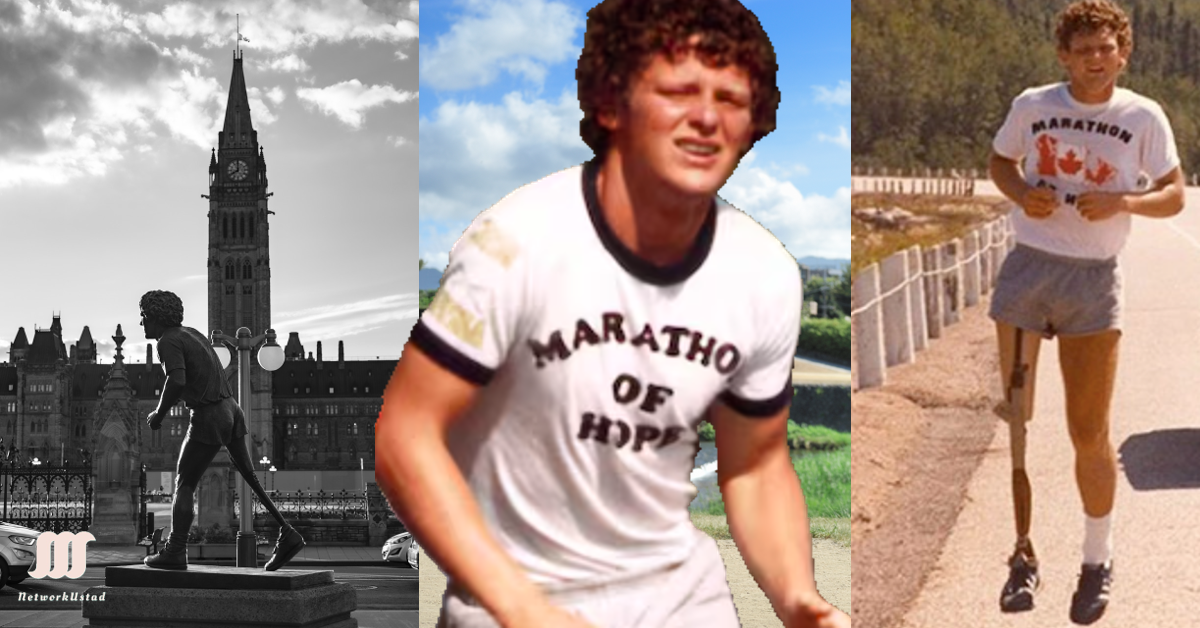
Picture this: On April 12, 1980, a 21-year-old man dipped his artificial leg into the icy Atlantic Ocean off St. John’s, Newfoundland. Terry Fox was about to embark on an unprecedented challenge: running 5,373 kilometers across Canada on a single leg, with the goal of raising $10 million for cancer research. What followed wasn’t just a marathon—it became a testament to human resilience, a story that transcended borders and generations. This narrative is not merely a tale of survival. It’s a saga of how one ordinary person, armed with extraordinary grit, rewrote the rules of hope.
In 2025, as we mark the 45th anniversary of Terry’s Marathon of Hope, his legacy will still motivate millions worldwide. The Terry Fox Foundation has now raised over $950 million, funding groundbreaking cancer research that has improved survival rates and brought precision medicine to patients. Annual events like the Terry Fox Run draw participants in over 650 Canadian communities and dozens of countries, proving that Terry’s dream lives on stronger than ever.
The Diagnosis That Changed Everything
A Young Athlete’s Nightmare
Terry Fox was born in Winnipeg, Canada, on July 28, 1958. A natural athlete, he thrived in basketball and long-distance running. But in 1977, a sharp pain in his right knee shattered his world. Doctors diagnosed osteosarcoma, a rare bone cancer. The prognosis was brutal: amputation of his leg above the knee, followed by chemotherapy.
At just 18 years old, Terry faced a life-altering surgery on March 9, 1977. The night before his amputation, he read about an amputee runner, sparking a dream that would change history. During recovery, he endured grueling chemotherapy sessions, witnessing firsthand the suffering of other patients, especially young children battling cancer.
The Agony of Loss
“Why me?” Terry asked his mother, Betty, as he grappled with the news. But even in despair, a seed of defiance took root. During his 16-month chemotherapy regimen, Terry witnessed children succumbing to cancer. “I could never leave that hospital the same person,” he wrote. “Those kids didn’t get to live… I had to do something.”
These experiences fueled Terry’s determination. He saw inadequate funding for cancer research and vowed to make a difference. By February 1979, he began secret training with his new prosthetic leg, pushing his body to limits most thought impossible.
The Birth of the Marathon of Hope
A Secret Mission
In 1979, Terry confided in his best friend, Doug Alward: “I’m going to run across Canada.” He trained in secret with a prosthetic leg made of fibreglass and steel. For 14 months, he dragged his 7-pound artificial limb through snow, rain, and searing heat, often collapsing in exhaustion. His family had no idea until he revealed his plan at Christmas: “I’m doing this for everyone who’s suffered like me.”
Terry’s vision was simple yet bold: run a marathon (42 km) every day across Canada’s 10 provinces, aiming to raise $1 for every Canadian—initially $24 million. He sought sponsorships from companies like Adidas (for his iconic Orion shoes) and Ford, while appealing to the Canadian Cancer Society for support.
The Unlikely Hero
Terry’s goal was audacious: a marathon a day (42 km) to cross 10 provinces. The media scoffed. “A one-legged man running across Canada? It’ll never last,” one reporter wrote. But on Day 1, Terry’s quiet determination silenced doubters. Clad in shorts and a T-shirt, he ran with a lopsided gait, his fists pumping rhythmically. By sunset, he’d covered 46 km.
Supported by Doug Alward in a van, Terry collected seawater from the Atlantic to pour into the Pacific upon completion—a symbolic gesture of unity.
The Journey That Captured a Nation
Miles of Solitude and Solidarity
For 143 days, Terry ran through blistering winds, uphill battles, and excruciating pain. Blisters formed on his stump; his good leg swelled. Yet, he refused to quit. Slowly, Canadians began to notice. In Ontario, farmers lined highways with homemade signs: “Go, Terry, Go!” Schoolchildren donated lunch money. A truck driver handed him $10,000.
Early days in Atlantic Canada were lonely, with sparse crowds and minimal donations. But as Terry entered Quebec and Ontario, support surged. Celebrities and politicians joined him; crowds grew to thousands. In Toronto, over 10,000 people cheered him on Canada Day 1980.
The Heartbreak in Thunder Bay
By September 1, 1980, Terry had run 5,373 km. But outside Thunder Bay, Ontario, he collapsed, coughing blood. The cancer had metastasized to his lungs. At a press conference, tears streaming, he vowed, “I’ll fight this. I’m gonna win.” The nation wept with him.
Terry’s run ended after 143 days, but his message resonated. Donations flooded in, surpassing his goal.
Legacy of a Reluctant Hero
The Floodgates Open
Though Terry’s run ended, his mission didn’t. Donations poured in—$23 million by February 1981. Terry passed away on June 28, 1981, but his words echoed: “Even if I don’t finish, others must continue.”
The first Terry Fox Run in 1981 drew 300,000 participants and raised $3.5 million. Isadore Sharp, founder of Four Seasons Hotels (who lost a son to cancer), helped organize it.
The Ripple Effect
Today, Terry’s legacy thrives:
- Over $950 Million Raised (as of 2025): Funds fuel breakthroughs in immunotherapy, early detection, and precision medicine.
- Annual Terry Fox Run: Held in over 650 Canadian communities and internationally in dozens of countries.
- Symbol of Unity: His statue stands proudly, with recent relocations in Ottawa placing it along his original 1980 route near Parliament Hill for greater historical significance.
Monuments like the Terry Fox Memorial in Thunder Bay overlook the spot where he stopped, offering panoramic views and a place for reflection.
The 45th Anniversary Celebrations in 2025
2025 marked the 45th anniversary of the Marathon of Hope with unprecedented events. The annual Terry Fox Run on September 14 drew thousands across Canada, including special sites like the return of the Confederation Bridge Run after a decade.
Other highlights included:
- The National Ride of Hope, led by Terry’s brother Darrell Fox, cycling 7,000 km coast-to-coast.
- Limited-edition ‘Finish It’ merchandise and a reissued Adidas Orion shoe.
- The documentary Run Terry Run, offering unprecedented access to archival footage.
- A limited-edition vinyl of “Courage (for Terry)” by The Tragically Hip.
- Holiday matching campaigns, tripling donations up to $1.5 million through December 31, 2025.
School runs involved over 10,000 schools, with a new app aiding student fundraising.
Modern Impacts on Cancer Research
Terry’s efforts have transformed cancer care. The Terry Fox Research Institute and Marathon of Hope Cancer Centres Network drive precision oncology, sequencing tumors for targeted therapies. Survival rates for many cancers now exceed 80%, thanks to funded projects in immunotherapy and data sharing.
Stories like Dan Murphy’s—diagnosed with Stage 4 pancreatic cancer in 2023 and benefiting from Terry-funded tumor sequencing—illustrate real-world impact.
Global Reach and Community Involvement
Terry Fox Runs now occur in over 30 countries, from Vietnam to Zimbabwe. In Canada, events are volunteer-led, non-competitive, and inclusive—walk, run, bike, or wheel.
Volunteers and schools play key roles, teaching younger generations about perseverance.
Why Terry’s Story Still Matters in 2025
More Than a Marathon
Terry Fox wasn’t a saint. He was stubborn, introverted, and fiercely private. But his imperfections made him relatable. He taught us that heroism isn’t about superhuman strength but about showing up, even when every step feels like a battle.
In 2025, amid advancing AI and personalized medicine, Terry’s human-centered approach reminds us that hope drives progress.
The Science of Hope
Terry’s run coincided with a 40% increase in childhood cancer survival rates. Researchers credit his campaign for shifting public perception of cancer from a death sentence to a solvable challenge.
Ongoing initiatives like the Digital Health and Discovery Platform continue this momentum.
Conclusion: The Echo of Terry’s Footsteps
Participate in a run, make a donation, or simply share his story—hope, like Terry’s footsteps, reverberates eternally. Terry Fox once said, “I want to set an example that will never be forgotten.” Mission accomplished. His story isn’t confined to history books; it lives in every dollar donated, every lab breakthrough, and every person who laces up their shoes to run “just one more mile” in his name.
Terry Fox reminds us that one person’s defiance can ignite a revolution in a world often paralyzed by cynicism. His Marathon of Hope wasn’t just a race against cancer but a sprint toward the best version of humanity.
In 2025, as the Terry Fox Foundation pushes toward a cancer-free future, we’re reminded: the marathon continues. Join a run, donate, or simply share his story—because hope, like Terry’s footsteps, echoes forever.
FAQs
What was Terry Fox’s Marathon of Hope?
Terry Fox’s 1980 cross-Canada run aimed to raise cancer research funds and awareness. He ran 5,373 km with a prosthetic leg before cancer halted his journey, inspiring ongoing global events.
As of 2025, how much has the Terry Fox Foundation raised?
Since 1980, the Terry Fox Foundation and Research Institute has raised over $950 million, funding more than 1,300 innovative cancer research projects.
When was the 2025 Terry Fox Run held?
The 45th annual Terry Fox Run took place on September 14, 2025, in over 650 communities across Canada, with special anniversary events like the Confederation Bridge Run.
What is Terry Fox’s legacy in modern cancer research?
Terry’s efforts fund precision medicine and the Marathon of Hope Cancer Centres Network, improving survival rates and enabling targeted therapies for patients worldwide.
How can I participate in Terry Fox events today?
Join local Terry Fox Runs, school programs, or donate online at terryfox.org. Events are inclusive, non-competitive, and support ongoing cancer research breakthroughs.
Disclaimer: This article is an inspirational retelling of Terry Fox’s historical Marathon of Hope and legacy, based on publicly available information from the Terry Fox Foundation and reliable sources as of December 2025. It is not affiliated with or endorsed by the Terry Fox Foundation. For official details, visit terryfox.org. Cancer experiences vary; consult medical professionals for health advice.