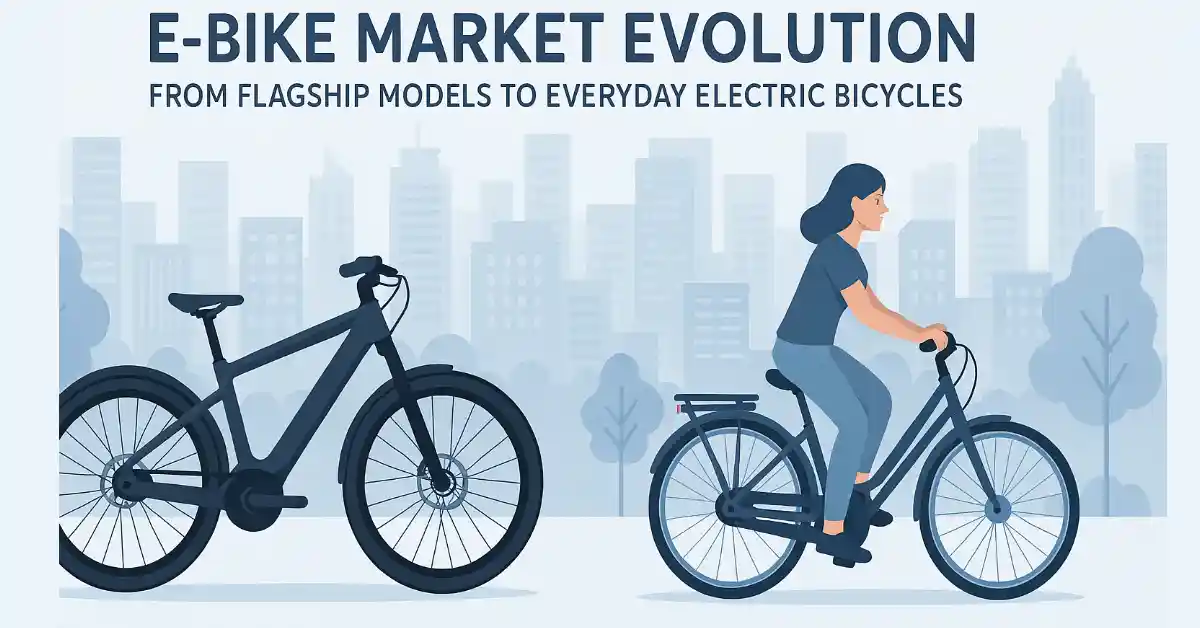
For much of its early development, the e-bike market was shaped by flagships. High-performance models, advanced features, and ambitious specifications defined how the category presented itself. These bikes weren’t just transportation—they were statements about what electric mobility could become.
Today, that shape is changing.
While flagship models still exist, they no longer define the center of the market. Instead, attention is shifting toward everyday e-bikes designed for routine use. This transition reflects a broader realignment in both demand and supply, signaling a market that is moving from aspiration to practicality.
How Flagship Models Once Set the Tone
In emerging markets, flagship products play an outsized role. They establish credibility, showcase technical capability, and help a category attract attention. In the early e-bike market, these models set expectations around speed, range, and innovation.
Buyers were often willing to accept trade-offs. Weight, complexity, and cost were tolerated in exchange for novelty and performance. Flagships acted as proof of concept, even if they weren’t the most common purchase.
That dynamic made sense when the market was still defining itself.
Why Everyday Models Are Now Gaining Ground
As adoption has expanded, the center of gravity has shifted. A growing share of buyers now approach e-bikes with specific, everyday needs in mind—commuting, short urban trips, errands, and predictable routes.
These use cases don’t demand extremes. Instead, they reward balance: manageable weight, comfortable geometry, intuitive assistance, and reliability over time. As a result, everyday models—once overshadowed by flagships—are becoming the dominant force in the market.
This doesn’t mean innovation has slowed. It means innovation is being redirected toward usability rather than spectacle.
What This Shift Says About Buyer Maturity
The move from flagship-led demand to everyday models is closely tied to buyer maturity. As consumers become more familiar with e-bikes, their priorities evolve.
Rather than asking what an e-bike can do at its limits, buyers are asking how it fits into daily routines. They want fewer surprises, less maintenance anxiety, and a riding experience that feels predictable.
This shift reflects confidence. Buyers know what they need, and they’re less swayed by headline features that don’t translate into everyday value.
The Role of Price and Value in a Reshaped Market
Flagship models often anchor the high end of pricing, setting a benchmark that can make the rest of the lineup feel more accessible. In a maturing market, however, value perception becomes more nuanced.
Everyday models are not necessarily “cheap.” Instead, they are evaluated based on how well price aligns with actual use. Buyers are increasingly comfortable bypassing top-tier options if mid-range models meet their needs more effectively.
This recalibration has also changed how people browse. For many consumers, casually exploring an ebike for sale online is less about chasing the best specification and more about identifying the right balance of features, price, and practicality.
How Product Lineups Are Being Rebalanced
On the supply side, manufacturers are adjusting product strategies accordingly. Instead of building entire lineups around halo products, many are expanding offerings that sit closer to the middle of the market.
This results in more models that look similar on paper but are tuned for slightly different everyday scenarios. Small differences in geometry, comfort, and usability matter more than dramatic jumps in performance.
The market is becoming flatter—not in ambition, but in relevance.
What Happens to Flagships in a Practical Market
Importantly, the rise of everyday models does not mean flagships are disappearing. Their role is simply changing.
Rather than driving volume, flagships increasingly serve as reference points. They demonstrate technical competence and help frame the brand’s capabilities, even if most buyers choose something more restrained.
In this way, flagships still influence the market—but they no longer define it.
Long-Term Implications for the Category
The shift toward everyday models suggests a market that is stabilizing. Growth may become steadier, but also more durable. Products designed around daily use tend to generate repeat purchases, stronger word of mouth, and more consistent demand.
For buyers, this evolution brings clarity. For the industry, it signals a transition from expansion through novelty to growth through relevance.
Conclusion
The changing shape of the e-bike market reflects a broader pattern seen in many maturing categories. What begins with flagships and experimentation eventually settles around everyday solutions.
As e-bikes move deeper into daily life, the models that matter most are no longer the most extreme, but the most appropriate. In that context, the rise of everyday e-bikes isn’t a retreat from innovation—it’s a sign that the market has learned what truly works.
And in mature markets, that understanding is what drives long-term confidence and growth.
FAQs
What is driving the shift from flagship to everyday e-bikes?
Buyers’ growing familiarity with e-bikes has shifted focus from high-performance flagships to practical models for commutes and errands. Priorities now include usability, reliability, and value, reducing emphasis on extremes and fostering market stability through relevant innovations.
How has buyer maturity influenced the e-bike market?
As consumers gain experience, they move beyond novelty, seeking e-bikes that integrate seamlessly into routines with fewer surprises and less maintenance. This maturity emphasizes predictable riding, balanced features, and value alignment, diminishing the sway of headline specs and elevating everyday models as the market core.
What role do flagship e-bikes play in today’s market?
Flagships no longer dominate but serve as reference points showcasing brand capabilities and technical prowess. They influence perceptions without driving most sales, as buyers opt for restrained, practical options. This evolution maintains innovation while flattening the market toward relevance and broader appeal.
How are manufacturers adapting to the changing e-bike market?
Manufacturers are rebalancing lineups, expanding mid-range offerings tuned for specific everyday scenarios like comfort and usability. Rather than centering on halo products, they focus on value perception, where small differences in geometry and reliability matter more, supporting steadier demand and growth.
What are the long-term implications of this e-bike market shift?
The emphasis on everyday models suggests stabilization, with durable growth from repeat purchases, positive word-of-mouth, and consistent demand. It brings clarity for buyers and relevance for the industry, transitioning from novelty-driven expansion to sustainable integration of e-bikes into daily life.