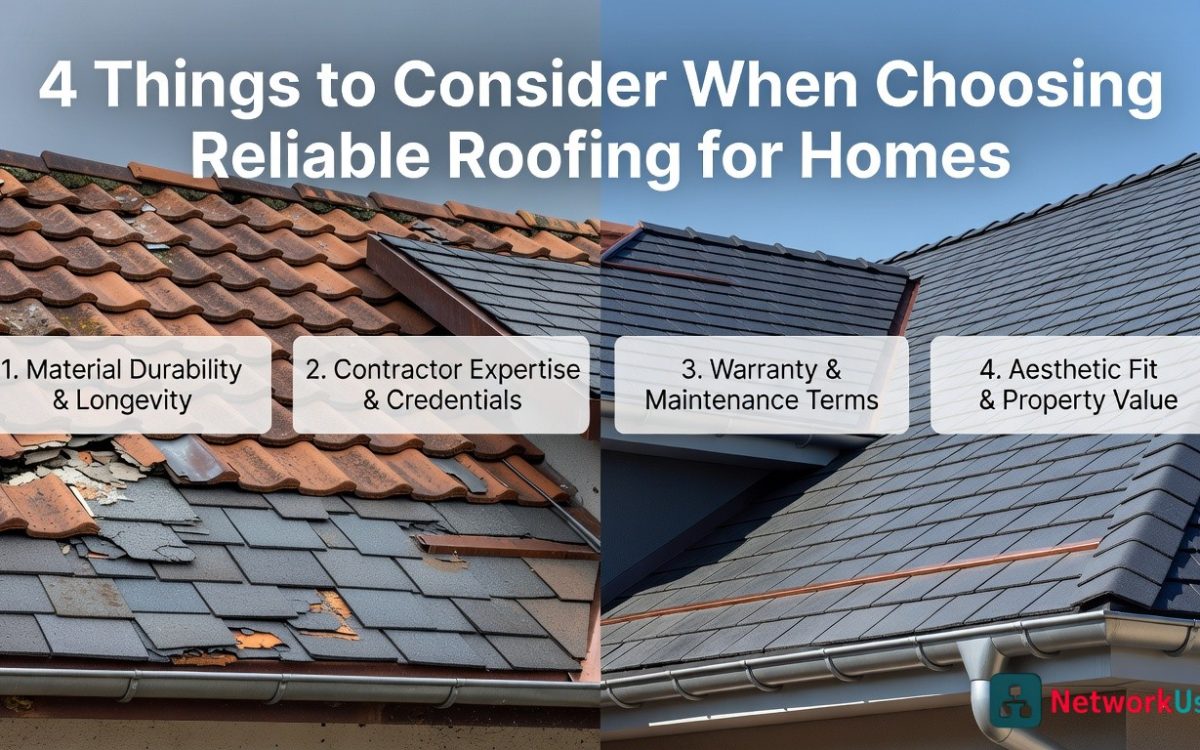
A roof is one of the most important parts of any home. It protects the structure from harsh weather, adds to the curb appeal, and holds a lot of value for property owners. The market has a wide range of roof materials, styles, and price points to choose from. Each option comes with its own set of benefits that match different home structures and climates. This article covers four key factors that help homeowners choose the best roof for their property.
1. Roof Material Options for Homes
The material of a roof plays a major role in how well it holds up over time. The most common metal roofing types available to homeowners are vertical seam panel roofing, stone-coated metal roofing, and painted profile shape. Steel is a popular choice due to its strength and lower cost. Aluminum works well in coastal areas because it resists salt and moisture with ease. Copper and zinc both offer a premium look and tend to last for many decades with little maintenance required.
2. Roof Design and Style Options
The design of a roof affects the overall appearance and function of a home. Several popular metal roof styles give homeowners a lot of room to match their home’s look and feel.
These are some of the most widely chosen metal roof styles today:
Standing seam panels feature raised seams that run vertically along the roof surface, giving a clean and modern appearance.
Corrugated panels have a wavy or ribbed pattern that adds texture and works well on both residential and agricultural structures.
Metal shingles mimic the look of traditional asphalt or wood shingles while delivering the strength of metal.
Stone coated steel combines a steel base with a stone granule surface for a classic aesthetic and added durability.
Each style brings a distinct look, and the right choice depends on the home’s architecture and the homeowner’s taste.
3. Cost and Installation Factors
The cost of a roof depends on the material, the roof’s size, and how complex the installation process is. Metal roofs tend to cost more upfront than asphalt, but they save money over time due to their long lifespan and low maintenance needs.
Here are a few key cost-related points to keep in mind:
Material choice affects price significantly, with copper and zinc on the higher end and steel on the more affordable side.
Roof size and slope directly impact how much labor and material a job will require.
Professional installation is essential to ensure the roof performs well and that warranties remain valid.
Long-term savings from reduced repair costs and electricity pricing offset the higher initial investment.
4. Energy Efficiency and Home Comfort
A roof does more than just protect a home from the elements; it also plays a big role in how much energy a household consumes. Metal roofs reflect solar heat rather than absorb it, which helps keep indoor temperatures stable during hot months.
Homeowners who prioritize efficiency often find that the metal roofing types available today come with cool-roof coatings that boost performance even further. Some metal roof systems also allow for proper ventilation, which adds to year-round comfort. An energy-efficient roof is a smart investment for both the environment and the monthly utility bill.
To choose the right, homeowners require careful thought about materials, durability, design, cost, and efficiency. Metal roofs deliver exceptional performance across all these areas, making them a solid choice for most homeowners. A roof built with quality materials and proper installation protects a home for decades. Working with a trusted roofing professional ensures the right system gets selected for each unique property. A well-chosen roof is an investment that pays off for years.