Many B2B companies slowly start feeling that their old way of handling support just doesn’t work anymore when the number of customers increases. Emails stack up, phone calls take longer, and teams spend most of their day answering the same basic questions instead of focusing on real issues. The actual volume starts to slow them down and work stays undone.
That’s when companies start investing in customer portal development, as a practical way to build a place where clients can log in, check information, manage requests, and handle simple tasks without waiting for someone to respond.
Enabling Seamless Self-Service Capabilities
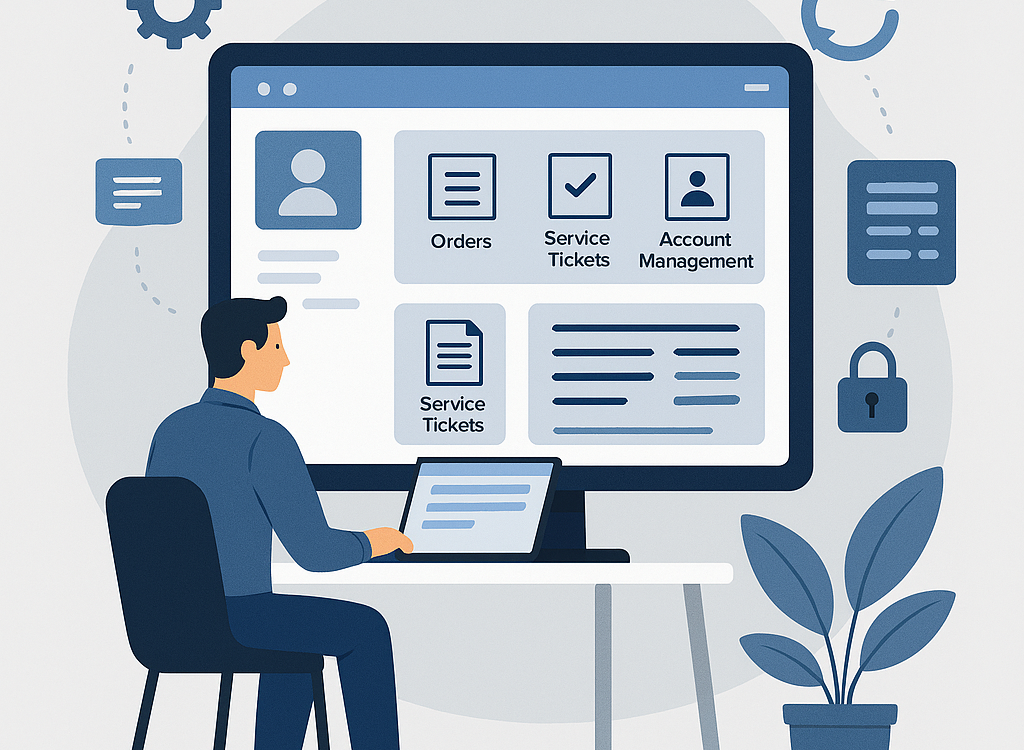
Inside a customer portal, users can see orders, download invoices, open service tickets, and follow progress without needing constant back and forth communication. Most routine actions don’t need support agent to be completed anymore.
Over time this changes how “Support” actually works, by allowing customers to get answers faster, and helping teams to no longer be overwhelmed by repetitive work, which allows more clients to be serviced without hiring more staff.
Improving Operational Efficiency
When everything runs through one system, internal work stops being messy. Requests are organized automatically, updates appear right away, and common problems are easier to solve using shared information.
Less manual handling means fewer small mistakes and less time wasted fixing them. Managers also start seeing where processes slow down and can improve things gradually instead of guessing.
Supporting Business Scalability
As demand increases, traditional service models usually start breaking under pressure. Response times grow longer and customers become frustrated.
Customer portals grow much more smoothly. Systems adjust as more users appear, and instead of slowing down, they keep working in the background without major issues. New features can be added when needed, without stopping daily operations.
Enhancing Customer Experience and Engagement
Good portals are simple and customers can find what they need quickly, track requests, and manage accounts without confusion. When everything feels easier and faster, people trust the service more, stay longer, and are more willing to keep using additional features over time.
Integrating with Core Business Systems
Most portals are connected with billing tools, CRM platforms, and internal databases so information stays updated everywhere – this avoids data mismatches, speeds up responses, and gives teams a clearer view of what is happening across customers and services.
Strengthening Security and Access Control
Since portals handle contracts, payments, and service history, security is an unconditional necessity.
Different access levels, login protections, and encryption help make sure only the right people see sensitive data, which builds confidence in the system.
Delivering Personalized User Experiences
Many portals adjust content depending on who is logged in – for example users see different information, tools, and workflows based on their role, which allows simplicity and personalizes the work to the users’ needs, instead having to search through large bases.
This saves time and makes the platform feel more useful instead of generic. A leading company Crunch, on the software development market, has perfected their engineering methods to provide accessible and personalized products to their clients, by implementing the recent advancements in technology and providing software that are tailored to every customer’s needs.
Measuring ROI and Long-Term Value
After portals are introduced, companies often notice fewer support requests, faster problem resolution, and happier customers.
Over time, these improvements reduce costs and increase retention, turning the portal into a long-term business asset.
Customer portals are not just about technology. They are about making daily work simpler, letting customers handle routine tasks themselves, and allowing businesses to grow without losing service quality.
When built around real usage, portals become one of the most practical digital investments a B2B company can make.