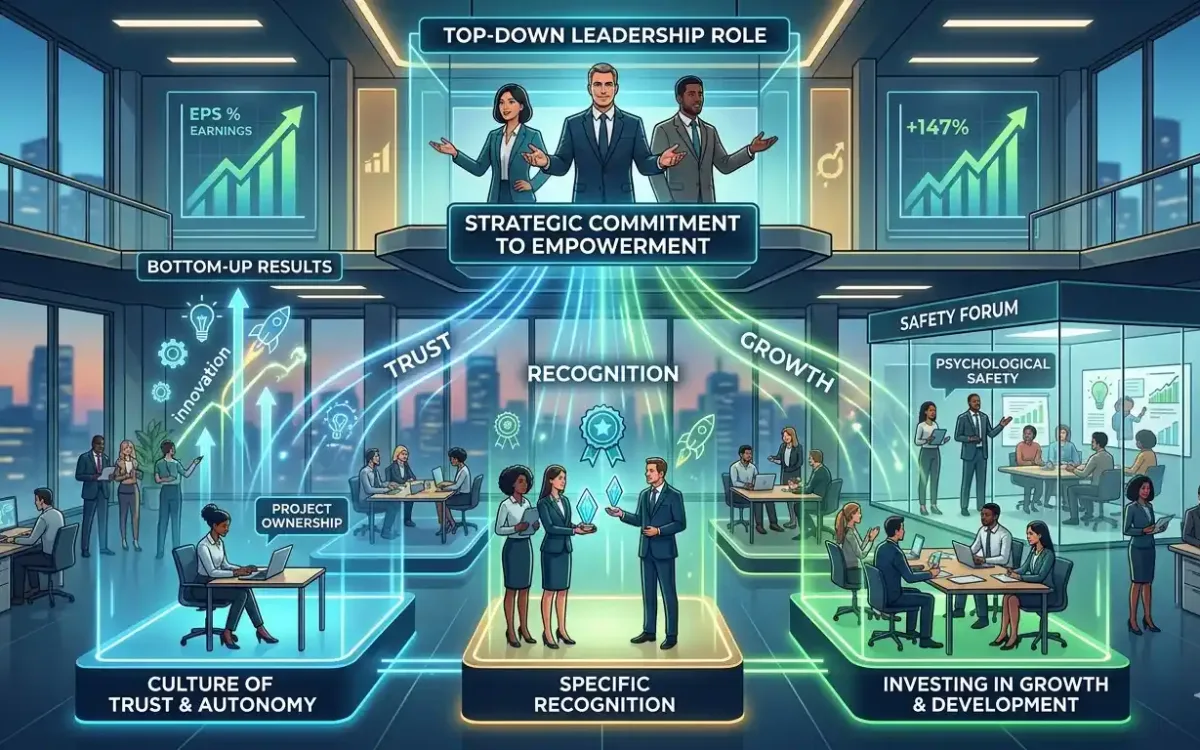
The difference between a company that merely functions and one that truly thrives often comes down to a single factor: how empowered its employees feel. Empowerment is not simply a buzzword tossed around in HR meetings — it is a measurable, actionable force that drives productivity, loyalty, and innovation. According to Gallup, companies with highly engaged employees outperform their competitors by 147% in earnings per share. That number alone should be enough to prompt every business leader to rethink how they show up for their teams.
Creating a Culture of Trust and Autonomy
Empowerment begins with trust. When managers micromanage every task, they send a clear message: we do not believe in your capabilities. This erodes confidence and initiative over time. Employees who are trusted to make decisions within their roles become more invested in outcomes because those outcomes feel personal to them.
Autonomy does not mean abandoning structure. It means giving employees ownership over how they accomplish their goals, not just what those goals are. Google famously allowed engineers to spend 20% of their time on passion projects, a policy that gave birth to Gmail and Google Maps. That kind of creative freedom signals genuine belief in employee potential.
Practical steps toward building autonomy include letting team members set their own work schedules where possible, involving them in decision-making processes, and reducing approval chains that slow down progress. When people feel trusted, they rise to meet that trust.
Recognition as a Driver of Performance
Recognition is one of the most underutilized tools in the leadership toolkit. Research from Deloitte found that organizations with strong recognition programs have 31% lower voluntary turnover than those without. People want to feel that their efforts matter, and when they do not, they start looking elsewhere.
Recognition does not always have to come in the form of salary increases, though fair compensation is foundational. It can look like public acknowledgment in a team meeting, a personal note from a senior leader, or a meaningful award that commemorates a milestone. Physical recognition, in particular, carries a staying power that digital messages cannot replicate. A “how can I incorporate company logos into crystal awards?” Google search will often lead HR professionals and managers down a rabbit hole of customization options, which points to just how seriously companies take tangible, personalized recognition. These are not trinkets — they are symbols of belonging and achievement that employees display with pride for years.
The key is consistency and specificity. Generic praise feels hollow. Telling someone their quarterly report helped secure a major client, or that their calm leadership during a crisis set the tone for the whole team, resonates far more deeply than a blanket “great job.”
Investing in Growth and Development
Employees who feel stagnant disengage. LinkedIn’s Workplace Learning Report found that 94% of employees would stay at a company longer if it invested in their career development. That is a staggering figure that should reframe how businesses think about training budgets.
Empowerment through growth means offering clear pathways for advancement, providing access to relevant training and mentorship, and encouraging employees to build skills that extend beyond their current role. When a company pays for a course, sponsors conference attendance, or pairs a junior employee with a senior mentor, it communicates that the individual’s future is worth investing in.
Internal mobility also matters. Many organizations hire externally for roles that could be filled by talented insiders. Prioritizing promotion from within not only retains institutional knowledge but reinforces the belief that hard work leads somewhere real.
Psychological Safety in the Workplace
No empowerment strategy works in an environment where people are afraid to speak up. Psychological safety — the belief that one can express ideas, concerns, or mistakes without fear of punishment — is the foundation on which all other empowerment efforts rest.
Amy Edmondson, a Harvard Business School professor, has spent decades studying this concept and found that teams with high psychological safety are more innovative, more productive, and better at catching errors before they escalate. Leaders create this environment by modeling vulnerability, responding to failure with curiosity rather than blame, and actively soliciting dissenting opinions.
Team meetings should feel like forums for honest dialogue, not performance stages where only polished ideas are welcome. When employees know that their voice carries weight, they contribute more freely — and that collective intelligence becomes one of the company’s greatest competitive advantages.
The Leadership Role in Empowerment
Empowerment is ultimately a top-down commitment with bottom-up results. Leaders set the tone for how much autonomy, recognition, and psychological safety are available to their teams. Middle managers, who interact with employees most directly, are especially critical. According to Gallup, managers account for at least 70% of the variance in employee engagement scores.
Investing in leadership development — training managers to coach rather than control, to recognize rather than overlook, and to listen rather than dictate — is not optional. It is the infrastructure through which every other empowerment initiative flows.
When employees are truly empowered, they do not just show up — they show up fully, bringing creativity, commitment, and their best work to every challenge the organization faces.