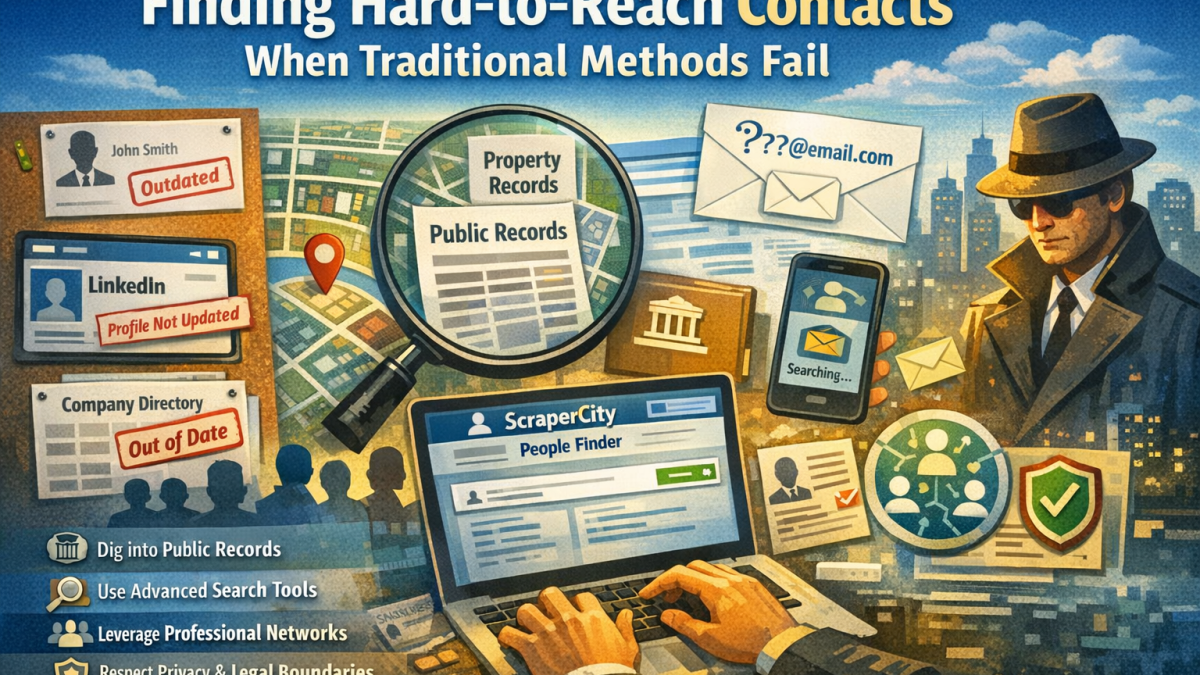
Every professional has faced this frustrating scenario: you need to reach someone urgently, but traditional contact methods lead nowhere. The business card is outdated, the LinkedIn profile lacks current information, the company directory is hopelessly behind, and your usual networking channels come up empty. Whether you’re trying to reconnect with a former colleague, reach a potential client, contact a property owner, or locate someone for legitimate business purposes, the challenge of finding hard-to-reach contacts is a common obstacle that can cost valuable time and opportunities.
This guide explores practical strategies for locating those elusive contacts when standard approaches fail, drawing on both traditional investigative techniques and modern digital resources to help you connect with the people who matter to your business success.
Understanding Why Contacts Become Hard to Find
Before diving into solutions, it’s worth understanding why contact information becomes inaccessible in the first place. People change jobs more frequently than ever before, with the average professional switching positions every four years. Company acquisitions and reorganizations shuffle personnel into new roles with different contact details. Remote work has eliminated many traditional office phone numbers, replacing them with mobile devices that aren’t publicly listed.
Privacy concerns have also made individuals more cautious about sharing contact information online. Social media profiles become locked down, email addresses get buried behind contact forms, and personal phone numbers are guarded zealously. Add to this the proliferation of spam and unsolicited marketing, and you have a landscape where legitimate business connections become increasingly difficult to establish.
The challenge intensifies when dealing with specific scenarios: property owners who use LLCs or trusts to hold real estate, executives shielded by multiple layers of administrative staff, entrepreneurs who’ve moved between several ventures, or professionals who maintain deliberately low digital footprints for competitive reasons.
Starting with the Foundation: Information You Already Have
The most effective contact searches begin by thoroughly cataloging what you already know. Even seemingly incomplete information can serve as a starting point for your investigation. A partial phone number, an old email address, a previous employer, a general location, or a professional association membership all provide potential leads.
Create a document listing every piece of information you possess about the contact, no matter how outdated or insignificant it seems. Include full names and any variations you’ve seen, previous employers and job titles, cities or regions where they’ve lived or worked, educational institutions attended, professional certifications held, and any mutual connections you share. This comprehensive inventory often reveals patterns or connections you might otherwise overlook.
Pay particular attention to unique identifiers that distinguish your contact from others with similar names. Middle names, professional credentials, specialized expertise areas, or unusual career trajectories can help you filter search results and avoid wasting time pursuing the wrong person.
Leveraging Professional Networks and Databases
LinkedIn remains an invaluable resource for professional contact searches, but using it effectively requires strategy beyond simple name searches. Look for company alumni groups, industry associations, and professional communities where your contact might participate. Check the connections of mutual colleagues who might provide introductions or updated information.
Professional licensing databases offer another avenue, particularly for regulated professions. Attorneys, real estate agents, medical professionals, contractors, financial advisors, and numerous other professionals must maintain current contact information with licensing boards. These publicly accessible databases often include addresses, phone numbers, and email contacts that aren’t available elsewhere.
Industry-specific directories and association memberships provide similar opportunities. Trade organizations, professional societies, and industry groups maintain member directories that can offer current contact details or at least confirm that someone is still active in their field.
Public Records and Digital Footprints
Public records contain surprisingly comprehensive contact information, though accessing and interpreting them requires patience and methodical searching. Property records, voter registrations, business filings, court documents, and professional licenses all create trails that can lead to current contact information.
County assessor websites allow you to search property ownership records, which often include mailing addresses for tax purposes. Even if your contact no longer lives at a particular property, ownership records can provide leads. Business entity filings with state agencies reveal registered agents and business addresses for entrepreneurs and company principals.
Court records, while sensitive, are often matters of public record and may contain contact information submitted in legal proceedings. Civil cases, property disputes, divorce filings, and business litigation all generate documents that might include addresses and phone numbers.
Digital footprints extend beyond social media to include blog comments, forum posts, podcast appearances, webinar registrations, conference speaker listings, published articles, patent filings, and any other online activity that might reveal contact information or current affiliations.
Modern Tools for Contact Discovery
Traditional research methods remain valuable, but specialized tools have emerged to streamline contact discovery for legitimate business purposes. These platforms aggregate information from multiple sources and present it in accessible formats, dramatically reducing the time required for thorough contact searches.
For comprehensive contact research, ScraperCity offers a People Finder tool that locates contact details and addresses from names, phone numbers, or partial information. Real estate investors use such platforms to identify property owners, while sales professionals rely on them to enrich lead information with direct contact details. The ability to start with limited information and receive comprehensive results makes these tools particularly valuable when traditional methods prove insufficient.
The key to using any research tool effectively is understanding both its capabilities and limitations. Most platforms work best when you provide multiple data points rather than relying on a single piece of information. Cross-referencing results against other sources helps verify accuracy and ensures you’re contacting the correct individual.
Email Discovery and Verification Strategies
Email addresses present unique challenges because they’re easier to change than physical addresses and aren’t centrally registered. However, several strategies can help you locate valid email addresses even when direct listings aren’t available.
Understanding common email patterns used by organizations provides a starting point. Most companies follow predictable formats: firstname.lastname@company.com, firstinitial.lastname@company.com, or variations thereof. Once you identify the pattern through known employee emails, you can construct likely addresses for other personnel.
Email permutators generate possible combinations based on names and domains, but verification is essential before sending important messages. Invalid emails can trigger spam filters and damage your sender reputation. When you need to verify email addresses or find additional contact details, using verification tools before sending helps ensure your messages reach their intended recipients while protecting your professional reputation.
Generic email addresses like info@, contact@, or hello@ can serve as entry points when direct contacts prove elusive. While these addresses reach general inboxes rather than specific individuals, a well-crafted message may be forwarded to the appropriate person or generate a response with correct contact information.
Phone Number Research Techniques
Phone numbers have become increasingly difficult to research as mobile devices replace landlines and individuals exercise greater control over number privacy. However, several approaches can yield results when you need to locate current phone numbers.
Reverse phone lookups allow you to verify number ownership and gather additional context about unknown numbers. These services can identify whether a number belongs to a mobile carrier or landline, its general location, and sometimes the registered owner. This information helps you decide whether to pursue a particular number or search for alternatives.
Business phone numbers remain easier to locate than personal numbers, particularly for companies with public-facing operations. Company websites, Google My Business listings, professional profiles, and directory services often include direct office lines that can serve as initial contact points.
For mobile numbers, social media profiles sometimes include contact options even when full phone numbers aren’t displayed publicly. WhatsApp, Signal, and similar messaging platforms allow you to find contacts if you have their phone number, which can confirm whether a number belongs to the person you’re seeking.
Ethical Considerations and Legal Boundaries
The ability to locate contact information carries significant ethical responsibilities. Just because information can be found doesn’t mean every use is appropriate or legal. Understanding boundaries protects both you and the individuals you’re researching.
Legitimate business purposes include reconnecting with professional contacts, verifying information for transactions, conducting due diligence, reaching property owners for real estate purposes, and other activities with clear business justifications. Personal curiosity, surveillance, harassment, or stalking are never acceptable reasons to search for someone’s contact information.
Privacy regulations like GDPR in Europe and various state laws in the United States impose restrictions on how contact information can be collected, stored, and used. Familiarize yourself with applicable regulations before conducting extensive contact research, particularly if your business operates across jurisdictions.
When you successfully locate someone’s contact information, respect their communication preferences. If someone declines contact or requests removal from your outreach list, honor that request immediately. Professional reputation depends on treating contacts with respect and maintaining ethical standards even when no legal requirements exist.
Building Systems for Future Contact Management
The best solution to hard-to-find contacts is preventing the problem in the first place. Building robust contact management systems reduces the frequency of difficult searches and preserves valuable relationship information.
Implement a centralized contact database that captures multiple data points for each individual: current employer and title, work email and phone, personal email if appropriate, LinkedIn profile URL, physical business address, mutual connections, interaction history, and any notes about communication preferences or topics of mutual interest. Update this information regularly rather than waiting until you need to reach someone urgently.
Tag contacts with relevant categories that reflect how you know them and why they matter to your business. Real estate investors might tag property owners by location and property type. Sales professionals might categorize prospects by industry, company size, or buying cycle stage. These tags make it easier to maintain relationships proactively rather than reactive searching when needs arise.
Schedule regular contact maintenance activities. Quarterly reviews of your contact database can identify outdated information before it becomes completely stale. Simple check-ins with important contacts serve both relationship-building purposes and information verification functions.
When to Seek Professional Assistance
Some contact searches exceed the practical limits of personal research efforts. Complex cases involving privacy protections, international jurisdictions, deliberately obscured identities, or legal complications may require professional investigators or skip tracing specialists.
Private investigators bring specialized tools, databases, and expertise that aren’t available to general business users. They understand legal boundaries and can navigate sensitive situations while maintaining appropriate documentation. The cost of professional services is often justified by the time saved and the higher success rates for difficult cases.
Skip tracing services specialize in locating individuals who’ve intentionally become difficult to find. These services are commonly used in debt collection, legal proceedings, and family law matters where standard research methods prove insufficient.
Before engaging professional services, clearly define your needs and verify that your purpose meets ethical and legal standards. Reputable investigators will decline cases that don’t meet appropriate criteria, protecting both their licenses and your interests.
Practical Tips for Improving Success Rates
Successful contact searches combine persistence with strategic thinking. Start with the easiest, most obvious sources before moving to more complex research methods. Google searches remain surprisingly effective, particularly when you use advanced search operators to filter results.
Time your searches strategically. People update LinkedIn profiles after job changes, register new businesses after launching ventures, and purchase property that generates public records. Recent life events create fresh information trails worth investigating.
Cross-reference information across multiple sources to verify accuracy. A single outdated database entry can send you pursuing false leads, but consistent information across several sources increases confidence that you’ve found correct contact details.
Document your search process, particularly for important contacts. Recording which sources you’ve checked, what information you’ve found, and which leads proved unsuccessful saves time if you need to resume searching later and helps identify patterns that might guide future efforts.
Consider indirect approaches when direct contact information remains elusive. Colleagues, assistants, mutual connections, or company switchboard operators might provide introductions or forward messages even when you can’t locate direct contact details.
Maintaining Long-Term Contact Intelligence
Contact discovery isn’t a one-time activity but rather an ongoing process of gathering, maintaining, and updating relationship information. The most successful professionals treat contact intelligence as a strategic asset worthy of consistent investment.
Monitor important contacts for changes and updates. Set up Google Alerts for key individuals, follow their social media activity, track their companies’ news and announcements, and maintain awareness of industry developments that might affect their situations. Proactive monitoring often reveals contact changes before you need to reach someone urgently.
Create systems that capture contact information during every interaction. When someone shares a new email address or phone number in casual conversation, update your records immediately rather than trusting memory. When you learn about job changes, company moves, or other developments, document them promptly.
Share contact intelligence appropriately within your organization. Sales teams benefit when multiple members maintain accurate contact information for accounts. Real estate investors coordinate better when everyone has access to property owner details. Centralized, well-maintained contact databases serve entire organizations rather than fragmented individual records.
Moving Forward with Confidence
Locating hard-to-find contacts requires patience, resourcefulness, and ethical judgment. While the process can be time-consuming and occasionally frustrating, systematic approaches combined with appropriate tools dramatically improve success rates while maintaining professional standards.
Remember that contact discovery serves relationship building rather than replacing it. Once you’ve located someone’s information, your approach, message, and value proposition determine whether that contact becomes a meaningful professional relationship. Invest as much care in what you say as you do in finding whom to say it to.
The techniques and resources outlined in this guide provide a foundation for effective contact research regardless of your industry or specific needs. Adapt these strategies to your situation, respect privacy and legal boundaries, and maintain the high ethical standards that sustain long-term professional success. With the right combination of traditional research skills and modern tools, even the most elusive contacts become reachable for legitimate business purposes.