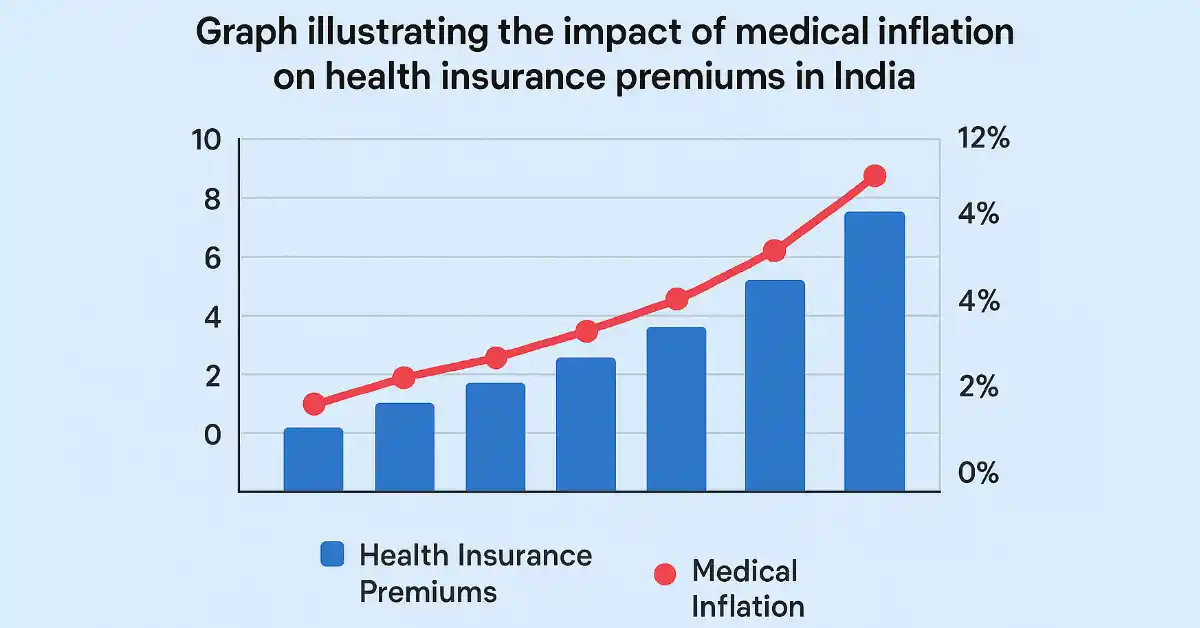
Healthcare in India is getting costlier with every passing year, and most families are feeling the pressure. From doctor visits to hospital bills, everything seems to cost more than it did a few years ago.
This constant growth of expenditure is what is known as medical inflation, and it has an effect on not only your treatment costs but also the premium you pay for health insurance. Thus, understanding it will help one to plan better and avoid sudden financial stress.
Let’s break this down in a simple way in order to understand better!
What is Medical Inflation?
Medical inflation refers to the rising healthcare costs in India over time. It includes everything, from doctors’ fees and medicines to diagnostic tests, hospitalisation charges, and even new treatments or procedures. These expenses continue to increase at a rate faster than the prices of most other goods and services, so people end up paying more for the same medical care.
This rise has been quite sharp in India; in fact, medical inflation even touched around 14% in 2021, which was higher compared to some other major countries. With the growing cost of supplies, equipment, and advanced treatments, hospitals and clinics have to charge more. Consequently, overall healthcare becomes more expensive for individuals, families, and insurance companies.
Put simply, medical inflation shows how expensive healthcare is becoming each year and why we need to plan for it.
Impact of Medical Inflation on the Health Insurance Premiums
Here is a detailed overview of the medical cost inflation impact on health insurance premiums:
- Higher Payouts Mean Higher Premiums
Insurers experience increased financial strain as healthcare costs rise. They have to settle larger claims, and they cannot absorb these costs indefinitely. So, premiums go up to balance out the higher compensation they must pay.
- Changes in Premium Based on Age
Health insurance premiums remain stable within a given age group, but upon migrating into a higher age bracket, the premium often jumps. At times, this may rise by as high as 50%. This is because health risks increase with age, which, further accentuated by medical inflation, increases the risk of frequent claims.
- More Impact on Seniors and People With Pre-existing Conditions
As older people and those who have pre-existing conditions are likely to require more frequent and costlier medical attention, insurers charge accordingly, raising their premiums. Additionally, with rising medical costs, the claim amounts for these two groups also increase, which increases the insurer’s risk.
As a result, seniors and people with pre-existing conditions may end up paying more than their younger, relatively healthier counterparts. In this case, one can also look out for senior citizen health insurance options, depending on the insured needs and requirements.
What are the Causes of Medical Inflation in India?
Medical inflation keeps growing due to many factors that push the costs of healthcare up year by year. Some of these changes are needed for better treatment, but they also make care more expensive for everyone.
Check them out in detail below:
- Advancements in Medical Technology
New technology has made treatments quicker, safer and more accurate. However, this advancement has not come at a low cost. Developing complex machines from scratch, acquiring imported equipment, and training specialists are highly cost-intensive.
That is why treatments of cancer, heart diseases, and some other serious conditions are costly, as they often depend on such technologies. So, while technology improves care, it also raises costs for hospitals and patients.
- Higher Treatment Cost Per Person
The cost of treating just one patient has increased over time. That includes:
- Medical supplies
- Salaries for doctors and hospital staff
- Diagnostic tests
- Other fundamental elements of treatment
As these individual costs rise, the final bill is higher. Therefore, the per-person cost contributes to medical inflation.
- Increasing Demand for Healthcare Services
People are now looking for higher-quality, more specialised care and treatment. Additionally, as more individuals are willing to pay for higher-quality treatment, healthcare providers raise their prices. Since the demand is relatively constant, costs hardly decrease.
- Rising Pharmaceutical Costs
Medications have become more expensive due to the increasing cost of research, prolonged approval processes, patenting, and increased production expenses. Newer drugs for chronic or complex diseases are even costlier, and this cost is factored into overall treatment charges in hospitals.
- Increasing Raw Material and Import Costs
The raw materials required for medicines and medical equipment have become costlier. Add to that higher import duties, freight charges, storage costs, and emergency supply expenses. All of these extra layers push up healthcare prices.
How to Tackle the Impact of Medical Inflation in India?
You cannot avoid medical inflation, but you can reduce how much it affects health insurance costs. Small, smart steps make a big difference over time. They are:
- Buy Health Insurance Early
Getting health insurance early means you lock in lower premiums. Because risks are lower when you’re younger, insurers charge less. So, you end up paying a manageable amount every year while staying protected against the rise in medical costs. It’s good for your finances and your peace of mind.
- Select Policies That Have a No-Claim Bonus
Many health insurance plans give a No-Claim Bonus if you don’t claim during the year. It would increase your coverage or reduce your premium. And the best part is it keeps growing every claim-free year. Hence, it helps balance the impact of medical inflation while providing you with extra protection.
- Choosing the Right Policy
Not every plan suits every person. You must compare the various types of health insurance plans, check their coverage, and see if the premium makes sense for your needs. The right plan gives you value for money and cushions the rising costs of healthcare.
So, spend a little time understanding what you’re signing up for.
- Choose Higher Deductibles If You Can
A deductible is the amount that you pay from your pocket before your insurer steps in. A higher deductible usually brings down the premium. But make sure you can afford that amount during a claim; otherwise, it may be stressful when you need the coverage.
Medical inflation is rising in India, making healthcare and health insurance more expensive each year. As treatment, technology, and medicine costs go up, insurers raise premiums to manage higher claim payouts.
Buying insurance early, choosing the right plan, and using benefits like no-claim bonuses can help protect you from the growing financial impact.
FAQs
What is medical inflation and why is it rising in India?
Medical inflation is the ongoing increase in healthcare costs, including fees for doctors, medicines, tests, and hospital stays. In India, it hit 14% in 2021, driven by advanced tech like imported equipment, higher staff salaries, rising pharma research costs, increased demand for specialized care, and elevated raw material imports. This outpaces general inflation, making treatments pricier yearly.
How does medical inflation affect health insurance premiums?
As healthcare costs soar, insurers face larger claim payouts, leading to premium hikes to offset expenses. Premiums jump up to 50% when entering older age brackets due to higher risks. Seniors and those with pre-existing conditions pay more, as they often need costlier, frequent care, amplifying the insurer’s financial strain amid inflation.
What causes medical inflation in India?
Key drivers include medical tech advancements requiring expensive equipment and training, per-person treatment costs from supplies and diagnostics, growing demand for premium specialized services, escalating pharmaceutical prices due to patents and production, and rising raw materials with import duties, freight, and storage adding layers of expense.
How can I mitigate the impact of medical inflation on my health insurance?
Buy insurance early to secure lower premiums before age-related jumps. Opt for plans with no-claim bonuses that boost coverage or cut costs yearly. Compare policies for best value and coverage suited to needs. Choose higher deductibles if affordable to reduce premiums, cushioning against rising healthcare expenses over time.
Disclaimer: This article provides general information on medical inflation and health insurance trends in India for educational purposes only. It is not intended as financial, medical, or insurance advice. Premiums and policies vary by provider and individual circumstances. Always consult a licensed insurance advisor or financial expert for personalized recommendations before making decisions. The content is based on available data as of the article’s publication and may change.