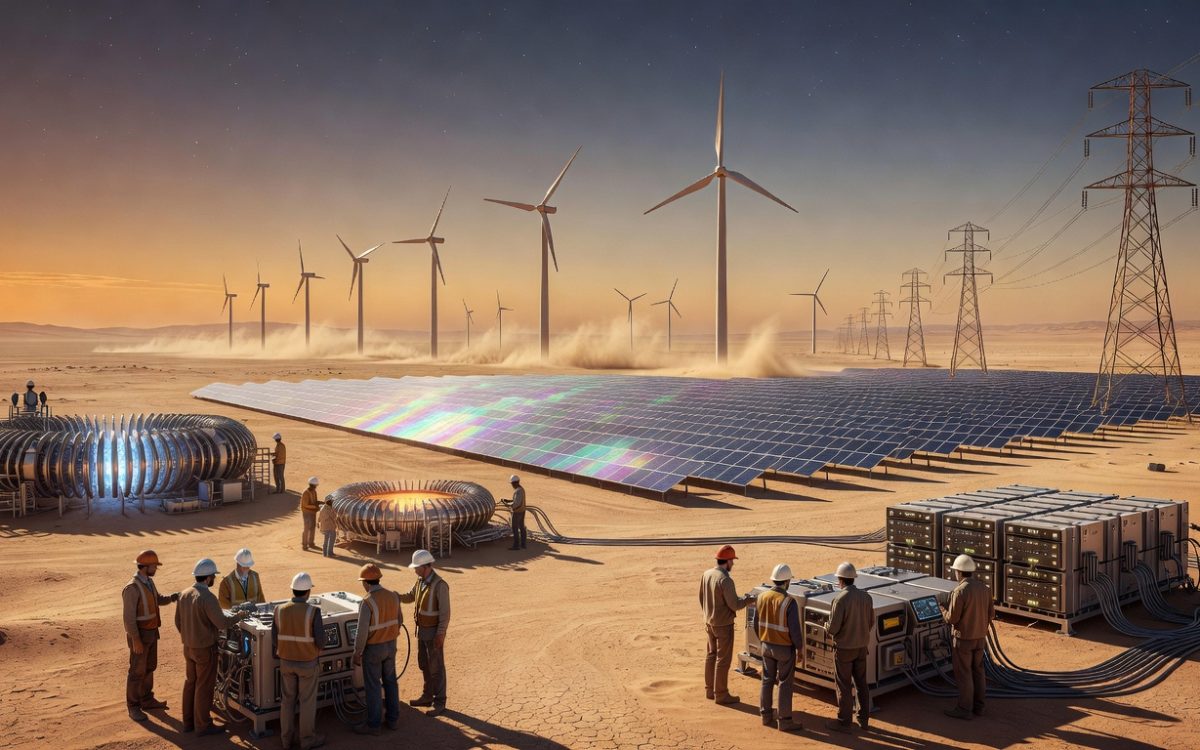
By 2035, the global power grid faces an unprecedented scramble as fusion energy prototypes near commercialization, advanced nuclear fission reactors gain regulatory nods, and renewable sources like solar and wind scale massively—yet no single technology holds a decisive lead.
This race, intensifying since the 2020s energy transition push, pits innovative clean options against reliable incumbents, with investments topping $2 trillion annually worldwide. Experts warn that grid reliability hinges on which powers prevail, especially amid rising demand from electric vehicles and AI data centers.
Background: From Coal Dominance to a Fragmented Future
The electric grid evolved from coal-fired plants in the early 20th century to a diversified mix by 2026. Renewables now supply over 30% of U.S. electricity, per the Energy Information Administration (EIA), up from 20% a decade ago.
However, intermittent sources like wind and solar require backups, fueling debates on baseload power. Climate goals under the Paris Agreement demand near-zero emissions by mid-century, accelerating the shift. “The grid of 2035 will look nothing like today’s,” says Dr. Elena Vasquez, senior analyst at the International Energy Agency (IEA). “It’s a wide-open contest driven by policy, tech breakthroughs, and market forces.”
Key Drivers of the Race
- Rising energy demand: Global consumption projected to grow 50% by 2050, per IEA reports.
- Geopolitical tensions: Supply chain disruptions for rare earths in batteries and panels.
- Technological leaps: AI-optimized grids and modular reactors shortening deployment times.
The Nuclear Contenders: Fusion and Fission Lead the Charge
Nuclear power, long sidelined by safety concerns post-Fukushima, is staging a comeback. Small modular reactors (SMRs) from companies like NuScale Power promise safer, cheaper fission by 2030, with the first U.S. units online by 2029.
Fusion, the holy grail of unlimited clean energy, edges closer. Commonwealth Fusion Systems aims for a net-positive prototype by 2028, potentially scaling to grid levels by 2035. “Fusion could disrupt everything if it delivers,” notes MIT physicist Dr. Raj Patel. “But fission’s proven track record gives it an edge in the near term.”
Challenges persist: Regulatory hurdles delay fission projects, while fusion’s high costs—estimated at $20 billion per plant—deter investors. Still, governments pledge support; the U.S. Department of Energy allocated $6 billion for advanced nuclear in 2025.
Renewables and Storage: Scaling to Meet Demand
Solar and wind capacities exploded in the 2020s, with costs plummeting 80% since 2010. By 2035, renewables could power 60% of the grid in Europe, according to BloombergNEF forecasts.
Battery storage innovations, like solid-state tech from QuantumScape, address intermittency. “Pairing renewables with gigafactory-scale batteries will make the grid resilient,” says Sarah Lin, VP at Tesla Energy. Yet, land use and supply chain vulnerabilities, including China’s dominance in solar panels, pose risks.
Hydrogen emerges as a bridge fuel, with electrolyzers converting excess renewable power into storable energy. Projects in Australia and Germany target 10% grid integration by 2035.
Fossil Fuels’ Role: Natural Gas as the Bridge
Despite green pledges, natural gas lingers as a transitional fuel. It provides 40% of U.S. power in 2026 and could hold 20-30% by 2035, per EIA projections, thanks to fracking efficiencies.
Carbon capture tech, like ExxonMobil’s initiatives, aims to make gas “cleaner.” But environmentalists decry methane leaks. “Gas buys time, but we can’t afford delays,” warns Greenpeace energy director Tom Reilly.
Impact and What’s Next: A Grid in Flux
The 2035 grid’s makeup will shape economies and climates. A nuclear-heavy future promises stable prices but raises waste concerns; renewables dominance could slash emissions yet strain resources.
Policy will tip the scales—expect subsidies for fusion under Biden-era extensions and international pacts at COP31. Investors eye hybrids: grids blending sources for resilience.
Ultimately, the race stays wide open. As demand surges, the winner must balance affordability, sustainability, and security. By 2035, what powers the grid could redefine global energy.
{ “rewritten_title”: “Fusion, Fission, Renewables Vie for 2035 Grid Dominance”, “rewritten_excerpt”: “No clear frontrunner emerges in the battle to supply the 2035 power grid, with nuclear fusion prototypes, advanced fission reactors, and surging renewables all in contention amid rising global demand.”, “meta_title”: “What Powers the 2035 Grid? Fusion vs Renewables Race”, “meta_description”: “The 2035 power grid race pits fusion, fission, and renewables against each other. Experts highlight implications for energy security and climate goals in this open competition.”, “focus_keyword”: “power grid 2035”, “categories”: [“Technology”, “Business”], “tags”: [“renewable energy”, “nuclear fusion”, “energy transition”, “grid modernization”, “fossil fuels”], “reading_time”: “4 min read”, “image_alt_text”: “Illustration of competing energy sources for the power grid in 2035 including fusion reactors and solar panels”, “image_title”: “2035 Power Grid Race”, “image_caption”: “Various technologies compete to dominate the future electric grid by 2035.”, “image_description”: “This image depicts a futuristic power grid with icons representing nuclear fusion, fission reactors, wind turbines, solar arrays, and natural gas plants, symbolizing the intense competition to supply energy needs by 2035. It highlights the uncertainty and innovation in the energy sector.”, “social_title”: “Will Fusion Win the 2035 Grid Race? The Stakes Are High”, “social_description”: “Fusion, nuclear