Home insurance, often referred to as homeowner’s insurance, is a vital safety net that protects your abode from myriad perils. It safeguards not only your dwelling and personal belongings nestled within its confines but shields you from potential financial upheaval brought on by unexpected incidents.
Such concerns like property damage due to natural disasters, theft of personal items, or even lawsuits from injuries sustained on your property are mitigated under the umbrella of home insurance. Yet home insurance isn’t a one-size-fits-all product.
Instead, it comes with an array of policy options designed to provide coverage tailored to individual needs and circumstances. Each plan is woven with intricate details specifying what is covered and what lies outside its protective reach.
Consequently, understanding these nuances can be nothing short of critical for homeowners to make informed decisions about their coverage. Despite seeming complex in structure, the fundamental principle that underlies home insurance is fairly straightforward: it’s designed as a financial buffer against unexpected damage or loss, offering reassurance in tumultuous times where the stability of your residence may be compromised.
The Impenetrable Shield or Gaping Loophole: Understanding Your Coverage
The comprehensive nature of a standard home insurance policy might lend assurance that every nook and cranny within your domicile falls into its realm of protection. However, this assumption could potentially lead homeowners into costly pitfalls.
In truth, your coverage has boundaries defined within the fine print of your policy documentation – conditions under which claims can be denied, An arduous exploration into this labyrinthine literature might yield surprising discoveries about what constitutes an insurable peril – occurrences against which you’re safeguarded – and exclusions – events for which you’re left uncovered.
Savvy homeowners will familiarize themselves with these elements, preparing for discourse with their insurer about potential gaps in their coverage and possibilities of additional endorsements necessary to plug these holes. An understanding of your policy is the stepping stone that bridges the gap between misconceived assumptions and the true breadth of your coverage.
The Unasked Question: Septic Tank Damage and Home Insurance
When examining their home insurance policies, homeowners often overlook certain components of their property. One such frequently-disregarded feature is the humble septic tank. Integral to any home not connected to a municipal sewer system, it quietly serves its purpose out of sight and consequently, often out of mind.
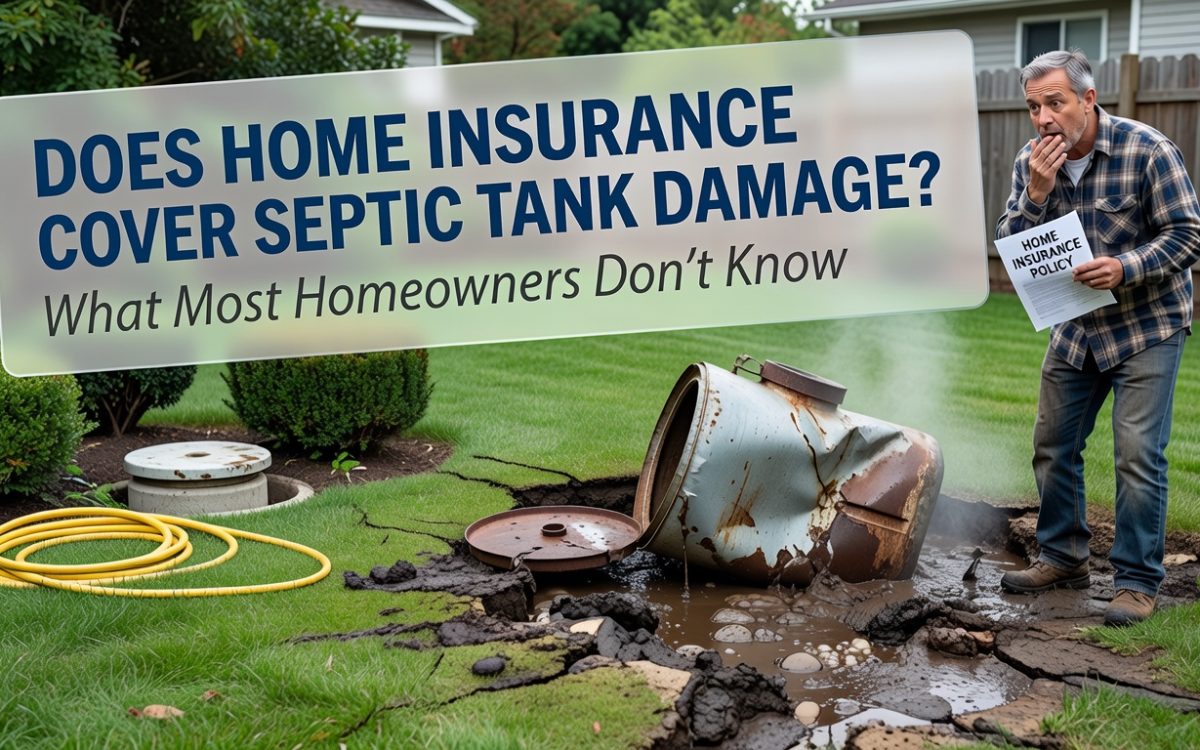
However, when damage occurs to these essential structures due to unforeseen circumstances or accidents, homeowners can face significant repair or replacement costs. Confronted with such an unanticipated expenditure, one might wonder – Does home insurance cover septic tank damage?
It’s a question that demands focused attention as the answer isn’t simply black or white; instead it resides in varying shades of gray contingent on specific policy details. So let us delve into this intriguing issue further, unraveling misconceptions while shedding light on the intricate interplay between home insurance and septic tank damage.
Understanding Home Insurance Policies
A Comprehensive Guide to Standard Home Insurance Policies
In the milieu of homeownership, insurance plays an integral role in providing a safety net against unforeseen circumstances. A standard home insurance policy typically embodies four primary components: Dwelling coverage, Personal property coverage, Liability protection, and Additional living expenses (ALE). Dwelling coverage, or Coverage A as it’s often termed, is the bedrock of any home insurance policy.
It indemnifies the homeowner for damages to the physical structure of their home caused by a covered peril. This includes integral parts such as walls, roofs and built-in appliances.
Personal property coverage—often labeled Coverage C—serves to shoulder financial burdens when personal belongings inside or outside your domicile are damaged, stolen or destroyed by a covered peril. From electronics and furniture to clothing and even certain types of jewelry, this segment offers broad protection for your possessions.
Liability Protection and Additional Living Expenses: Your Safety Nets
Liability protection provides fortification against lawsuits for bodily injury or property damage that policyholders or family members cause to other people. It also pays for damage caused by pets. For instance, if your dog bites your neighbor’s hand causing significant injury requiring medical treatment; this portion of your policy could cover you.
Additional Living Expenses (ALE), alternatively known as loss-of-use covers the supplementary costs borne out due to uninhabitable living conditions following a disaster insured against under your policy. This can encompass hotel bills, restaurant meals and other expenses over and above customary living expenses incurred while your home is being rebuilt.
Deciphering Named Perils & Open Perils
An essential facet in understanding home insurance pertains to deciphering two fundamental concepts: “named perils” versus “open perils”. In named perils policies only damages resulting from specific causes listed in the policy are covered.
These usually include fire, lightning, windstorm and others expressly outlined in your policy. On the contrary, open perils policies offer a broader spectrum of coverages.
Essentially, if a cause of damage isn’t specifically excluded in the policy language, it’s covered. This type of policy offers more comprehensive protection but generally comes at a higher premium.
Typical Exclusions: Know What’s Not Covered
While home insurance policies provide extensive coverage for numerous scenarios, there exist certain exclusions that homeowners should be cognizant about. Common exclusions typically encompass damages from floods and earthquakes as these require separate coverages.
Furthermore, standard policies also typically delineate that they won’t cover losses resulting from neglect or failure to perform necessary maintenance on property. It’s crucial for homeowners to familiarize themselves with these exclusions to avoid any unexpected out-of-pocket expenses when disaster strikes.
The Intricate World of Septic Systems
What is a Septic Tank?
A septic tank is an integral part of the onsite sewage facility, more commonly known as a septic system. Acting as a personal mini sewer treatment facility, it’s recurrently used in areas with no connection to main sewage pipes provided by local governments or private corporations. The primary function of these tanks is to separate waste water from solid waste, commence the breakdown of organic matter through bacterial activity and provide for the safe disposal of wastewater.
The septic tank processes domestic wastewater and enables its eventual absorption into the ground through an elaborate system. Underneath its simple exterior lies a complex mechanism designed to handle waste efficiently while protecting the environment from potential contamination.
A Journey Through Time: The Evolution and Usage Statistics
Septic systems have been around for over 130 years, providing off-grid sanitation solutions long before city sewer systems became ubiquitous globally. John Mouras, a French inventor, is credited with designing the first prototype in 1881. His design has since undergone technical evolution but still remains essentially true to his original concept.
Today, according to data from Environmental Protection Agency (EPA) in the United States alone, one in five homes utilizes septic systems over municipal sewer systems. Their adoption rate varies significantly based on geographical location — mostly common in rural areas due to disproportionate installation costs incurred by large-scale public sewer lines.
Unlocking the Mechanism: How It Works
Typically buried underground, a septic tank operates by receiving all household waste water run-off funneled through drainage pipes. Once this effluent enters the tank, gravity forces heavy solids settle at the bottom forming sludge while lighter materials like fats and oils float into a layer on top termed scum. Between these two layers resides relatively clear water which carries dissolved wastes and bacteria.
Over time, beneficial bacteria within the tank break down the organic material in the sludge and scum layers. This treated liquid, or effluent, eventually exits into a drain field where it permeates through soil acting as a natural filter before reentering groundwater systems.
Varied Designs with Unique Challenges: Types of Septic Tanks and Their Common Issues
There are various types of septic tanks available today including concrete, fiberglass, plastic and advanced treatment units each coming with their unique merits and issues. Concrete is by far the most common type due to its longevity but is susceptible to cracking over time. Plastic tanks are lightweight and easy to install but may become distorted if installed improperly.
Irrespective of type, all septic tanks may encounter challenges such as leaks caused by poor maintenance or improper usage like flushing non-biodegradable items down toilets. Additionally, lack of regular pumping can result in overflow issues while excessive water use can overwhelm the system leading to untreated waste spilling into your yard or backing up into your home.
Septic Tank Damage: Common Causes and Prevention Methods
Unraveling the Underlying Causes of Septic Tank Damage
The durability and efficiency of a septic tank can be compromised by various factors. Understanding these can provide homeowners with better insight into implementing appropriate preventative measures. Two broad categories encapsulate most causes of septic tank damage: natural and human-induced.
Natural causes predominantly include calamities such as earthquakes and floods. The violent shaking during an earthquake can lead to structural damage, even causing the tank to shift position.
This displacement could lead to pipe disruption, causing sewage backup or total system failure. On the other hand, floods pose a different kind of danger.
Excessive water saturation around the tank area may exert substantial pressure leading to cracking or collapse of the tank. It’s worth noting that while these natural incidents are relatively rare, their impact is often significant, resulting in costly damages that may not always be covered by basic insurance policies.
The Man-Made Menace: Human-Induced Problems
More frequently however, septic tanks fall victim to human-induced problems such as improper maintenance and vehicle traffic. Maintenance negligence like irregular pumping can cause sludge buildup that compromises the system’s functionality, leading eventually to possible overflow or back up into household drains. A lesser-known culprit lies in vehicular traffic over areas concealing septic tanks.
The repeated pressure from heavy vehicles can compress the soil above the septic system leading to broken pipes or even damaged tanks – an issue too often discovered only when significant damage has been done. In addition to these causes, inappropriate disposal of non-biodegradable items down drains is another common cause for blockages in septic systems, underscoring yet another example where human habits directly influence system longevity.
Prevention: The First Line of Defence Against Septic Tank Damage
As with many home-related issues, prevention is often more cost effective and less time consuming than repair or replacement. Regular septic system maintenance is essential.
This includes routine professional inspections and pumping, usually around every three to five years, depending on usage levels and tank size. Avoiding driving or parking heavy vehicles over the septic tank area can prevent undue pressure on the system.
Creating a visible boundary or barrier can be an effective reminder for homeowners and visitors alike. Being mindful of what is disposed down drains can also contribute significantly to prevention of damage.
Non-biodegradable items such as diapers, cigarette butts, paper towels should never be flushed into the system. Similarly certain chemicals can disrupt the bacterial balance within the tank affecting its functionality.
Does Home Insurance Cover Septic Tank Damage?
General Rule: Sudden and Accidental vs Gradual Damage
One of the most critical aspects when delineating the parameters of home insurance coverage over septic tank damage relates to how the damage occurred. The paradigm here is often divided into ‘sudden and accidental’ versus ‘gradual’ damage. Most home insurance policies provide coverage for damages that are sudden, unplanned, and unintentional.
For instance, if your septic tank suffered a rupture due to a tree falling on it during a storm, your coverage would probably come into play. Conversely, issues deemed as gradual – such as rusting or decay over time – fall under maintenance responsibilities of homeowners and are typically not included in standard insurance policies.
Consider this as an integral part of risk management from an insurer’s perspective. Insurers are financially protecting you from unforeseen events that may cause significant financial losses instead of incidents that could have been avoided through regular upkeep.
Specific Scenarios Where Insurance Might Cover the Damage
Let’s delve deeper into scenarios where home insurance might provide coverage for septic tank damage. As indicated earlier, sudden or accidental incidents are generally covered under most policies, provided they fall within stipulated perils.
For instance, if your septic tank was damaged by fire caused by a lightning strike or an unexpected landslide resulted in physical harm to your septic system, these scenarios would likely activate your policy’s dwelling coverage provisions. Similarly, if vandalism or theft somehow led to your septic system’s impairment – perhaps malicious individuals stole necessary components resulting in functional failure – these circumstances would also likely elicit potential assistance from your policy.
Example Cases Where Coverage Was Granted
To comprehend this better, let us look at some anecdotal instances where claims for septic tank damages were successfully approved by insurance companies. In one case, a homeowner filed a claim when a delivery truck unknowingly drove over and severely damaged their buried septic tank. The incident was classified as accidental damage, and the claim was settled successfully.
In another example, an individual’s septic system was compromised due to severe floods; the excessive water pressure pushed the tank out of position, causing it to float up and break the ground surface. This unusual event was covered under their policy because it entailed an unpredictable natural disaster.
Scenarios Where Insurance Typically Won’t Cover the Damage
The insurance landscape isn’t entirely unequivocal about coverage for septic systems. There are numerous scenarios where standard home insurance policies will not cover septic tank damage. Typically, problems arising from neglect or poor maintenance will not be covered by your policy.
If you haven’t pumped your tank regularly leading to an overflow or if tree roots intruded into your system because you planted trees too close – these scenarios fall under homeowners’ responsibility. Additionally, damages due to age or ‘wear and tear’ – such as rusting, corrosion, or general degradation over time – are generally excluded from most home insurance policies.
Example Cases Where Claims Were Denied
There are several instances where claims for septic tank damages were denied by insurers based on these exclusions. For instance, one homeowner faced a denial of claim when their old steel septic tank corroded over time and eventually collapsed. The insurer considered this damage due to ‘wear and tear’.
In another case, a homeowner did not pump out his septic system for several years causing sludge build-up that led to clogs and back-ups into his house. His claim for repair costs was denied as it was seen as neglect of regular maintenance responsibilities.
Additional Coverage Options for Septic Tank Damage
Discovering the Value in Service Line Coverage Add-ons
Moving beyond the confines of standard home insurance, service line coverage add-ons present a potent arsenal for homeowners desiring to safeguard their septic systems. This ancillary protection, when appended to your typical home insurance policy, specifically covers the repair or replacement costs for damaged service lines such as water pipes, electrical lines, and yes – septic tanks. This compelling option proves particularly advantageous due to its expansive coverage which does not merely cater to the elements within your property boundaries but extends right from your house to the public utility connection or private well.
Thus, whether it’s a tree root intruding into your septic tank or an unexpected catastrophic failure of the system itself, service line coverage can provide a worthy financial buffer. However, caution should be exercised while opting for this add-on.
Make sure it does indeed cover septic systems and explicitly enumerate what types of damage are included in its purview. The cost-effectiveness should also be evaluated based on your specific circumstances and potential risks.
The Assurance of Home Warranty or Equipment Breakdown Coverage
A home warranty is another distinct yet beneficial instrument that can cater to septic tank damage under certain conditions. Contrary to popular belief, home warranties are not restricted solely to appliances and systems within your dwelling; they often cover key outdoor components like sprinkler systems and even septic tanks. This type of contract covers repairs owing to normal wear and tear; hence if a malfunctioning pump causes a sewage backup in your system leading up to substantial damage – you’re covered!
Further enriching this proposition is an Equipment Breakdown coverage: an attribute of some home warranties that extends protection against sudden mechanical failure under non-routine situations. However, always remember that these contracts often require you to maintain your systems properly and evidence of negligence could lead to denial of coverage.
Also, not all home warranties offer septic tank coverage as standard – it may be an optional add-on or not available at all. Hence, prior investigation is critical.
Importance of Reviewing Policy Details before Purchasing
A comprehensive understanding of insurance policies cannot be overstated when preparing to protect your investment from unforeseen circumstances such as septic tank damage. Each policy is a labyrinth of clauses and stipulations that define the terms and conditions under which you are covered – or left vulnerable.
A well-versed review unveils the perils that are covered and those excluded; thereby allowing you to make educated decisions about additional coverages needed for complete protection. For instance, knowing that standard homeowners’ insurance typically excludes septic system damage might encourage exploration of service line endorsements or home warranties.
Do not merely skim through the policy document. Dive deep into its depths until you discern its true extent – only then can you confidently sign on the dotted line knowing that your treasured abode has all the protection it deserves.
Unearthed Mishaps: What Most Homeowners Don’t Know About Septic
The intricacies of septic system functioning and maintenance often fall within the realm of the unseen and, therefore, largely unconsidered for many homeowners. This lack of knowledge can inadvertently lead to significant damage to these crucial systems.
For instance, a common misstep is the improper disposal of non-biodegradable materials down drains and toilets. These items can clog the system, leading to expensive repairs that are often not covered by home insurance.
Furthermore, homeowners might not be aware that certain chemicals may disrupt the bacterial balance in their septic tanks. Household cleaners such as bleach and other harsh chemicals can annihilate important bacteria responsible for breaking down waste material in your tank.
Without these bacteria, your septic system loses its ability to function properly which could lead to more substantial problems down the line. Last but not least, physical damage is another underappreciated concern with septic tanks.
Homeowners who park vehicles or construct heavy structures over their septic systems run a high risk of damaging their tanks and drain fields due to excessive weight. Unbeknownst to most homeowners, this type of damage is usually preventable but unfortunately falls outside most standard home insurance coverage plans.
Conclusion
Understanding your home insurance policy’s scope when it comes to covering septic tank damages is as crucial as knowing how best you can avoid those damages in the first place. While it’s true that most standard policies don’t cover all types of damages particularly those due to neglect or incorrect use – there are still various scenarios under which your insurer might help shoulder repair costs. Moreover, remember that you have options at hand – from adding service line coverage add-ons to obtaining home warranty or equipment breakdown coverage.
Knowledge is indeed power, but applying that knowledge towards preventive measures can significantly decrease the likelihood of costly septic system failures. As homeowners, let’s create a safe and secure environment for our families, starting from what lies beneath.