Even a tiny stand may just be lost in a crowded hall, or may halt people on their way. The variation is hardly due to budget. It is elegant in clarity, layout and message. I have witnessed an example of a brands that had very little room to be able to beat larger brands because in essence, they knew what they intended to do and built the whole thing around that purpose.
When you are going to exhibit in the near future, ask yourself: do visitors get your offer in five seconds? Otherwise, you are already losing your attention. It is time to dissect how to make even a small booth a powerful business instrument and get actual leads not only foot traffic.
Clear Goals Before Booth Design
Before you think about colors, banners, or furniture, define one clear goal. Not three. Not five. Just one. Do you want leads? Demo bookings? Direct sales? This decision shapes everything that follows.
From experience, booths with a single goal perform up to 40% better in lead conversion, simply because the message stays focused. When teams try to do everything, they confuse visitors.
Set simple metrics:
- number of conversations
- qualified leads
- scheduled follow-ups
Also, match your goal with your audience. If your target is decision-makers, your booth should support short, efficient talks. If it’s general visitors, focus on quick engagement.
Clarity at this stage saves money, time, and effort later.
Layout Planning for Limited Floor Area
Space is limited, but smart layout changes everything. This is where many brands fail—they overfill the booth. The result? Visitors hesitate to step in.
With 10×10 booths, the best approach is simple: open space, clear zones, and easy movement. You don’t need more elements you need better placement.
Use this structure:
- open entry area with no barriers
- central focus point for your main offer
- side space for short conversations
Avoid placing tables at the front. It creates distance. Instead, keep the entry open so people can walk in without thinking.
Storage is often ignored. Hide boxes and materials. A clean space feels more professional and invites interaction.
Even small changes like shifting a display slightly can improve flow. When visitors move freely, they stay longer. And time inside your booth directly increases the chance of a conversation.
Visual Message That Can Be Read in Seconds
People don’t read booths. They scan them. You have about 3–5 seconds to communicate your value. If your message isn’t clear in that time, it won’t be seen at all.
Start with one strong headline. Not a slogan. A clear benefit.
Bad example:
“Innovative Solutions for Modern Businesses”
Good example:
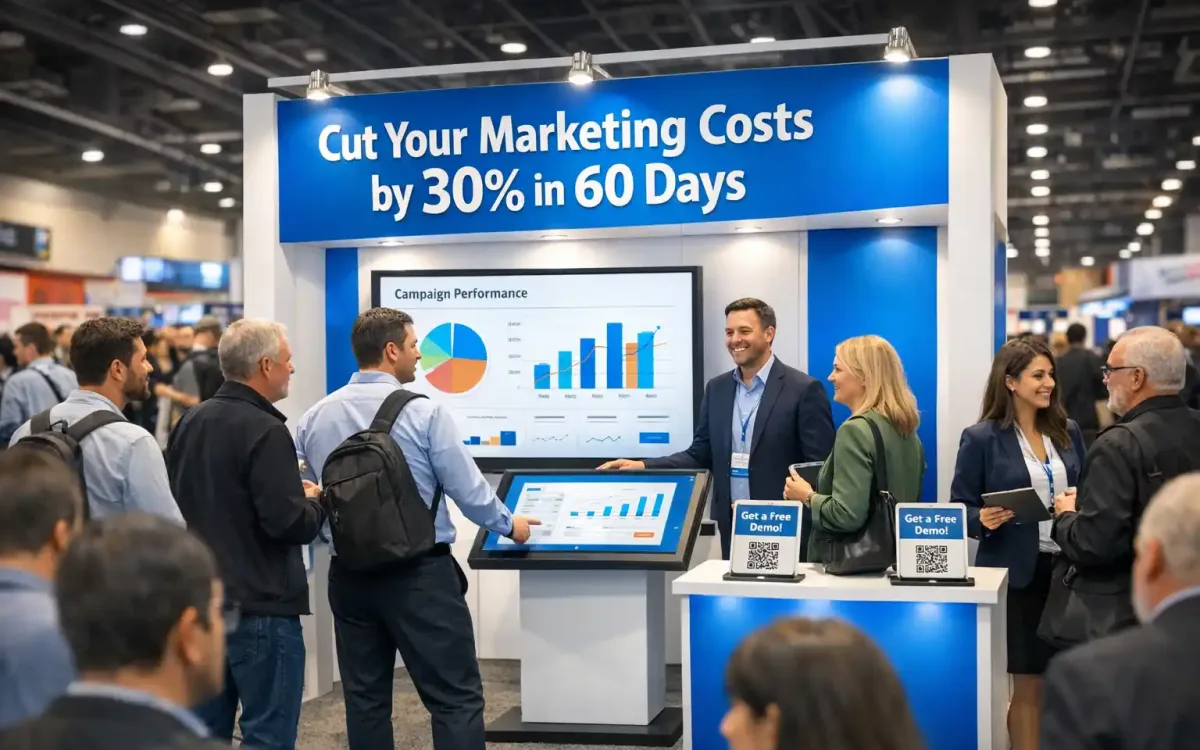
“Cut Your Marketing Costs by 30% in 60 Days”
See the difference? One is vague. The other is direct and measurable.
Keep text minimal. Use visuals that support your message. Research shows that visual content is processed much faster than text, so images should carry meaning, not decoration.
Here’s a simple checklist:
- one headline (max 10 words)
- one supporting visual
- one clear call to action
Lighting also matters more than most expect. Poor lighting reduces visibility and makes even a good design look weak. Use focused light on key elements.
Staff Actions That Increase Booth Visits
The most suitable booth design cannot work without the appropriate individuals in the booth. Tourists do not interact with buildings that they interact with people. I have witnessed more mediocre booths outshine great ones just because the employees were trained to be that way.
Start with body language. Being behind a table and crossing your arms would give space. It is inviting to talk to a person standing in a general position near the aisle.
Train your team to:
- acknowledge visitors in less than 3 seconds.
- try to ask just one single question, not to pitch.
- listen more than they speak
As an illustration, ask: rather than telling you about our product, ask:
What are you seeking during this event?
This minor change enhances interaction. Event studies indicate that the more active the staff is in a booth, the more interactions will take place.
Also, limit phone use. A single distracted member of the team can decrease trust. People notice everything. Brief talks are better than lengthy speeches. Concentrate on initiating conversations, but not making deals on hand.
Tools That Improve Visitor Interaction
Aids ought to facilitate and not kill contact. The idea is not complicated, just to maintain visitors interested to the extent of engaging them in an actual conversation.
In the case of 10×10 booths, there will be limited space, and each tool will need a purpose. Screens, tablets and demos are the most appropriate when they are user friendly and fast to learn.
Effective tools include:
- short demo videos (30–60 seconds)
- User-friendly touchscreens.
- QR coded quick access to offers.
- lead capture applications rather than paper-based.
Memory is enhanced by the interactive components. Research indicates that an individual can retain up to 70 percent of the information when being actively involved rather than passively watching.
But avoid overload. It suffices to have one or two powerful tools.
Smart Use of Standard Booth Sizes
There are standard sizes such as 10×10 booths or 10×20 size because it fits most event plans and budgets. Yet to make proper use of them needs planning.
One of the errors is to consider a minor booth a smaller version of a large one. That doesn’t work. You must adapt your approach.
Focus on:
- vertical space for branding
- minimal furniture
- clear visitor flow
Tallness tends to be more important than thinness. The strategic placement of a banner makes it visible even at a long distance attracting people to your area even before you see them.
Also, think modular. A flexible structure allows the reuse of elements between events, which is a cost savings in the long term.
Small booths that apply these principles in practice can in some cases give higher ROI per square meter than large ones. Large scale is not about size it is about the use of it.