Network communication

Comparison between TCP/IP and OSI Model
Comparison between TCP/IP and OSI models is critical because protocols that make up the TCP IP protocol suite can also be described in terms of the OSI reference model. The network access layer and application layer of the TCP IP models are further divided, and the OSI model describes discrete functions that must occur at...
Introduction to IP address and Subnetting, Unicast, Multicast and Broadcast Communication Quiz Test
🚀 Ready to Test Your Networking Knowledge? 🚀 📢 Take the “Introduction to IP Addresses, Subnetting, and Communication Types” Quiz Now! Are you confident in your understanding of IP addressing, subnetting, and the differences between unicast, multicast, and broadcast communication? Prove your skills and challenge yourself with this quick, interactive quiz! ✅ What’s in it for you? 🔥 Why Wait?Whether you’re prepping...
Quiz Test: Transmission Control Protocol (TCP) and TCP Protocl Suit
Test your knowledge with our comprehensive Quiz Test: Transmission Control Protocol. Learn the essentials of TCP and enhance your networking skills with detailed explanations. TCP/IP Model Certification Exam Submit Answers Reset Test
Point-to-Point Protocol (PPP) Components – Exclusive Defination
A layered architecture is a logical model that aids communication between interconnecting layers. We can map the Point-to-Point Protocol (PPP) layer model with the Open System Interconnection (OSI) model. Both Point-to-Point Protocol (PPP) and OSI models share the same physical layer although the Point-to-Point Protocol (PPP) distributes the functions of Link Control Protocol (LCP) and...
What is DHCPv4 Relay?
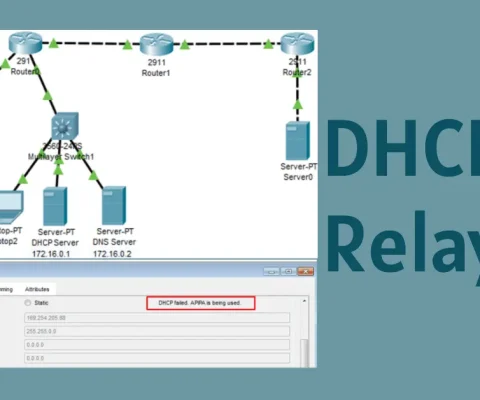
In enterprise networks, dedicated servers are usually used to provide DHCP, DNS, TFTP, and FTP services. The clients are not generally on the same subnet as those servers. The clients used to broadcast messages to locate the servers and get services. Now, look at the figure below. Laptop0 is attempting to acquire an IPv4 address...
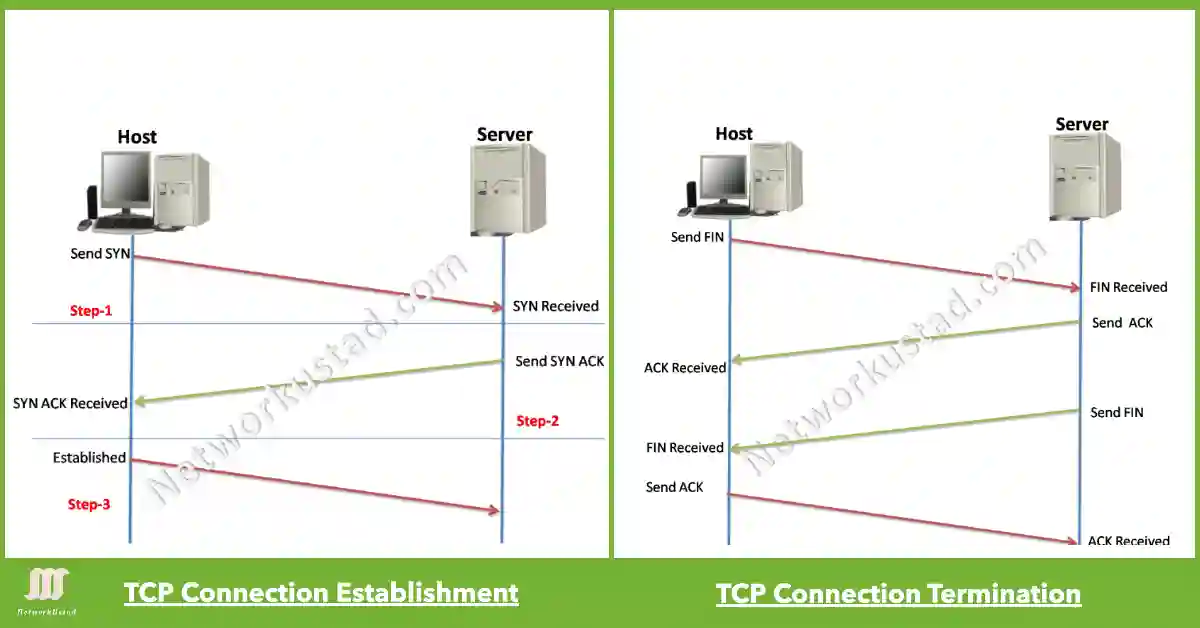
Master TCP Connection Establishment and Termination – Boost Your Skills (Updated 2025)
All application processes on the server use unique port numbers. The network administrator can use default ports (e.g., 80 for HTTP, 21 for FTP) or configure custom ports manually, ensuring no conflicts. An active server application requiring an open port on the server means the transport layer accepts and processes segments addressed to that port...