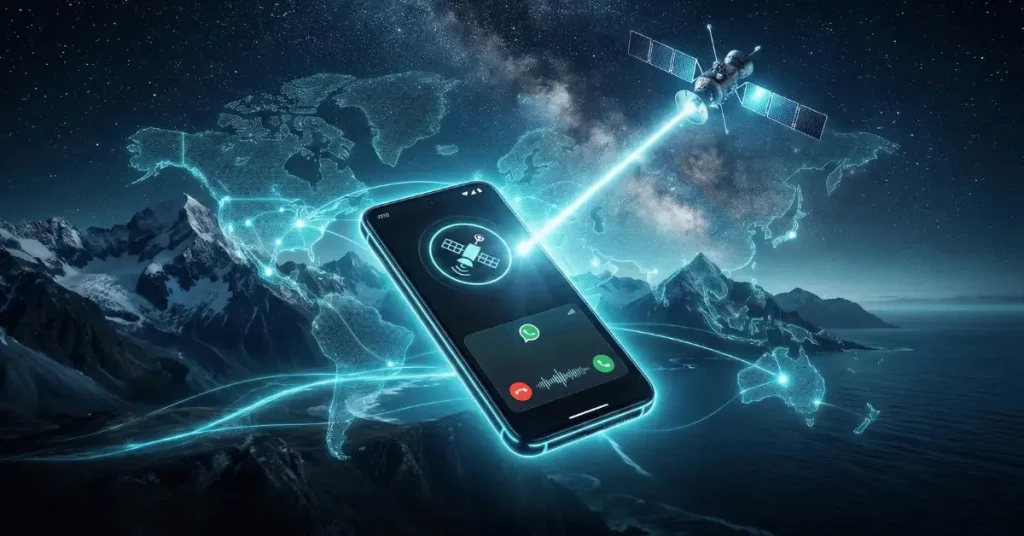
As of January 2026, Google Pixel 10 series (including Pixel 10, Pixel 10 Pro, and Pixel 10 Pro XL) continues to lead Android in satellite connectivity, building on its August 2025 launch at the Made by Google event. Partnering with Skylo for Non-Terrestrial Network (NTN) support and Qualcomm’s advanced modems, the Pixel 10 delivers reliable Satellite SOS—direct emergency messaging without cellular or Wi-Fi—now expanded with carrier integrations, location sharing, and even non-emergency features like WhatsApp voice/video calls over satellite.
This feature addresses dead zones in remote work, outdoor adventures, disaster response, and enterprise IoT deployments. With global rollouts accelerating (US, Canada, Europe via Orange starting Dec 2025, Australia, and more), Google Pixel 10 sets the standard for unbreakable connectivity in 2026.
The Evolution of Satellite Connectivity on Pixel in 2026
Launched in August 2025 with Tensor G5 chipset and MediaTek/Qualcomm modems supporting 3GPP Release 17 NTN, Google Pixel 10 pioneered Android satellite features beyond Apple’s iPhone. Key 2026 updates include:
- Expanded Coverage & Carriers: Satellite SOS now active in US (via Skylo), Europe (Orange rollout Dec 2025 onward, free first 6 months then €5/mo), Canada, Australia. T-Mobile’s T-Satellite (Starlink-powered) offers early data access on Pixel 10 for off-grid apps like Google Maps/Messages.
- New Capabilities: WhatsApp voice/video calls over satellite (first on Google Pixel 10, launched Aug 28, 2025). Satellite-based location sharing in Google Maps/Find My Device (off-grid pins with satellite icon). Pixel Watch 4 adds standalone 2-way emergency messaging.
- Performance Gains: Up to 100 Mbps in optimal conditions, 30% lower latency via AI-optimized handoff (Gemini integration), and broader coverage for remote areas.
Recent January 2026 updates (e.g., Satellite Gateway app v20260105) optimize performance further.
How Satellite SOS Works on Google Pixel 10
When no signal exists:
- Dial 911 or access Safety & Emergency settings.
- Phone prompts Satellite SOS—connect with clear sky view.
- Send texts to emergency services, share location, or use non-emergency messaging (carrier-dependent).
- AI assists alignment and handoff for faster, reliable links.
Compatible with Android 16; demo available in Settings > Safety & Emergency > Pixel Satellite SOS.
Benefits for Professionals & Enterprises
- Remote Workers & Field Teams: Real-time communication in logistics, agriculture, mining—boosting efficiency by reducing downtime.
- Disaster Response & Safety: Life-saving rescues (hiker accidents, highway incidents) via direct emergency links.
- IoT & Enterprise: Reliable off-grid data sharing for sensors, drones, and critical ops.
- Global Resilience: Covers zones traditional networks miss, with carrier plans including free/affordable access.
Compared to competitors: Pixel 10 outperforms text-only satellite on Samsung Galaxy S25; adds voice/video via WhatsApp; matches or exceeds iPhone in Android ecosystem integration.
Top Use Cases in 2026
- Hiking/off-grid travel: Share location or call for help.
- Rural/enterprise deployments: Maintain connectivity for operations.
- Humanitarian efforts: Calls for expanded direct satellite access in crises.
Challenges: Requires clear sky, limited to participating carriers initially, and optimal for emergencies/non-emergency texting/calls.
The Bottom Line: Pixel 10’s Satellite Edge in 2026
Google Pixel 10’s Satellite SOS isn’t just emergency tech—it’s a connectivity game-changer for remote and resilient networking. With ongoing expansions, carrier partnerships, and AI enhancements, it empowers users and enterprises to stay connected anywhere. For network pros and IT teams, evaluate Google Pixel 10 for hybrid workflows demanding unbreakable reach.
Explore more in our Technology category or related guides like Types of Networks for foundational connectivity insights, or Cybersecurity Fundamentals 2026 on secure remote access.
Stay ahead—subscribe for the latest tech and connectivity trends!