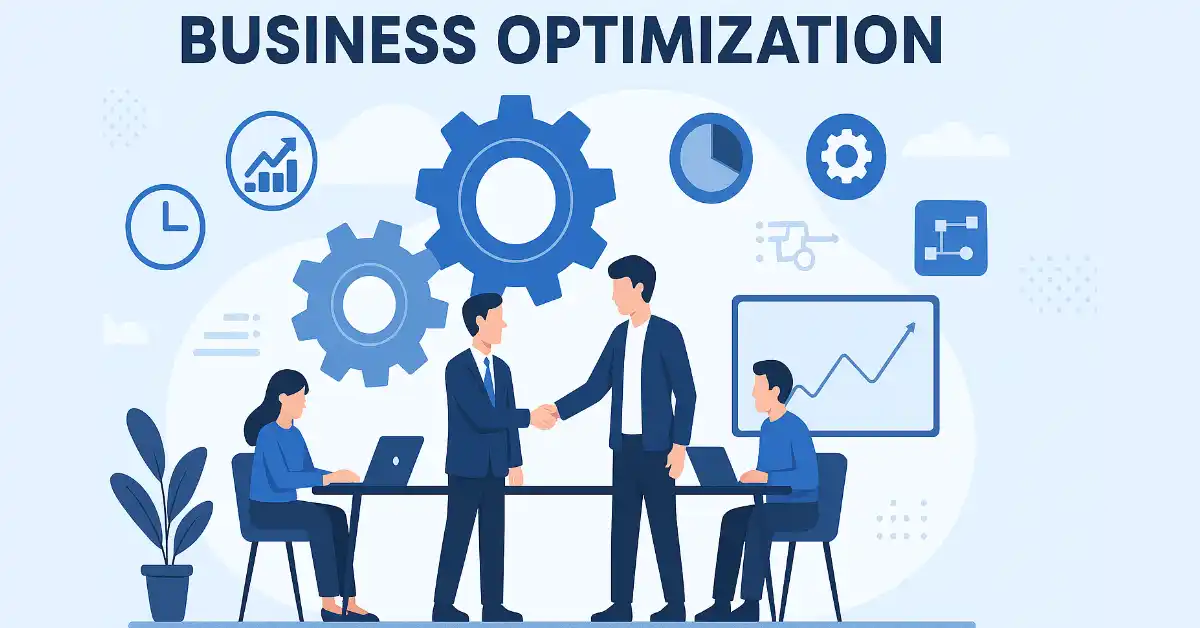
Despite the numerous tools and strategies available, many businesses struggle to optimize their operations effectively. A recent McKinsey study found that companies that aggressively digitize their back offices can expect a productivity boost of up to 30%. Such statistics highlight the importance of streamlined operations not only for cost savings but also for improved service delivery and competitive advantage. Business optimization often involves examining existing processes, embracing new technologies, and fostering a culture that prioritizes efficiency and growth. Below, we’ll delve into solutions that can drive your business towards achieving these goals, thereby securing its position in a dynamic marketplace.
Streamlining Business Processes With Effective Workflow Management
Implementing a streamlined workflow management approach can significantly improve a company’s performance. Workflows that clearly define roles and responsibilities lead to a 15% increase in operational efficiency, according to recent findings. This efficiency translates into faster turnaround times and higher-quality output, essential to customer satisfaction and business success.
Companies often find that removing bottlenecks and redundancies in their workflows can greatly reduce operational costs. For instance, automating repetitive tasks could save employees up to 20% of their time, allowing them to focus on more strategic activities. This not only improves job satisfaction but also enhances overall productivity.
Businesses can start optimizing their workflows by mapping out all processes and identifying areas for improvement. Introducing a robust workflow management system, training staff on best practices, and continuously reviewing processes for potential upgrades are actionable steps toward solid workflow efficiency.
Leveraging Technology for Enhanced Operational Efficiency
Technology is a key driver of operational efficiency, with cloud computing and AI offering solutions once inaccessible to small and medium-sized businesses. For example, cloud-based media asset management software can streamline the organization and retrieval of digital assets, potentially reducing search time by up to 35%.
Advanced analytics tools enable businesses to track performance in real time, leading to a more responsive, agile operational model. This allows companies to act on insights quickly, adjusting processes and resource allocation efficiently to meet both emerging trends and customer needs. Notably, businesses that use analytics have noted a 5-10% increase in productivity and profit margins.
To harness technology for operational benefits, companies should assess their current IT infrastructure, pinpoint what technologies align best with their goals, and create a roadmap for integration and training. Regularly revisiting this technology strategy ensures they stay aligned with evolving digital advancements.
Strategic Decision Making Based on Data Analytics
Strategic decision-making fueled by data analytics can significantly impact a business’s bottom line. Companies that implement data-driven decision-making report a 6% increase in profitability over competitors who do not. This underscores the transformative power of data in steering companies toward sound strategic decisions.
Data analytics can reveal patterns and insights that are otherwise obscured in conventional reports. For instance, predictive analytics can identify customer trends and help businesses anticipate market demands. Retail businesses using predictive analytics have seen up to a 73% accuracy in forecasting future product demand, thereby reducing inventory waste and boosting sales.
Businesses should invest in data analytics platforms, train their teams to interpret data effectively, and create a culture where decisions are backed by concrete data insights. By continually refining data collection and analysis processes, companies can maintain an edge in strategic planning.
Fostering a Culture of Continuous Improvement and Innovation
The final key to perpetual business optimization lies in nurturing a culture dedicated to continuous improvement and innovation. Organizations that foster this culture expect their employees to actively seek out inefficiencies and propose innovative solutions, creating a cycle of perpetual progress.
A commitment to innovation not only drives efficiency but also empowers employees, leading to higher engagement and productivity levels. When employees are involved in the company’s continuous improvement initiatives, they often exhibit a 12% higher productivity rate than those in a non-incentivized environment.
Encouraging innovation requires setting clear expectations, providing the necessary resources for experimentation and improvement, and recognizing and rewarding successful initiatives. Businesses can also consider back office outsourcing functions to free up internal resources for innovation and development.
The journey toward business optimization is ongoing and dynamic, heavily reliant on adopting suitable strategies across various fronts. By streamlining workflow management, leveraging technology, making data-driven decisions, and fostering innovation, companies can realize heightened operational efficiency and secure long-term success. To stay ahead, businesses must remain flexible, continuously assessing and adjusting their optimization strategies to meet the ever-evolving market demands.
FAQs
What is business optimization?
Business optimization is the ongoing process of examining and improving operations through streamlined workflows, technology adoption, data-driven decisions, and a culture of innovation. It delivers up to 30% productivity gains, reduces costs, improves service quality, and creates a strong competitive advantage in changing markets.
How can businesses streamline their processes?
Map current workflows, identify bottlenecks, automate repetitive tasks, implement dedicated workflow systems, train staff thoroughly, and review performance regularly. These steps can increase operational efficiency by 15% and free up 20% of employee time for higher-value strategic work.
What role does technology play in business optimization?
Modern tools like cloud computing, AI, and advanced analytics make optimization accessible to all business sizes. They reduce search time by 35%, enable real-time tracking, and deliver 5-10% gains in productivity and profits when properly integrated and supported by training.
How does data analytics support strategic decisions?
Data analytics reveals hidden patterns and trends, while predictive models forecast demand with up to 73% accuracy. Companies using data-driven decisions are 6% more profitable than competitors. Investing in platforms and training builds a culture where every choice is backed by evidence.
Why foster a culture of continuous improvement?
Encouraging employees to spot inefficiencies and propose solutions raises productivity by 12% in incentivized environments. It boosts engagement, sparks innovation, and keeps the business agile. Recognizing contributions and even outsourcing back-office tasks frees resources for creative growth.