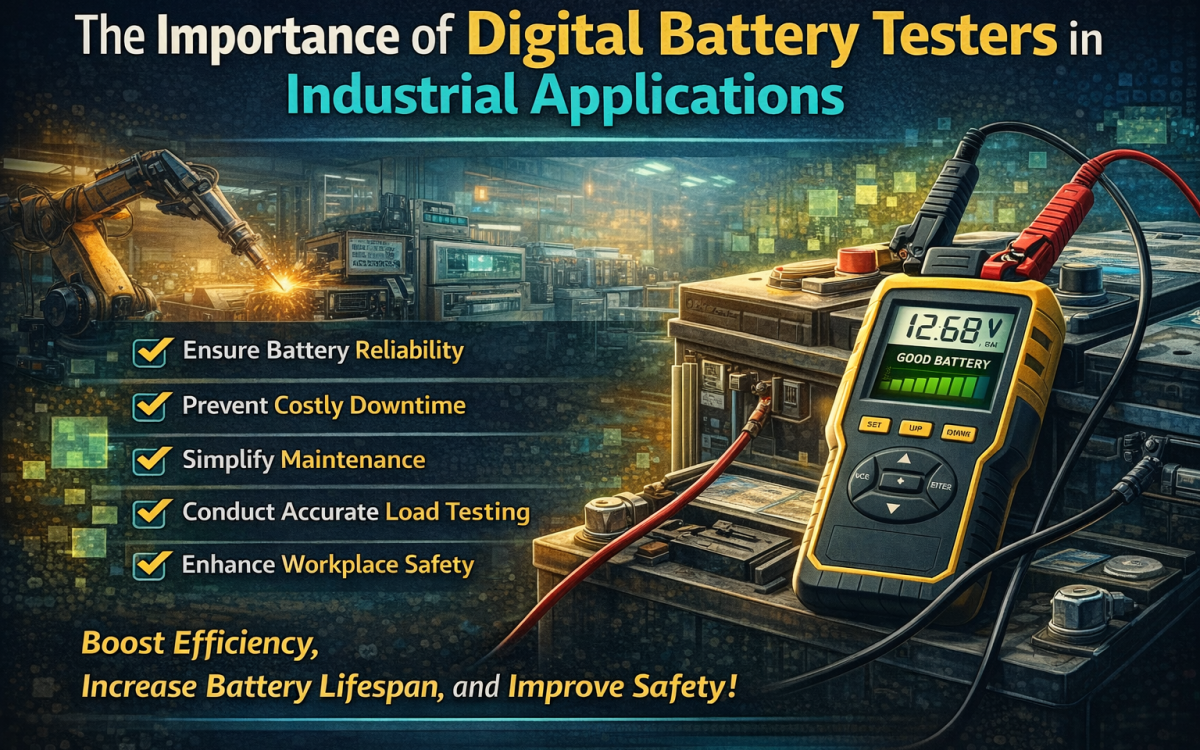
In the industrial sector, reliability and efficiency are paramount. The equipment and machinery that power various industries, from manufacturing plants to energy systems, rely heavily on batteries. These batteries serve as critical components, ensuring operations run smoothly even during power interruptions.
For businesses that depend on battery-operated systems, knowing the health and performance of those batteries is essential to avoid downtime and potential system failures. One of the most effective tools for maintaining battery performance is the digital battery tester.
But how does the digital battery tester work, and why is it becoming indispensable in industrial applications? This article will explore the key benefits of using this tool in industrial settings, from improving safety to enhancing operational efficiency.
What Is a Digital Battery Tester?
A digital battery tester is an electronic tool designed to measure and evaluate the health and charge capacity of batteries. These testers provide precise readings of the battery’s voltage, internal resistance, and charge state, among other key metrics.
Unlike traditional testers, which often rely on simple analog readings, a battery tester delivers a more accurate and detailed assessment, allowing for quicker and more reliable results.
In industrial applications, these testers are used to monitor the performance of batteries that power everything from backup systems to heavy machinery. By ensuring that batteries are functioning optimally, businesses can prevent unexpected breakdowns and costly repairs.
The Growing Need for Digital Battery Testing in Industry
Battery-operated systems are increasingly common across various industrial sectors. From backup power systems in hospitals to forklifts in warehouses, batteries are essential to daily operations. As industrial applications become more reliant on these systems, the need for regular, accurate battery testing becomes more pronounced.
A digital battery load tester is particularly useful in these settings because it simulates real-world conditions by applying a load to the battery, mimicking actual usage. This helps identify performance issues that might not be evident during idle or low-use periods. By detecting early signs of failure, businesses can take proactive steps to ensure that their equipment remains in good working condition.
Advantages of Using a Digital Battery Tester in Industrial Settings
1. Improved Battery Longevity and Performance
Industrial batteries are often subject to harsh conditions, such as extreme temperatures, frequent charging cycles, and heavy loads. Over time, these factors can degrade battery performance, leading to shorter lifespans and decreased efficiency. Regular testing with a digital battery tester provides insight into the battery’s health, helping to identify issues like excessive discharge, overcharging, or internal resistance.
By using a digital battery tester to regularly check the status of industrial batteries, companies can optimize their maintenance schedules and extend the life of their batteries. Early identification of issues allows for timely intervention, whether it’s recalibrating the battery’s charging system or replacing a deteriorating battery before it leads to a system failure.
2. Accurate Load Testing
One of the most significant advantages of a digital battery load tester is its ability to simulate actual load conditions. Unlike standard testers, which only measure voltage or charge, a digital battery load tester applies a controlled load to the battery, mimicking real-world usage. This allows for a more accurate assessment of the battery’s performance under stress.
Load testing is particularly important in industrial environments where equipment is often running under heavy loads for extended periods. By using a digital battery load tester, businesses can ensure that their batteries can handle these demands without failure. This is especially critical for backup systems that need to provide reliable power during emergencies or outages.
3. Data Logging and Reporting
Most modern digital battery testers come equipped with data logging capabilities. This means that the tester records the results of each test, which can then be analyzed and used for future reference. For industrial applications, this feature is invaluable as it allows businesses to track the performance of their batteries over time.
With the ability to generate detailed reports, companies can monitor the degradation of battery performance and make data-driven decisions about when to replace or maintain batteries. This proactive approach to battery management not only enhances operational efficiency but also helps avoid unexpected breakdowns that could lead to costly downtime.
4. Simplified Maintenance
Another benefit of using a digital battery tester is the simplification of maintenance procedures. In many industrial environments, maintenance teams need to perform regular checks on multiple batteries, often in different locations or power systems. With a battery tester, the process is streamlined.
These testers provide quick, easy-to-read results that can be interpreted by any technician, regardless of experience level. This reduces the risk of human error and ensures that batteries are tested consistently across all systems. Whether the tester is being used for daily checks or periodic maintenance, the process is simplified, saving time and reducing labor costs.
5. Enhanced Safety
Batteries, particularly large industrial ones, can pose safety risks if they are not properly maintained. A malfunctioning or deteriorating battery can lead to overheating, leakage, or even explosions. Regular testing with a digital battery tester helps identify potential safety hazards before they become a serious problem.
By detecting issues like high internal resistance, which can lead to overheating, or low charge capacity, which could cause the battery to fail unexpectedly, a digital battery tester helps to mitigate safety risks. This is especially important in industries where large batteries are used in critical systems, such as healthcare, manufacturing, and energy.
How to Choose the Best Digital Battery Load Tester
When selecting the best digital battery load tester for your industrial applications, there are several key factors to consider:
- Compatibility: Ensure that the tester is compatible with the specific type of battery used in your system. Whether you are testing lead-acid, lithium-ion, or another type of battery, the tester must be able to handle the voltage and load characteristics of the battery.
- Accuracy: Choose a tester that offers high accuracy in measuring battery performance. Look for models that provide detailed readings, such as internal resistance, charge capacity, and voltage under load.
- Ease of Use: Select a tester with an intuitive interface and clear readings. In industrial settings, time is often of the essence, so you want a tool that can quickly and easily provide the necessary data.
- Data Logging and Connectivity: For long-term monitoring, choose a tester that can log data and generate reports. This will help you track battery performance over time and make informed decisions about maintenance or replacement.
- Durability: In industrial environments, equipment must withstand harsh conditions. Ensure that the digital battery tester is rugged enough to perform in tough environments, such as high temperatures, dust, and vibrations.
Conclusion
Using a digital battery tester in industrial applications is more than just a precaution—it’s a smart business decision. These tools provide valuable insights into battery performance, helping to improve efficiency, extend battery life, and enhance safety.
By incorporating digital battery load testers into regular maintenance routines, businesses can ensure that their energy systems remain reliable and operational, minimizing the risk of downtime and costly repairs.
The best digital battery load tester will not only offer accuracy and reliability but also simplify maintenance and provide long-term value. With the right equipment in place, industries can maintain the reliability of their battery-powered systems, prevent safety issues, and optimize performance for years to come.