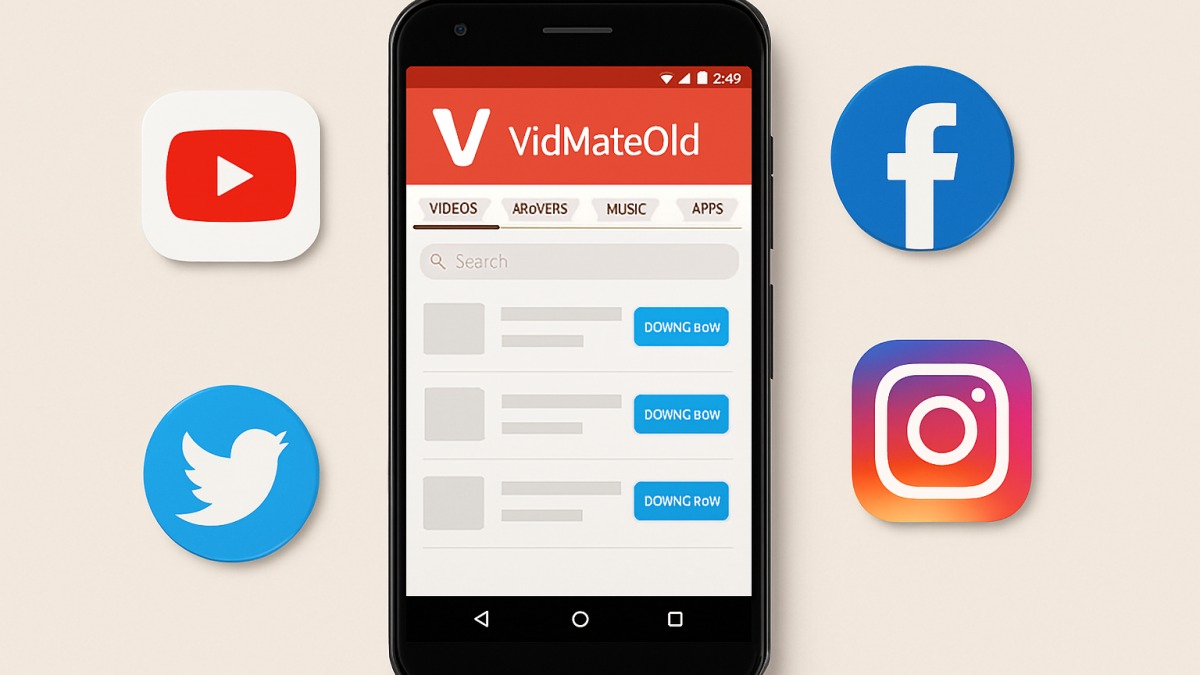
In the rapidly evolving landscape of mobile applications, newer isn’t always better. While developers constantly push updates with redesigned interfaces and additional features, many users find themselves longing for the simplicity and reliability of earlier versions. VidMateOld represents this sentiment perfectly—a legacy version of the popular VidMate Android application that preserves the classic interface and straightforward functionality that made the app beloved by millions of users worldwide.
Understanding VidMateOld and Its Purpose
VidMateOld serves as the legacy edition of VidMate, specifically designed for users who prefer the familiar experience of earlier VidMate releases over the constantly evolving modern versions. This older iteration maintains the core functionality that established VidMate’s reputation: seamless downloading of videos, music, and images from numerous popular platforms including YouTube, Instagram, Facebook, Twitter, and WhatsApp.
The philosophy behind maintaining old VidMate apps centers on user choice and accessibility. Not every Android device runs the latest operating system, and not every user desires feature-heavy applications that consume significant storage space and processing power. VidMateOld addresses these concerns by offering a lightweight alternative that performs its primary functions efficiently without the bloat that often accompanies modern app updates.
The Evolution from VidMate 2014 to Present
To appreciate VidMateOld’s value proposition, it’s worth examining the application’s evolution. VidMate 2014 represented an early milestone in mobile video downloading applications, introducing users to the convenience of saving online content directly to their devices. During this period, mobile internet was becoming more accessible, streaming platforms were gaining popularity, and users increasingly wanted offline access to their favorite content.
The original versions, including VidMate 2014, featured straightforward interfaces with clear download buttons, simple quality selection, and reliable performance even on modest hardware. These early iterations focused purely on download functionality without attempting to incorporate social features, content discovery algorithms, or other additions that would later characterize more modern versions.
As VidMate evolved through subsequent years, developers added features like built-in video players, content recommendations, multiple download queue management, and expanded platform support. While these additions enhanced functionality for some users, others found the increasing complexity detracted from the simple, focused experience they valued. This divergence in user preferences created demand for maintaining access to older versions alongside current releases.
Key Features of VidMateOld
Despite being a legacy version, VidMateOld maintains robust functionality that continues serving users effectively. The application supports downloading from a comprehensive range of platforms, ensuring users can save content from their most-frequented social media and video-sharing services. This multi-platform support remains one of VidMateOld’s strongest attributes, eliminating the need for multiple specialized downloading applications.
The lightweight performance characteristic of old VidMate apps proves particularly valuable for users with older Android devices or those in regions where high-end smartphones aren’t as prevalent. VidMateOld typically requires less storage space for installation and consumes fewer system resources during operation compared to feature-rich modern alternatives. This efficiency translates to smoother performance, faster load times, and less battery drain—practical considerations that significantly impact daily usability.
Quality selection options in VidMateOld allow users to choose appropriate resolution and file size based on their storage capacity and intended use. Whether downloading high-definition videos for viewing on tablets or compressed formats suitable for sharing via messaging apps, the application provides flexibility without overwhelming users with excessive technical options.
The straightforward interface that characterized VidMate 2014 and subsequent early versions remains preserved in VidMateOld. Users familiar with the classic layout can navigate the application intuitively without relearning redesigned interfaces or searching for relocated features. This consistency proves especially valuable for less tech-savvy users who prefer applications that don’t change dramatically with each update.
Why Users Choose Legacy Versions
The decision to use VidMateOld over current VidMate versions stems from various practical considerations. Device compatibility represents a primary factor—older Android versions may not support the latest VidMate releases, making legacy versions the only viable option for users who haven’t upgraded their hardware.
Storage constraints also drive users toward old VidMate apps. Modern smartphones in developing markets often feature limited internal storage, making every megabyte count. When choosing between a streamlined legacy version and a feature-laden current release, users prioritizing storage efficiency naturally gravitate toward VidMateOld.
Beyond technical constraints, many users simply prefer the familiar. Interface redesigns, while potentially offering improved usability, require adjustment periods during which productivity suffers. Users who’ve mastered VidMateOld’s interface and developed efficient workflows often see little reason to adapt to changes when their current version satisfies their needs.
Performance stability represents another consideration. Newly released app versions sometimes introduce bugs or compatibility issues that take subsequent updates to resolve. Users who prioritize reliability over accessing the latest features often prefer sticking with proven legacy versions that demonstrate consistent performance.
Practical Applications and Use Cases
VidMateOld serves diverse user needs across various scenarios. Students in regions with expensive or unreliable internet connectivity use the application to download educational videos for offline study, ensuring learning continues regardless of network availability. Entertainment enthusiasts create personal libraries of favorite content, accessible anytime without streaming data consumption.
Content creators and social media managers utilize old VidMate apps to archive their own published content or save inspiration from other creators for reference. The ability to download from multiple platforms through a single application streamlines workflow compared to platform-specific solutions.
Travelers frequently rely on VidMateOld before trips to download entertainment content, ensuring they have movies, music, and videos available during flights or in locations with limited connectivity. The application’s efficiency makes it practical even when working within tight pre-departure timeframes and storage limitations.
Considerations for VidMateOld Users
While VidMateOld offers numerous advantages, users should approach legacy applications with appropriate awareness. Older versions don’t receive the same security updates as current releases, potentially creating vulnerabilities. Users should exercise caution regarding the content they download and the permissions they grant.
Platform compatibility represents an ongoing consideration. As social media and video platforms update their systems, older downloading applications may occasionally experience functionality issues. While VidMateOld maintains broad compatibility, users should verify that the specific platforms they need remain supported.
Conclusion
VidMateOld exemplifies how legacy applications continue serving valuable purposes in the modern app ecosystem. By preserving the straightforward functionality and lightweight performance that characterized earlier releases like VidMate 2014, it provides an accessible alternative for users who prioritize simplicity, efficiency, and familiarity over cutting-edge features. Whether driven by device limitations, storage constraints, or simple preference for classic interfaces, users choosing old VidMate apps demonstrate that in software, as in many aspects of technology, the best tool is ultimately the one that best fits individual needs and circumstances.