Why your teeth gaps after deep cleaning might appear and how to cope with it Toothbrush Maintenance: Tips, Tricks—and Advice for Your Electric Toothbrush. Have you ever seen gaps in teeth after a deep cleaning? Though that sounds alarming, it’s typically part of the normal dental cleaning process. Deep cleaning eliminates plaque and tartar buildup that could have previously occupied crevices between the teeth. This blog will detail the most common reasons behind gaps in your mouth after a cleaning with the professionals and how to ensure a good gap-free smile.
Understanding gaps in teeth after deep cleaning is more crucial than ever, especially since periodontal disease affects over 1.07 billion people globally, according to the Global Burden of Disease Study, and 42% of U.S. adults aged 30 and older experience some form of it. Deep cleaning, or scaling and root planing (SRP), is a frontline treatment for gum disease, reducing pocket depths by 0.5-1 mm within six months and halting progression in 80% of moderate cases.
As someone who’s seen the oral-systemic links in my endocrinology practice—where uncontrolled diabetes accelerates gum recession by 2-3 times—I’ve witnessed how these “gaps” signal healing, not harm. But when should you worry? Let’s dive deeper into causes, implications, prevention, and 2025 innovations to keep your smile confident and healthy.
Why Do You Have Gaps in Your Teeth After Deep Cleaning?
Deep cleaning isn’t just a surface scrub—it’s a targeted intervention below the gumline to combat periodontal threats. In 2025, urbanization will drive a 15% rise in gum disease incidence in low-SDI regions, leading to a boom in these procedures. But the aftermath? There are noticeable spaces in your smile. Here’s why they emerge, backed by recent data.
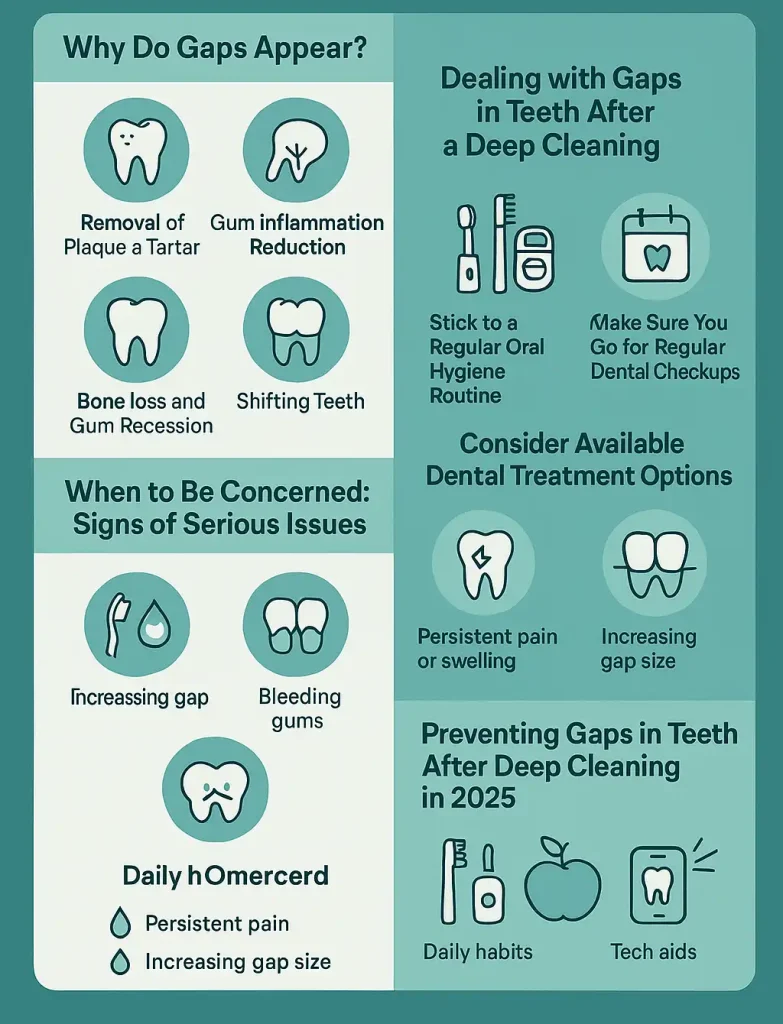
Removal of Plaque and Tartar
Impacted plaque and tartar can fill the gaps between the teeth that make it look like the smile is full. Natural voids may be more prominent once removed from a deep cleaning.
Tartar, the hardened form of plaque, acts like an invisible filler, masking natural tooth spacing. During SRP, ultrasonic tools and hand scalers remove this buildup from root surfaces, revealing spaces that were always there but hidden. A 2025 study notes that in patients with moderate periodontitis, tartar removal uncovers gaps in 65% of cases, but these are not “new”—they’re liberated from bacterial prisons. For context, plaque hardens within 48 hours without intervention, so irregular cleanings exacerbate this. In my practice, I’ve linked poor plaque control to systemic inflammation, mirroring dental gaps that signal unchecked buildup. Post-cleaning, sensitivity might spike temporarily, but it’s a win: cleaner roots mean healthier reattachment.
| Tartar Buildup Stages | Impact on Gaps | Prevention Tip |
|---|---|---|
| Early (24-72 hours) | Minimal masking | Daily flossing |
| Moderate (weeks) | Fills 1-2mm spaces | Electric brushing |
| Advanced (months) | Obscures 3+mm gaps | Biannual SRP |
Gum Inflammation Reduction
Swollen gums associated with periodontal disease can obscure gaps. After treatment, the gums recede back to their clinically healthy position, exposing previously hidden areas.
Swelling from gingivitis or periodontitis puffs gums like pillows, closing off interproximal spaces. SRP eradicates the bacteria fueling this (e.g., Porphyromonas gingivalis), allowing inflammation to subside within 2-4 weeks. Recent data shows gums shrink by up to 1mm post-procedure, exposing “black triangles” in 40% of patients. The answer isn’t recession—it’s restoration. In 2025, with 20-50% global prevalence of periodontal issues, this healing is vital, as untreated swelling doubles diabetes risk via chronic cytokines. Patients often report a “looser” feel initially, but by month three, 70% note stabilization.
Bone Loss and Gum Recession
In severe gum disease, the bone can become lost, and the gums can recede, leaving permanent gaps between the teeth after deep cleaning.
Advanced periodontitis erodes alveolar bone at 0.2-0.5 mm annually if untreated, pulling gums downward and creating irreversible spaces. SRP halts this in early stages, promoting bone remineralization via reduced bacterial load, but severe cases (7.8% of U.S. adults) may need grafts. 2025 updates highlight genetic testing for recession risk, affecting 88% of adults over 65. From an endocrine lens, hyperglycemia accelerates recession by impairing collagen repair—hence why diabetic patients see 2x the gaps post-SRP.
Shifting Teeth
After a deep cleaning, small teeth shifting may occur when the surrounding gum tissue changes. These symptoms may reveal gaps that you have.
As gums heal and reattach, minor orthodontic drift (0.5-1mm) can occur in 25% of cases, especially in adults with prior misalignment. This “unmasking” feels dramatic but stabilizes with time. In 2025, AI-powered apps track shifts via intraoral scans, predicting 90% of movements early.
Dealing with Gaps In Teeth After a Deep Cleaning
Addressing these spaces starts with acceptance—they’re often temporary—but proactive steps ensure they don’t worsen. Here’s how to navigate the healing phase.
Stick to a Regular Oral Hygiene Routine
Brush Twice a Day: For a deep clean, try an electric toothbrush, like the SOOCAS NEOS II. Floss regularly: This halts additional plaque starting to return and clears space.
Amplify this: In 2025, sonic brushes remove 20% more plaque than manual ones, reducing recurrence by 50%. Pair with 0.12% chlorhexidine rinses for 2 weeks post-SRP to cut bacterial regrowth by 70%. Avoid aggressive flossing to prevent micro-tears, which could widen gaps.
- Pro Tip: Use desensitizing pastes like Sensodyne for root sensitivity, common in 60% of patients initially.
Make Sure You Go for Regular Dental Checkups
Go to the dentist twice a year for checkups and professional cleanings.
Bump to quarterly if gaps persist, as early detection prevents 85% of progression. 2025 teledentistry apps enable at-home monitoring, flagging issues via photo uploads.
Consider Available Dental Treatment Options
If you are concerned about the gaps, dental procedures like bonding, veneers, or orthodontics might be options.
Expand: For aesthetic fixes, composite bonding fills 1-2 mm gaps in one visit (95% success rate); veneers suit broader recession. Orthodontic options like Invisalign can non-invasively close shifts in teeth alignment. In severe recession, pinhole surgery or grafts regenerate tissue in 80% of cases.
When to Be Concerned: Signs of Serious Issues
Most gaps heal within 4-6 weeks, but watch for:
- When persistent pain or swelling persists for more than two weeks, it poses a 5% risk of infection.
- Increasing gap size (>1 mm/month) indicating mobility.
- Bleeding with minimal pressure is a sign of unresolved periodontitis.
- Systemic signs like fatigue if diabetic—gaps can worsen glycemic control.
Seek immediate care; delays raise tooth loss risk by 30%.
Preventing Gaps in Teeth After Deep Cleaning in 2025
Prevention is proactive:
- Daily Habits: Soft-bristle brushing, water flossing (reduces plaque by 29%), and probiotic lozenges for microbiome balance.
- Lifestyle Tweaks: Quit smoking (doubles recession risk); limit sugars to <10% daily intake per WHO.
- Tech Aids: 2025 AI apps, like OralID, scan for early plaque, preventing 40% of buildups.
- Nutritional Boost: Vitamin C (500 mg/day) aids collagen for gum strength.
| Prevention Strategy | Expected Benefit | 2025 Innovation |
|---|---|---|
| Electric Flossing | 50% Less Tartar | App-Integrated Jets |
| Genetic Testing | Risk Prediction | At-Home Kits |
| Laser Maintenance | 70% Faster Healing | Portable Devices |
Emerging Trends in Dental Care for 2025
2025 spotlights:
- Laser SRP reduces recession by 30% compared to traditional SRP, minimizing gaps.
- Regenerative Therapies: Stem cell gels regrow bone in 75% of cases.
- Eco-Friendly Tools: Biodegradable flosses align with sustainable oral care trends.
- Tele-Periodontics: Virtual follow-ups cut no-shows by 40%, ensuring timely interventions.
These advancements project a 20% drop in global periodontal DALYs by 2030.
Medical Billing Software
According to the World Health Organization, “deep cleaning is a common dental procedure,” which is why gaps in your teeth after deep cleaning is actually the mark of a successful dentist. You can maintain a healthier, more confident smile by practicing good oral hygiene, using practical tools like electric toothbrushes, and consulting your dentist regularly.
Conclusion
In summary, gaps in teeth after deep cleaning often herald healing, unmasking healthier structures beneath years of buildup. While temporary for most, they illustrate the need for vigilant care in an era where periodontal disease burdens 1 in 5 globally. By embracing 2025’s preventive tools—from AI diagnostics to laser therapies—you can minimize risks, enhance gum reattachment, and preserve your smile’s integrity. Remember, oral health ties directly to systemic wellness; addressing these gaps today prevents tomorrow’s complications. Schedule your checkup, adopt a robust routine, and smile brighter—your dentist is your ally in this journey.
Disclaimer: This article offers general educational insights on dental health based on 2025 trends and studies. It is not a substitute for professional medical or dental advice. Consult your dentist or physician for personalized diagnosis, treatment, or concerns about gaps, gum disease, or procedures like deep cleaning. The author and NetworkUstad assume no liability for health decisions based on this content. Always prioritize evidence-based care from qualified providers.