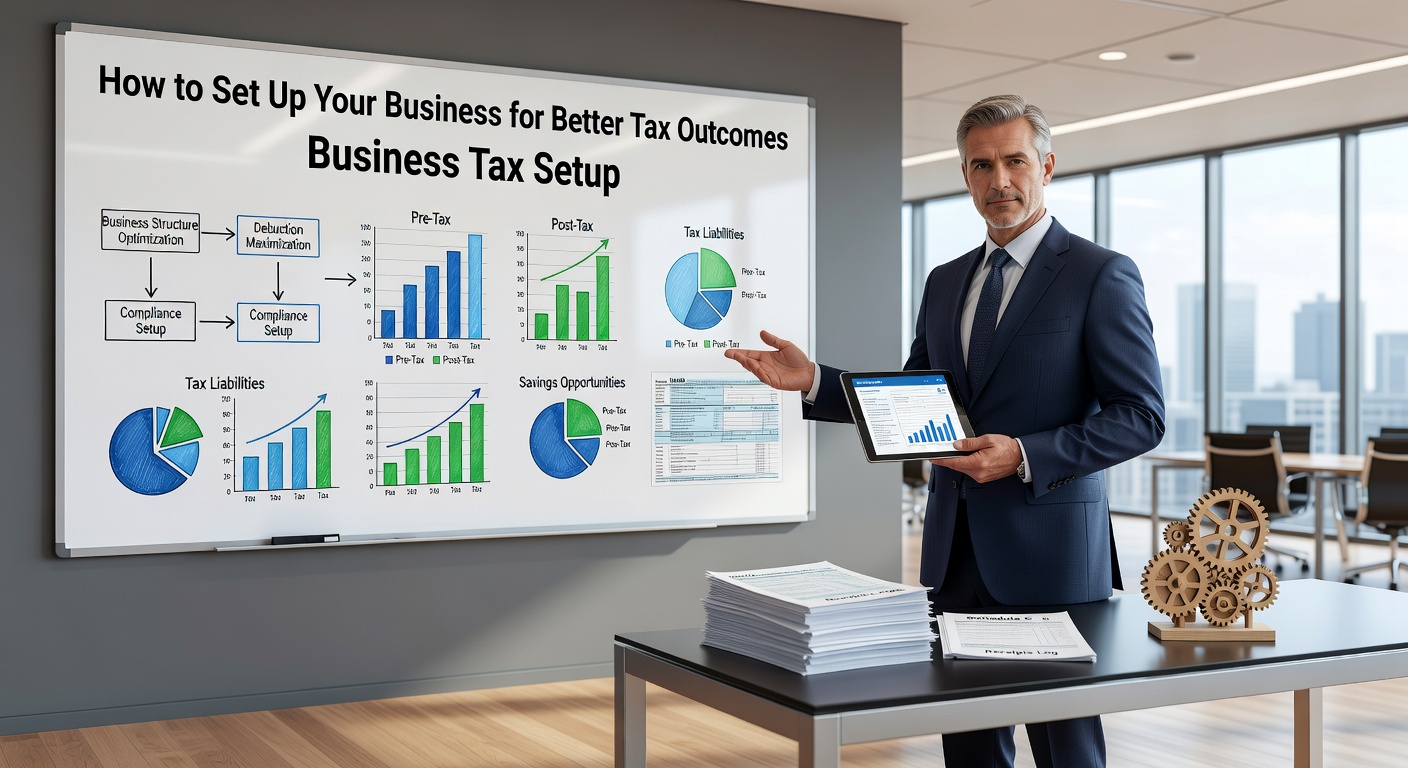
You only notice your tax setup when something goes wrong, usually when the numbers come back higher than expected. It is that quiet moment after reviewing expenses where you realize the business is working, but the structure behind it is not really helping. Nothing is broken, exactly, but it is not doing you any favors either.
Most businesses start this way. Decisions get made quickly just to get things running, and tax planning is pushed aside until there is enough income to worry about it. By then, the habits are set, and changing direction feels harder than it should. Still, the way a business is set up early on tends to shape how taxes behave later.
Choosing the Right Structure Early On
One of the first decisions that shapes tax outcomes is the legal structure of the business. It sounds like a formal step, but it carries practical weight. A sole setup might feel simple at the start, but it often limits flexibility once income grows. Other structures can offer different ways to handle profit, salaries, and distributions.
The challenge is that most people choose quickly and move on. They pick what seems easiest, not what fits long-term plans. At first, that does not cause obvious issues. But as revenue increases, the gaps become clearer. Taxes rise faster than expected, or there is less room to adjust income in a useful way.
Understanding Entity Choices Before Committing
Before locking into a structure, it helps to step back and look at how income will likely change over time. A lot of entrepreneurs today want to know how to start an S corp. That usually comes up once revenue feels steady enough that taxes start to sting a bit more than expected, and the basic setup no longer feels flexible.
By this time, habits around payments, expenses, and reporting are already in place, which makes switching feel more complicated than it really is. What matters is not just the label of the structure, but how it fits with how money moves through the business. Some setups allow income to be split or handled differently, which can ease the tax load over time, but only if the rest of the system supports it.
There is also the practical side of compliance. Certain structures require more reporting or stricter record-keeping, which can feel like extra work at first. But that added structure often leads to clearer financial tracking. Over time, that clarity tends to pay off.
Keeping Income and Expenses Clean
Once the structure is in place, the next layer is how money moves through the business. This is where things often get blurry. Personal and business expenses mix, records get incomplete, and small gaps start to form.
Clean separation makes a difference. Business income should land in business accounts, and expenses should be tracked with some consistency. It sounds basic, but it is one of the most common weak spots. When records are unclear, deductions become harder to justify, and the overall tax position weakens.
There is also a timing aspect. When income is received and when expenses are recorded can shift how taxes are calculated for a given period. This is not about manipulation. It is about understanding how the system works, so decisions can be made with awareness.
The Role of Automation in Tax Outcomes
Automation has changed how businesses handle taxes, though not always in obvious ways. It is not just about saving time. It is about reducing the number of small errors that build up over months.
Automated systems can track expenses, categorize transactions, and generate reports without relying on memory or manual entry. This creates a more consistent record, which makes tax preparation less stressful. It also makes it easier to spot patterns, like recurring costs that could be reduced or deductions that are being missed.
Still, automation does not replace understanding. It supports it. The system can organize data, but decisions about structure and strategy still need to be made with some care.
Planning For Growth, Not Just Survival
Many businesses focus on getting through the early stages, which makes sense. Cash flow is tight, and attention is on staying afloat. But tax planning works better when it considers where the business is heading, not just where it is now. For instance, understanding loan costs early can align financing with tax strategies.
As income grows, the tax approach that once felt adequate may start to fall short. What worked at a smaller scale might lead to higher liabilities later. Adjustments can be made, but they are easier when the groundwork has been laid early.
This is where periodic review helps. Looking at the structure, income patterns, and expense categories every so often keeps things from drifting too far off track. It does not need to be constant, but it should not be ignored for years either.
Avoiding Last-Minute Decisions
One of the more common patterns is leaving tax decisions until the end of the year. At that point, options are limited. Most of the activity has already happened, and there is less room to adjust outcomes in a meaningful way.
Better results usually come from smaller decisions made throughout the year. Choosing how to pay yourself, deciding when to make a large purchase, or adjusting how income is received can all influence the final numbers. These are not dramatic changes, but they add up, especially when key investments drive growth.
When planning is spread out, it feels less reactive. There is less pressure to fix everything at once, and the results tend to be more stable.
Living With the Structure You Choose
At some point, the goal is for the tax setup to stop being a constant concern. It should support the business quietly, without needing frequent correction. That does not mean it never changes, but it should not feel like a problem that resurfaces every few months.
A well-set structure, combined with consistent record-keeping and a bit of ongoing attention, usually leads to fewer surprises. The numbers start to make sense in a steady way. And while taxes are never completely simple, they become easier to manage when the foundation is solid. Proactively managing data-driven growth strategies further optimizes these outcomes.