Cargobikes have surged in popularity among families looking for practical, eco-friendly ways to navigate daily life — from school runs to grocery hauls. But as these bikes grow smarter, with connected apps, GPS tracking, and integrated sensors, a hidden challenge emerges: protecting your family’s personal data while staying safe on the road.

The modern cargobike isn’t just a vehicle; it’s a data-collecting device. Alongside physical safety features like high and low beams that keep your family visible in low-light conditions, parents now need to think carefully about what information their bike gathers, stores, and shares. For families who value both security and simplicity, navigating these concerns can feel overwhelming.
This article is designed to cut through that complexity. Whether you’re a first-time cargobike buyer or looking to upgrade, you’ll find clear guidance on evaluating safety features, understanding GDPR-compliant models, and adopting smart data management habits. By the end, you’ll be equipped to make confident, informed choices that protect not just your family on the road — but their personal information too.
Why Safety and Data Privacy Matter for Family Cargobikes
For many families, cargobikes have become indispensable — a practical alternative to the second car, capable of carrying children, groceries, and gear across urban streets and bike paths alike. But as these bikes evolve from simple pedal-powered vehicles into connected, sensor-equipped machines, the stakes around both physical safety and personal data have risen considerably.
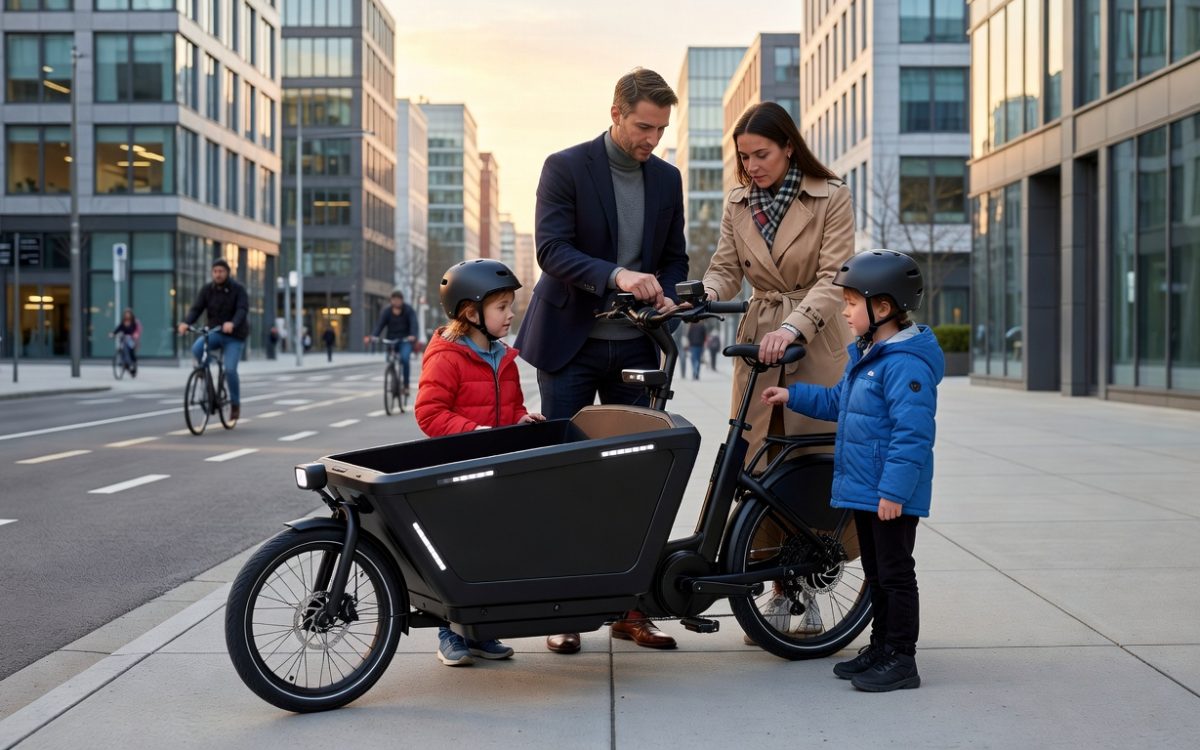
Physical safety remains the foundation of any family biking decision. Cargobikes carry precious cargo — often children as young as infants — which means every design choice matters. Lighting systems are among the most critical features, particularly for families navigating early morning school runs or evening commutes. Bikes equipped with high and low beams provide adaptive visibility, allowing riders to illuminate the road ahead without blinding oncoming cyclists or pedestrians. This kind of thoughtful engineering directly reduces accident risk in low-light conditions, where a significant proportion of cycling incidents occur.

Beyond lighting, stability systems, load-bearing frames, and reliable braking mechanisms all contribute to a safer ride. But increasingly, families also need to ask a second, less obvious question: what does this bike know about us?
Modern smart cargobikes routinely collect GPS location data, riding patterns, speed metrics, and even information about passengers through integrated apps. While these features offer genuine convenience — think stolen bike recovery or optimized routing — they also create a data trail. If that data is poorly managed, inadequately encrypted, or shared with third parties without clear consent, families face real privacy risks. Children’s location data is particularly sensitive under regulations like GDPR, making it essential that parents choose models built with transparent, robust data protection from the ground up.
Understanding Data Protection in Cargobikes: GDPR and Personal Data Policies
When shopping for a family cargobike, most parents instinctively check brake quality and weight capacity. Far fewer think to ask: “What happens to the data this bike collects?” That question matters more than ever, especially in Europe where the General Data Protection Regulation sets strict standards for how personal information must be handled — including data gathered by consumer devices like smart bikes.
GDPR compliance in the context of cargobikes means manufacturers must collect only the data genuinely necessary for the bike’s functions, obtain clear user consent before gathering it, store it securely, and give users straightforward control over what’s kept or deleted. For families, this translates into a bike ecosystem — app, firmware, and cloud storage combined — that treats your information with the same care you’d expect from a bank or healthcare provider.
A strong personal data policy from a bike manufacturer should do several things clearly: explain exactly what data is collected (GPS coordinates, ride duration, battery usage, passenger weight), state who can access it, specify how long it’s retained, and outline the process for requesting deletion. Vague language like “we may share data with partners” is a red flag worth taking seriously. E-bike brands like TARRAN have set a useful reference point here, publishing detailed data policies that break down collection practices by feature category rather than bundling everything into a single opaque disclosure.
Key Elements of a GDPR-Compliant Cargobike
Four pillars define genuine GDPR compliance for connected cargobikes. First, end-to-end data encryption ensures that location and usage data can’t be intercepted during transmission. Second, explicit user consent means the companion app requests permission for each data category separately — not buried in a terms-of-service checkbox. Third, transparency requires a readable, jargon-free privacy policy that details data flows. Fourth, the right to erasure guarantees families can permanently delete their ride history and personal profiles on demand. Together, these elements create a meaningful barrier against data breaches and unauthorized profiling, giving parents confidence that choosing a smarter bike doesn’t mean surrendering their family’s privacy.
Spotlight on the T1 Pro Family: Integrating Safety and Privacy
When theory meets practice, the T1 Pro Family cargobike stands out as a compelling example of how manufacturers can genuinely prioritize both physical safety and data privacy without compromise. Designed specifically for family use, it addresses the real-world demands of parents transporting children through city streets, school zones, and mixed-traffic environments — while handling personal data with the care that modern families rightly expect.
Consider a typical Tuesday morning: two children loaded into the cargo box, backpacks stacked, and a 7 AM school run underway in pre-dawn darkness. This is precisely where the T1 Pro Family’s engineering choices become tangible rather than theoretical.
Safety Features of the T1 Pro Family
The T1 Pro Family’s lighting system is built around adaptive high and low beams that automatically adjust to ambient conditions. When riding through a dimly lit park path, high beams provide maximum forward illumination; switching to a shared road with oncoming cyclists triggers low beams to prevent glare without sacrificing rider visibility. This automatic switching removes a decision burden from parents already managing young passengers. Beyond lighting, the bike features a low center of gravity frame specifically engineered for loaded cargo, wide-stance wheels for lateral stability during turns, and a responsive hydraulic braking system that accounts for the additional stopping distance required when carrying children. The cargo area itself includes integrated harness points and side protection panels, reflecting a child-first design philosophy throughout.
Data Privacy Measures in the T1 Pro Family
On the data side, the T1 Pro Family’s companion app presents privacy controls as a first-screen feature rather than an afterthought buried in settings. Location tracking for theft recovery can be enabled independently from ride analytics, meaning families choose exactly what’s collected. All transmitted data uses end-to-end encryption, and the manufacturer’s privacy policy clearly states that no data is sold to third parties — a commitment backed by GDPR-compliant data retention limits. Ride history deletes automatically after a user-defined period, and a single-tap “erase all data” function is available at any time. For parents managing a household’s worth of digital footprints, this level of transparent, granular control makes a meaningful practical difference.
Step-by-Step Guide to Choosing a Safe and Private Cargobike
Choosing the right family cargobike means evaluating two parallel tracks simultaneously: physical safety and data privacy. Treating either as secondary leads to compromises that families often regret after purchase. Here’s how to approach the decision systematically.
Start with safety fundamentals. Examine the lighting system first — a quality bike should offer both high and low beam settings, ideally with automatic switching based on ambient light. Test the braking system under load, since stopping distance increases significantly when carrying children. Check frame stability by assessing wheelbase width and center-of-gravity positioning, particularly relevant when cargo weight shifts during turns. Cargo area safety features — harness points, side panels, secure mounting — should be non-negotiable for any model carrying young passengers.
Next, shift focus to data privacy. Request the manufacturer’s full privacy policy before purchasing, not after. Confirm the bike’s companion app meets GDPR standards if you’re in Europe, or equivalent regional data protection laws elsewhere. Models like the T1 Pro Family demonstrate that transparent, granular privacy controls are achievable at the consumer level — use that as your benchmark for comparison.
Checklist for Safety and Data Privacy Assessment
Before committing to any model, work through these essential questions. Does the bike carry relevant safety certifications for cargo and child transport? Are high and low beam lighting modes included and independently tested? Does the manufacturer publish a clear, jargon-free personal data policy? Can you disable specific data collection categories — such as GPS tracking — without losing core functionality? Is there a documented process for requesting complete data deletion? Finally, verify whether the app requires account creation and what data that account retains permanently. Manufacturers willing to answer these questions directly are typically the ones worth trusting.
Practical Solutions for Protecting Your Family’s Data on Cargobikes
Owning a smart cargobike means committing to ongoing data hygiene, not just making a one-time privacy-conscious purchase. The good news is that protecting your family’s information doesn’t require technical expertise — it requires consistent habits and a few deliberate choices made early in your ownership experience.
Start by securing the companion app itself. Use a strong, unique password for your bike account and enable two-factor authentication if the app supports it. Keep the app updated regularly, since manufacturers frequently patch security vulnerabilities in software updates that go uninstalled on most users’ devices. Outdated firmware on the bike’s onboard system carries similar risks — check for updates every few months. When first setting up the app, resist the default “allow all” permissions prompt. Instead, grant only the permissions your family actively uses, whether that’s GPS for theft recovery or ride tracking for fitness purposes.
Make it a habit to review the manufacturer’s personal data policy annually. Companies update their policies, sometimes quietly, and what was GDPR-compliant last year may have shifted. A quick annual check takes minutes but keeps you informed about any changes to data sharing practices.
Implementing Data Privacy at Home
Household-level data management extends the protection beyond the bike itself. Designate one family account for the cargobike app rather than creating individual profiles for each family member, which minimizes the volume of personal data stored on the platform. If your children are old enough, use the setup process as a teachable moment — explaining why location sharing has limits and why not every app needs access to everything builds lasting digital awareness. Periodically log into your account settings to audit what ride data has accumulated, and use the deletion function for history older than your household’s practical needs. Small, regular actions compound into meaningful, long-term privacy protection for your entire family.
Balancing Road Safety and Data Privacy for Family Cargobikes
Family cargobikes have genuinely transformed how parents move through daily life — but that transformation comes with responsibilities that extend beyond choosing the right frame size or cargo capacity. As this article has shown, physical safety and data privacy are inseparable considerations for any family making a smart cargobike investment.
Lighting systems with high and low beams remain among the most impactful safety features available, directly reducing accident risk during the low-light conditions that define so many family commutes. Paired with stable frames, reliable braking, and child-specific cargo protections, these features form the physical foundation every parent should demand. Equally important is the data layer underneath: GDPR-compliant personal data policies, end-to-end encryption, transparent consent controls, and the right to erase your family’s information aren’t optional extras — they’re baseline expectations. Models like the T1 Pro Family demonstrate that manufacturers can deliver on both fronts simultaneously, without forcing families to choose between convenience and privacy.
The path forward is straightforward: use the checklist and practical habits outlined here to evaluate every option against both safety and privacy standards before purchasing. Ask manufacturers hard questions, read privacy policies carefully, and build consistent data hygiene into your household routines. Your family deserves a cargobike that protects them on the road and safeguards their information off it — and with the right knowledge, that choice is well within reach.