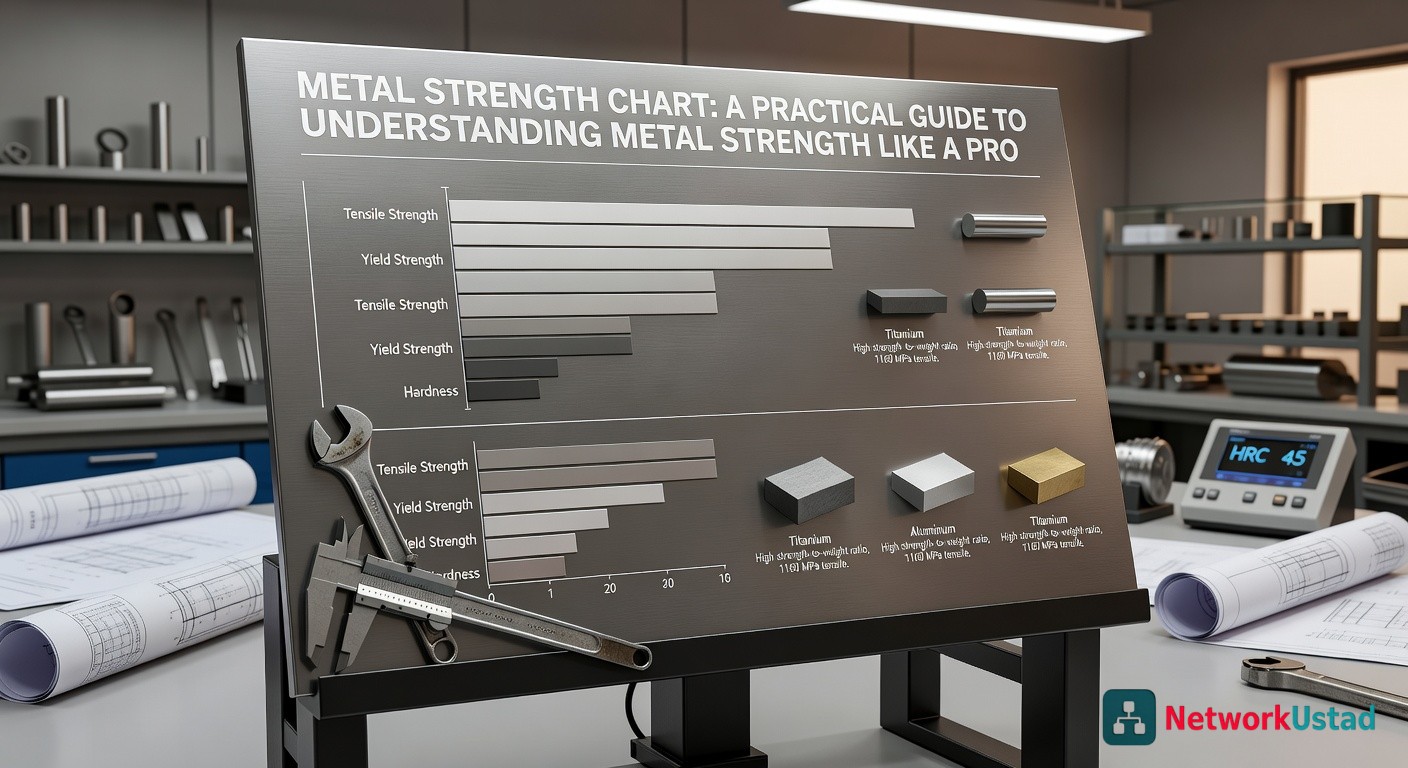
If you’ve ever stood in a workshop, stared at a spec sheet, and thought, “Wait… what does all this actually mean?” — you’re not alone.
A metal strength chart might look like a bunch of numbers at first glance, but once you understand how to read it, it becomes one of the most powerful tools in engineering, manufacturing, and even DIY projects. Whether you’re choosing materials for a structural build or just trying to avoid costly mistakes, knowing how to interpret a metal strength chart can save you time, money, and headaches.
What Is a Metal Strength Chart, Really?
The Simple Explanation
At its core, a metal strength chart is a reference table that shows how different metals perform under stress. It compares properties like:
1. Tensile strength
2. Yield strength
3. Hardness
4. Elasticity
Think of it as a “performance scoreboard” for metals.
Why It Matters More Than You Think
Let me put it this way: choosing the wrong metal is like building a house on sand. It might look fine at first… until it doesn’t.
A reliable metal strength chart helps you:
1. Prevent structural failure
2. Optimize cost vs performance
3. Choose the right material for the job
4. Improve safety margins
And if you’re serious about accuracy, I highly recommend checking this detailed guide: metal strength chart.
Key Properties You’ll See in a Metal Strength Chart
When you first look at a metal strength chart, it’s easy to feel overwhelmed by all the numbers. But here’s the truth: once you understand the core properties, everything starts to make sense. These values aren’t just technical data—they directly impact how a material performs in the real world.
Tensile Strength: How Much Force a Metal Can Take
Tensile strength is one of the most important values on any metal strength chart. It tells you the maximum amount of pulling force a metal can withstand before it fractures.
Imagine stretching a metal rod from both ends. The point where it finally snaps is its tensile strength limit. This property is critical in applications like cables, fasteners, and structural supports where failure is not an option. A higher tensile strength usually means greater durability under extreme loads.
Yield Strength: The Point of No Return
Yield strength is where things get practical. It marks the stress level at which a metal begins to deform permanently.
Before reaching this point, the material can return to its original shape once the load is removed. After that, the change is permanent. In construction and engineering, this value often matters more than tensile strength because even slight deformation can compromise safety or alignment.
A well-read metal strength chart helps you avoid materials that may bend too easily under working conditions.
Hardness: Resistance to Wear and Damage
Hardness measures how well a metal resists surface damage such as scratches, dents, or abrasion.
This property becomes especially important in high-friction environments. Components like gears, cutting tools, and contact surfaces rely on hardness to maintain performance over time. A metal strength chart typically includes hardness ratings using standardized scales, allowing you to compare materials quickly.
Ductility: Flexibility Without Breaking
Ductility describes how much a metal can stretch or deform before it breaks. Materials with high ductility can absorb stress by elongating rather than cracking.
This is particularly useful in applications where vibration, movement, or dynamic loads are involved. A metal strength chart often highlights ductility through elongation percentages, giving you a clearer picture of how forgiving a material can be under stress.
Elasticity: Returning to Original Shape
Elasticity refers to a metal’s ability to return to its original shape after being deformed within its elastic limit.
This property is essential for parts that experience repeated loading and unloading. Springs and flexible components depend heavily on elasticity. By studying a metal strength chart, you can identify materials that maintain their shape and performance over repeated cycles.
Understanding these key properties transforms a metal strength chart from a simple table into a decision-making tool. Instead of guessing, you’re choosing materials based on real performance data, which is exactly what high-quality engineering and reliable results demand.
How to Read a Metal Strength Chart Without Getting Lost
Step 1: Identify Your Application
Before even looking at a metal strength chart, ask yourself:
1. Is this for structural support?
2. Is weight a concern?
3. Will it face extreme temperatures?
Context is everything.
Step 2: Focus on the Right Metrics
Not all numbers matter equally.
For example:
1. Structural beams → Yield strength matters most
2. Cables → Tensile strength is key
3. Wear parts → Hardness dominates
Step 3: Compare Materials Side by Side
A good metal strength chart lets you quickly compare metals like:
1. Steel
2. Aluminum
3. Titanium
4. Brass
This side-by-side comparison is where the real value lies.
Common Metals and How They Stack Up
Steel – The All-Round Champion
Steel is often the go-to material, and for good reason.
1. High tensile strength
2. Good yield strength
3. Relatively affordable
But it’s heavy and can rust if untreated.
Aluminum – Lightweight but Capable
Aluminum is like the athlete of the metal world.
1. Lightweight
2. Corrosion-resistant
3. Lower strength than steel
Perfect for aerospace and automotive applications.
Titanium – Strength Meets Luxury
Titanium is impressive… and expensive.
1. High strength-to-weight ratio
2. Corrosion-resistant
3. Biocompatible
Used in medical implants and high-end engineering.
Brass – The Underrated Performer
Brass doesn’t get enough credit.
1. Good corrosion resistance
2. Easy to machine
3. Moderate strength
Ideal for fittings and decorative applications.
Real-World Applications of a Metal Strength Chart
Construction and Infrastructure
Engineers rely heavily on a metal strength chart when designing:
1. Bridges
2. Buildings
3. Reinforced structures
One wrong calculation here can mean millions in damage.
Manufacturing and Machining
Machinists use strength charts to:
1. Select cutting tools
2. Optimize machining speeds
3. Prevent material failure
Automotive and Aerospace
Weight vs strength is critical.
A metal strength chart helps engineers strike the perfect balance between:
1. Safety
2. Performance
3. Fuel efficiency
Mistakes People Make When Using a Metal Strength Chart
Ignoring Environmental Factors
Strength values are often tested under controlled conditions.
But in the real world?
1. Heat
2. Moisture
3. Corrosion
All of these can affect performance.
Choosing Based on Strength Alone
Stronger isn’t always better.
Sometimes you need:
1. Flexibility
2. Weight reduction
3. Cost efficiency
A smart decision considers all factors, not just what looks best on a metal strength chart.
Misreading Units and Data
This happens more often than you’d think.
Mixing up:
1. MPa and PSI
2. Yield vs tensile strength
…can lead to serious design flaws.
How to Choose the Right Metal Using a Strength Chart
Start With Your Priorities
Ask yourself:
1. Is strength the top priority?
2. Is weight more important?
3. What’s the budget?
Narrow Down Your Options
Use the metal strength chart to eliminate unsuitable materials quickly.
For example:
1. Need lightweight → skip steel
2. Need extreme strength → skip soft alloys
Validate With Real-World Conditions
Always double-check:
1. Temperature ranges
2. Load cycles
3. Environmental exposure
Because charts are just the starting point — not the final answer.
Advanced Insights Most Guides Don’t Tell You
Strength-to-Weight Ratio Is King
This is where materials like aluminum and titanium shine.
A metal strength chart doesn’t always highlight this directly, but it’s crucial for:
1. Aerospace
2. Automotive design
Fatigue Strength Matters Over Time
Repeated stress can weaken metals, even if they never reach maximum load.
This is called fatigue failure — and it’s a silent killer in engineering.
Heat Treatment Changes Everything
Here’s something a lot of beginners miss:
The same metal can have different strength values depending on heat treatment.
So always make sure the metal strength chart matches the exact condition of the material you’re using.
Final Thoughts: Why a Metal Strength Chart Is Your Secret Weapon
Here’s the truth most people don’t say out loud:
A metal strength chart isn’t just for engineers. It’s for anyone who wants to make smarter decisions with materials.
Once you understand how to read it, you stop guessing. You stop overbuilding. You stop wasting money.
Instead, you start making confident, informed choices.
And honestly? That’s what separates amateurs from professionals.
So next time you’re working on a project — big or small — don’t skip the chart. Lean into it. Study it. Use it.
Because the right material choice doesn’t just improve your project… it defines it.