Home Cybersecurity npm Mandates 2FA for Package Publishing to Prevent Supply Chain Attacks
Cybersecurity

npm Mandates 2FA for Package Publishing to Prevent Supply Chain Attacks

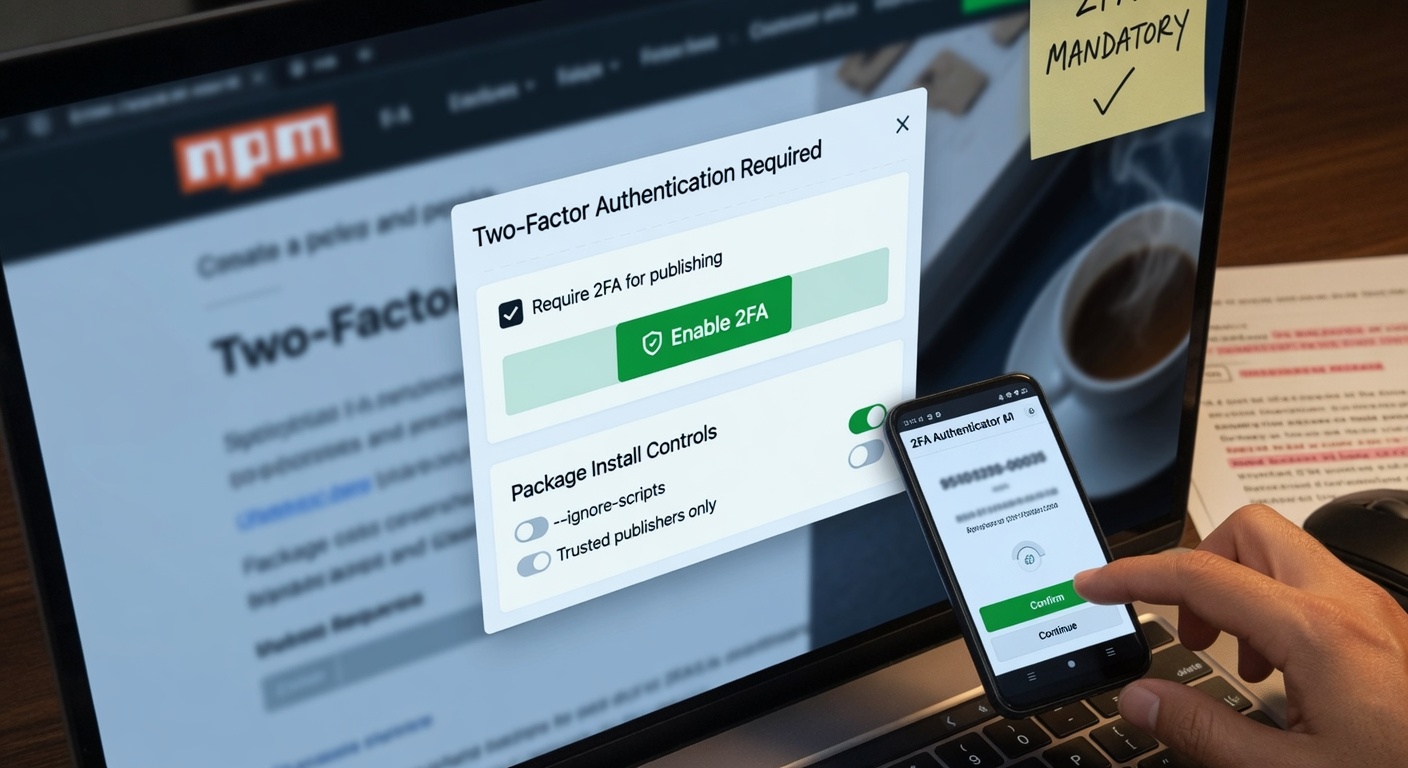
Npm Security Update Showing Two-Factor Authentication On A Developer'S Computer

npm Implements 2FA and Install Controls to Combat Supply Chain Attacks

npm, the package manager for JavaScript, has introduced mandatory two-factor authentication (2FA) for publishing packages and new controls for package installations to mitigate supply chain attacks. The changes, announced this week, aim to address growing security concerns in the open-source ecosystem.

Key Details

The new 2FA requirement applies to all package publishers on the npm registry. Developers must now enable 2FA before publishing or updating packages. Additionally, npm has added granular controls for package installations, allowing organizations to restrict which packages can be installed based on predefined policies.

These measures follow several high-profile software supply chain attacks in recent years, where malicious actors compromised legitimate packages to distribute malware. npm’s parent company, GitHub, reportedly identified these security upgrades as critical for maintaining trust in the platform.

Background

Supply chain attacks targeting open-source repositories have increased significantly since 2021. The npm ecosystem, with over 2 million packages, has been particularly vulnerable due to its decentralized nature. Last year, security researchers discovered multiple cases of attackers hijacking abandoned packages or creating malicious lookalikes.

The new installation controls complement existing security features like delegated authentication systems used in other technologies. Organizations can now define rules to block packages from unknown maintainers or restrict installations to vetted sources.

Implementation Timeline

npm will phase in the 2FA requirement over the next three months, starting with high-impact packages. The package installation controls are available immediately for enterprise customers. Free users will gain access to basic filtering options by July 2026.

GitHub’s security team stated these changes represent the first phase of a broader initiative to harden software supply chains against increasingly sophisticated attacks.


Frequently Asked Questions

How do I enable two factor authentication for npm package publishing?

To enable 2FA for npm package publishing, log into your npm account, navigate to Account Settings, and select 'Enable Two-Factor Authentication' under the Security section. Follow the prompts to configure either an authenticator app or hardware security key, then verify the setup to secure your publishing workflow.

What is npm 2FA mandate and why does it matter for supply chain security?

The npm 2FA mandate requires all package publishers to use two-factor authentication when publishing or modifying packages, directly preventing unauthorized account access that could lead to malicious code injections. This security measure blocks common supply chain attacks where compromised credentials are used to push harmful updates.

Why can't I publish npm packages without two factor authentication anymore?

npm now enforces 2FA for all package publishing to protect the entire JavaScript ecosystem from supply chain attacks that previously exploited weak passwords. If you try to publish without 2FA enabled, the command will fail with an authentication error until you complete the 2FA setup in your account settings.

Does the npm 2FA requirement cost anything or requires specific tools?

Enabling 2FA for npm publishing is completely free and works with any standard authenticator app like Google Authenticator, Authy, or hardware security keys (FIDO2). There are no additional costs beyond your existing npm account, and setup takes less than five minutes using the tools you already have.

Which authentication methods are accepted for npm 2FA mandate and how do they compare?

npm's 2FA mandate accepts time-based one-time passwords (TOTP) via authenticator apps or hardware security keys like YubiKey, with TOTP being the most common choice due to zero cost and wide app support. Hardware keys offer stronger phishing resistance but require purchasing a physical device, while both fully satisfy the mandate's requirement for package publishing security.
Avatar Of Khalid Khan

Khalid Khan

NetworkUstad Contributor

📬

Enjoyed this article?

Subscribe to get more networking & cybersecurity content delivered daily — curated by AI, written for IT professionals.

Related Articles