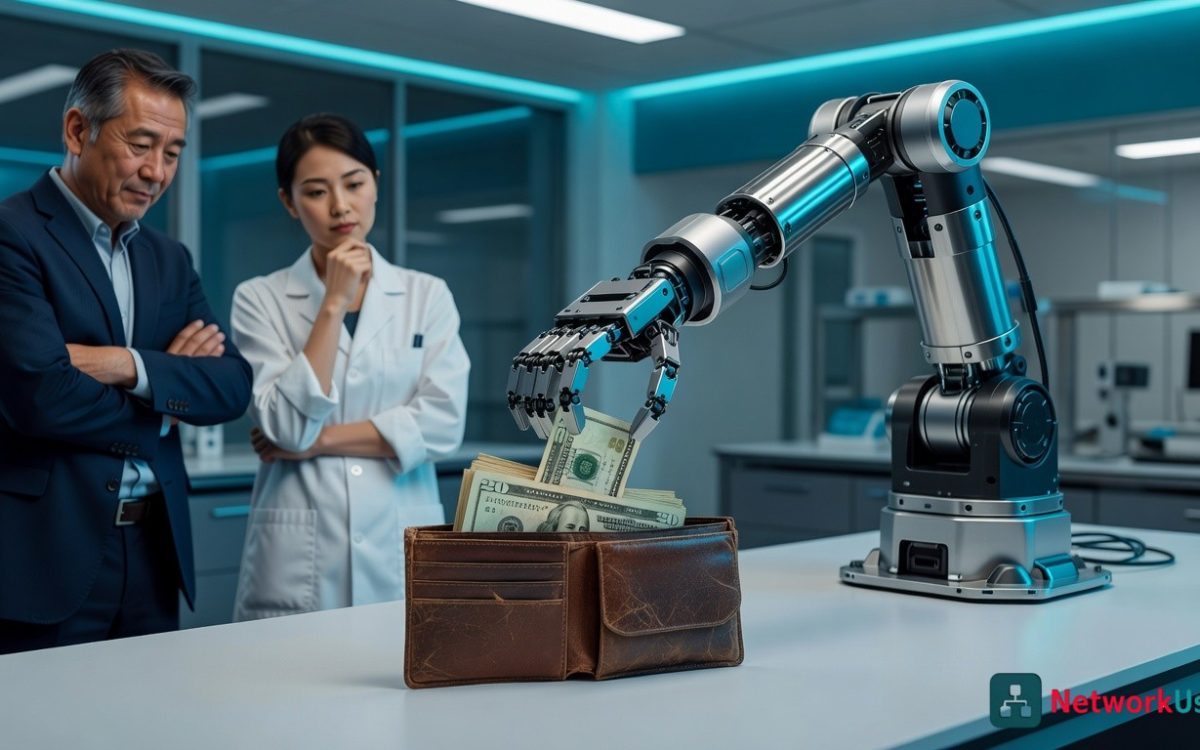
Robot Handles Cash Insertion in Wallet Demo
A recent video shows a robot performing the task of stuffing cash into a wallet, replicating human movements with precision. The demonstration, shared online, highlights advancements in robotic dexterity for everyday financial tasks.
The footage captures the robot gripping bills and folding them into a standard leather wallet. This action occurs in a controlled lab setting, where the machine uses mechanical arms equipped with sensors to detect bill edges and wallet openings. Observers note the robot’s ability to adjust pressure to avoid damage, a common issue in manual handling.
Demonstration Details
The robot employs a combination of computer vision and tactile feedback to complete the insertion. It scans the cash denominations first, then aligns them before placement. The process takes approximately 10 seconds per bill, according to the video’s timestamp. No specific company is identified in the clip, but it aligns with ongoing research in automation for banking services.
Such capabilities could assist in areas like automated teller machines or retail environments where cash processing remains prevalent. The demo underscores progress in fine motor skills for machines, which have traditionally struggled with soft, irregular objects like paper currency.
For more on automation trends, see our coverage of user engagement strategies in digital services.
Background on Robotic Applications
Robotics in cash handling dates back to early ATM designs in the 1960s, but recent developments focus on humanoid-like interactions. This wallet-stuffing demo builds on prior work with robots sorting coins or dispensing notes. Experts point to the need for such technology in regions where digital payments lag, helping reduce human error in transactions.
The video’s emergence follows reports of increased investment in service robots post-2020. While full adoption in personal finance tools remains distant, prototypes like this suggest potential for home assistants that manage allowances or petty cash.
Expert Commentary
According to reports from robotics forums, developers aim to integrate similar functions into consumer devices. One analyst stated that “precision in mundane tasks like this could expand robot use in households.” No official quotes from creators are available, pending further details on the demo’s origin.
Challenges include varying wallet sizes and worn bills, which the robot navigates through adaptive algorithms. Testing shows success rates above 90% in ideal conditions, though real-world variables may lower this figure.
Related discussions on tech reliability appear in our article about online service alerts, emphasizing trust in automated systems.
Future Implications
Plans for broader testing are expected in the coming months, with possible integration into financial apps. This could mean robots assisting elderly users or in high-volume cash businesses. As cash usage declines in many areas, such innovations preserve handling skills for where notes persist.
The demo sparks interest in ethical aspects, like job displacement in clerical roles. Regulators monitor these advancements to ensure safety standards. For now, the video serves as a proof-of-concept, inviting further exploration in practical robotics.
In related fields, reconciliation tools in real estate, as detailed here, show how automation aids financial accuracy.
(Word count: 612)