
Ask most real estate professionals why they use reconciliation software, and they’ll tell you it saves time. That’s true, but it’s not the real reason the software exists. The real reason is compliance — and getting it wrong can mean more than a messy spreadsheet.
Reconciliation software is a tool that matches financial records from different sources — bank statements, internal ledgers, transaction logs — to confirm they agree. In banking, this is standard practice. In real estate, it’s often a legal requirement, not just a convenience.
Why Real Estate Specifically Needs This
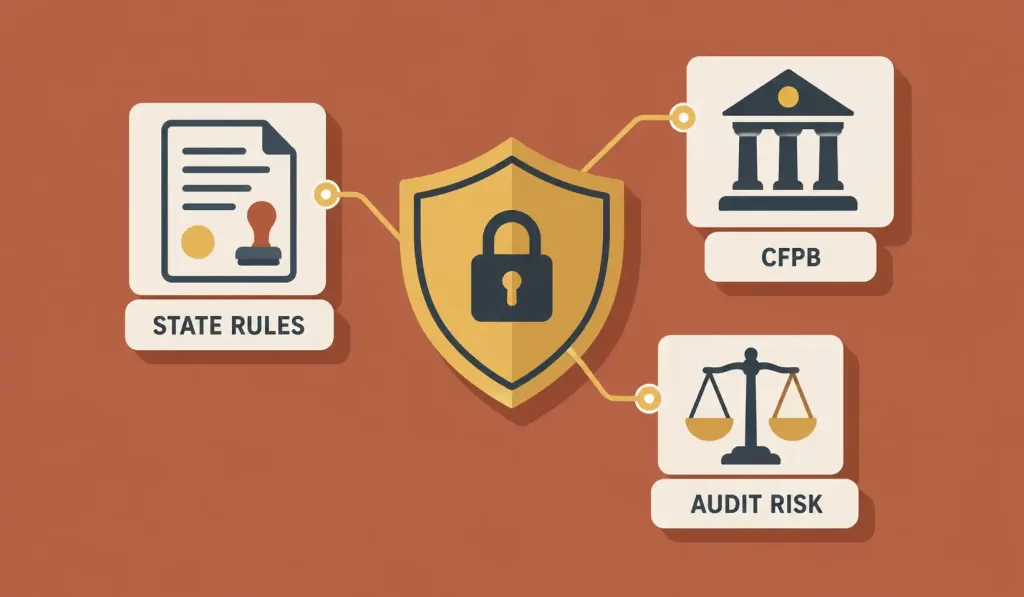
Real estate brokerages, title companies, and property managers routinely handle client money that isn’t theirs — earnest money deposits, security deposits, escrow funds held during a transaction. These funds typically sit in trust accounts, and most U.S. states require those accounts to be reconciled regularly, with specific documentation standards.
This isn’t optional bookkeeping hygiene. State real estate commissions can audit trust accounts, and discrepancies — even unintentional ones caused by manual tracking errors — can trigger real consequences: fines, license action, or in serious cases, legal liability. On the mortgage and closing side, the Consumer Financial Protection Bureau (CFPB) also holds title and closing companies to specific standards around escrow account management.
That’s the actual stakes behind reconciliation software in this industry. It’s not just about freeing up an afternoon that would otherwise go to paperwork — it’s about staying compliant with rules that carry real penalties for getting wrong.
This compliance burden isn’t unique to any single country’s regulatory system, either — it scales with the size and pace of a real estate market. In fast-growing sectors like emerging real estate markets such as India and South Africa, where transaction volume is climbing quickly, the operational case for reliable reconciliation infrastructure only grows — even though the specific rules and regulatory bodies involved differ meaningfully by jurisdiction from the U.S.-specific examples discussed here.
How Reconciliation Software Actually Works
The mechanics are fairly straightforward, even though the stakes behind them aren’t.
The software connects to a company’s bank accounts — checking, trust, escrow, whatever applies — and pulls transaction data automatically. That data gets matched against the company’s own internal records: deposits received, checks issued, funds disbursed. Where the two sources agree, the system confirms the match. Where they don’t, it flags the discrepancy for a human to investigate.
This matching process, done manually, is exactly the kind of work that’s both tedious and error-prone. A person cross-checking hundreds of line items by hand is far more likely to miss a discrepancy than a system built specifically to catch mismatches. That’s the core value proposition: not eliminating human judgment, but catching the errors a human is statistically likely to miss.
Most platforms also generate the specific reports auditors and regulators expect — daily reconciliation summaries, monthly trust account statements, and audit trails showing exactly when a discrepancy was caught and how it was resolved.
What the Software Actually Delivers
Regulatory compliance, first and foremost. Automated, documented reconciliation gives a brokerage or title company a clear audit trail — exactly what’s needed if a state commission or the CFPB ever asks for records. Manual processes make this significantly harder to produce on short notice.
Faster, more accurate bookkeeping. Realtors and title staff spend measurably less time cross-checking paper records when the matching happens automatically, freeing up time for client-facing work instead of ledger review.
Fewer errors, caught earlier. Automated matching catches discrepancies — a missing deposit, a duplicate entry, a transposed number — far faster than a monthly manual review would, which matters because small errors compound if they sit unnoticed for weeks.
Better client trust. Being able to show a client or a regulator an accurate, up-to-date account record on demand builds credibility that a “we’ll get back to you” response undermines.
Lower staff turnover pressure. Reconciliation work, done manually, is repetitive and high-stakes at the same time — a combination that tends to burn out the staff doing it. Automating the tedious matching work, while keeping a person in the loop for actual discrepancies, makes the role more sustainable and reduces the disruption that comes with constant turnover in reconciliation positions.
What the Landscape of Tools Actually Looks Like
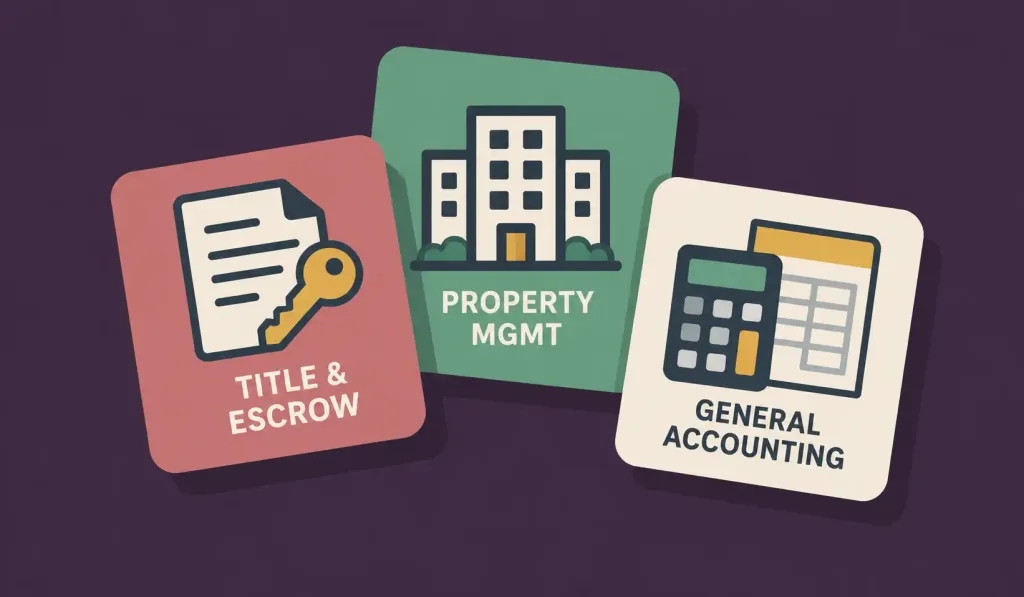
This isn’t a single-product category, and real estate professionals generally fall into one of three paths:
Title and escrow-specific platforms. Companies like SoftPro build reconciliation directly into broader title production and closing software, alongside document generation and compliance tools tailored to title and escrow work specifically. This is generally the strongest fit for title companies and real estate attorneys handling closings regularly, since the reconciliation function is built around the same trust-account rules governing that side of the industry.
Property management platforms with reconciliation built in. Tools aimed at property managers (handling rent collection, security deposits, and owner disbursements) often bundle reconciliation as one feature among many, rather than as a standalone specialty. This tends to suit property managers better than title companies, since the transaction types and compliance requirements differ meaningfully between the two.
General accounting software adapted for real estate. Some brokerages use broader accounting platforms with real estate-specific plugins or configurations rather than a dedicated real estate reconciliation tool. This can work for smaller operations with simpler trust accounting needs, though it usually requires more manual configuration to meet industry-specific compliance reporting standards out of the box.
Which path makes sense depends heavily on what kind of real estate business you’re running — a title company’s compliance needs look quite different from a small property management firm’s.
What to Look for When Choosing a Reconciliation Tool
A few questions worth asking before committing to any platform:
Does it generate the specific reports your state’s real estate commission requires? Compliance reporting requirements vary by state, and a generic reconciliation tool built for banking may not produce what a real estate regulator actually expects.
How does it handle discrepancies? A good system doesn’t just flag a mismatch — it gives staff enough context (transaction history, related records) to investigate and resolve it efficiently, rather than just a red flag with no supporting detail.
Does it integrate with your existing bank and title production software? Manual data entry between disconnected systems reintroduces exactly the error risk reconciliation software is meant to eliminate.
What’s the audit trail like? If a regulator asks for records from six months ago, can the system produce a clear, dated history of every reconciliation and every resolved discrepancy — not just current-state numbers?
Frequently Asked Questions
Is reconciliation software legally required for real estate businesses? Requirements vary by state, but many states mandate regular, documented trust account reconciliation for brokerages and title companies. Software isn’t always explicitly required, but meeting the documentation standard manually at scale is difficult without it.
What’s the difference between reconciliation software and general accounting software? General accounting software tracks income and expenses broadly. Reconciliation software specifically focuses on matching records between sources — bank data against internal ledgers — to confirm accuracy, which is the core function trust accounting compliance actually requires.
How often should real estate trust accounts be reconciled? Many states require monthly reconciliation at minimum, though daily reconciliation is common practice among title companies handling high transaction volumes, since it catches discrepancies before they have time to compound.
Can small real estate businesses benefit from reconciliation software, or is it only for large firms? Smaller businesses often benefit proportionally more, since they typically lack a dedicated accounting staff to catch manual errors — automated reconciliation covers a gap that a larger firm might otherwise fill with more bookkeeping personnel.
What happens if a trust account discrepancy isn’t caught? Depending on the state and severity, consequences can range from a required corrective filing to fines or license action. This is exactly why the audit trail and discrepancy-resolution documentation a good reconciliation platform produces matters as much as the matching itself.
The Bottom Line
Reconciliation software helps real estate businesses in ways that go well beyond saving time on paperwork. For brokerages, title companies, and property managers handling client trust funds, it’s often the practical backbone of staying compliant with state and federal requirements that carry real consequences for getting wrong. Platforms like SoftPro build this directly into broader title and closing workflows, while other paths — property management platforms or adapted general accounting tools — suit different business types. The right choice depends on what kind of real estate work you actually do, but the underlying need — accurate, documented, defensible records — applies across the industry.