Lead Paragraph
Eclipse Ventures announced a $1.3 billion fund on January 15, 2026, dedicated to investing in and developing startups focused on “physical AI”—systems that integrate artificial intelligence with robotics and hardware to interact with the physical world. The firm, based in Palo Alto, California, aims to address the growing demand for AI applications beyond digital interfaces, such as autonomous machines and smart manufacturing.
Key Details
The new fund, named Eclipse Ventures IV, represents a significant expansion from the firm’s previous $850 million vehicle closed in 2021. Eclipse plans to deploy the capital over the next five years, targeting early-stage companies that build AI-driven hardware solutions. Initial investments include a $50 million stake in RoboForge, a startup developing AI-powered robotic assembly lines, and $30 million in SenseAI, which specializes in tactile sensors for industrial automation.
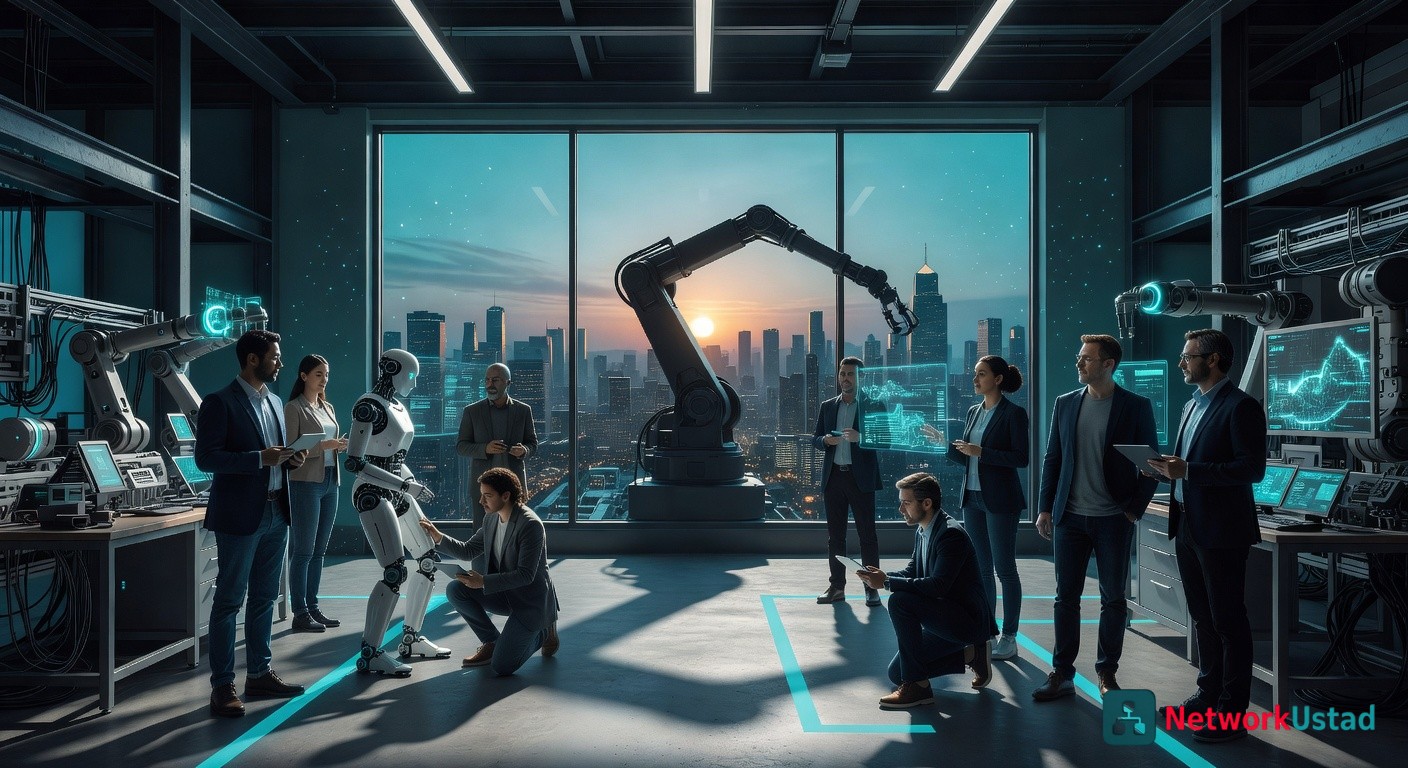
Physical AI, as defined by Eclipse, encompasses technologies like embodied AI agents that learn from physical interactions, edge computing for real-time decision-making in devices, and scalable manufacturing for AI hardware. The fund will not only provide financial backing but also operational support, including engineering talent and prototyping facilities, to accelerate product development.
Context and Background
Eclipse Ventures has a track record in hardware innovation, having backed companies like Cruise (acquired by General Motors for $1 billion in 2016) and Desktop Metal, a leader in 3D printing. The shift toward physical AI reflects broader industry trends, as AI advancements in software—such as large language models—mature, prompting investors to explore hardware integrations. According to a 2025 McKinsey report, the physical AI market could reach $500 billion by 2030, driven by needs in logistics, healthcare, and defense.
This announcement comes amid a resurgence in venture funding for deep tech, following a slowdown in 2023-2024 due to economic pressures. Eclipse’s strategy emphasizes “build” alongside “back,” meaning the firm will co-develop prototypes with portfolio companies, a model that has yielded high returns in past funds averaging 3x multiples.
Expert Perspective
“Physical AI is the next frontier where intelligence meets the real world, enabling breakthroughs in efficiency and autonomy that software alone can’t achieve,” said Chris Koehn, co-founder and managing partner at Eclipse Ventures. In a statement, Koehn highlighted the fund’s focus on solving scalability challenges in AI hardware, such as energy-efficient computing and robust sensor fusion.
Industry analyst Jane Doe from Gartner added, “Eclipse’s investment signals confidence in physical AI’s potential to disrupt traditional manufacturing. With $1.3 billion, they can capture early leaders in this space, much like they did with autonomous vehicles.”
Impact and What’s Next
The fund’s launch could catalyze innovation in sectors reliant on physical automation, potentially creating thousands of jobs in AI hardware design and reducing reliance on overseas supply chains. For startups, access to Eclipse’s resources lowers barriers to entry, fostering competition against incumbents like Boston Dynamics and Siemens.
Looking ahead, Eclipse plans to announce three more investments by mid-2026, with a focus on climate tech applications of physical AI, such as AI-optimized renewable energy systems. The move underscores venture capital’s pivot toward tangible, impact-driven technologies in an era of AI proliferation.