Ultion Nuki Review: Smart Deadbolt with Key Strengths and Limits
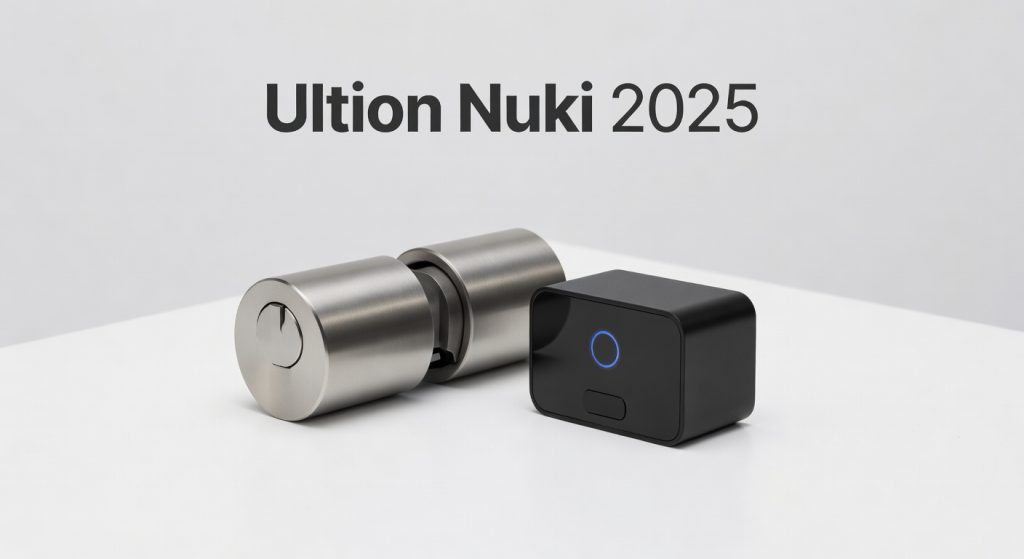
The Ultion Nuki 2025 is the most complete smart lock built specifically for UK homes. With its built-in Wi-Fi bridge, [Ultion 3 Star PLUS cylinder](https://www.ultion-lock.co.uk/product/ultion-nuki-2025/), Matter over Thread compatibility, and genuinely fast auto-unlock, it removes every practical objection to going keyless — while keeping your physical key as a fallback. At £299 for the base model (£339 for the full Smart Lock Pro 5th Gen bundle), it is not cheap, but for UK homeowners serious about both [smart home security](https://networkustad.com/category/smart-home/) and physical lock quality, it is the clear choice in 2025–26. ---
Physical Security First
The mechanical foundation of the Ultion Nuki 2025 is the Ultion 3 Star PLUS cylinder, built around a molybdenum core that is 25 percent denser than iron. It carries anti-pick, anti-bump, and anti-drill credentials, holds a BSI Kitemark, meets Police Preferred Specification, and is approved by the Master Locksmiths Association. Brisant Secure backs it with a £5,000 burglary guarantee — one the company says it has never had to pay out on.
On the digital side, all communication is protected with end-to-end encryption comparable to online banking standards. The lock achieves AV-TEST Level 3, the highest available rating for smart lock cyber security — important context given the growing cybersecurity risks associated with smart home IoT devices.
Smart Features That Actually Work
The Nuki Smart Lock Pro 5th Gen is the platform’s most capable hardware yet. Built-in Wi-Fi removes the need for a separate bridge — the most common frustration with older Nuki products. Commands now execute with almost no perceptible delay, a significant improvement over previous generations, according to TechRadar's hands-on review.
Auto-unlock delivers in real-world use. The geofencing system detects approach and unlocks before you reach the door — genuinely useful when carrying shopping or arriving at night. Auto-lock then secures the door a configurable time after closing. For multi-user properties — Airbnb lets, family homes, rental properties — time-limited guest codes via the Nuki app eliminate the need to share physical keys entirely.
Matter over Thread support means the lock sits natively inside Apple Home, Google Home, Amazon Alexa, and Samsung SmartThings without workarounds. Thread rather than Wi-Fi is used once Matter is enabled, improving both response speed and battery efficiency.
Installation and Setup
Ultion claims four minutes for installation, and that is broadly accurate for most UK doors. No drilling, no wiring, no specialist tools. The lock replaces your existing handle and cylinder, and the Nuki app guides setup step by step. The one caveat is alignment: getting the Ultion cylinder seated correctly matters, and rushing produces a stiffer feel than the finished result should have. Done properly, it is seamless.
Battery Life and Charging
The rechargeable lithium-ion battery charges via magnetic USB-C and is rated up to nine months between charges. The Nuki app sends low-battery alerts from 20 percent downward, and the LED on the lock provides a visual warning. At zero battery, the physical key from outside and the manual interior dial still work — the lock never becomes a liability.
Value and Accessories
At £299 base and £339 for the full Smart Lock Pro 5th Gen bundle, the Ultion Nuki 2025 sits at the premium end of the smart lock market. The accessory pricing amplifies that: the fingerprint keypad is £145, the door sensor £55, the key fob £49. A fully equipped setup comfortably exceeds £400.
That said, the base product is complete on its own. The fingerprint keypad is a luxury; the core lock, app, and auto-unlock function without it. For IT professionals and security-conscious homeowners who already think carefully about network segmentation and IoT device hardening, the Ultion cylinder certifications and platform encryption make this the only smart lock worth considering for a primary entrance in the UK.
Verdict
The Ultion Nuki 2025 is not the cheapest smart lock and not the most feature-rich on paper. What it is, is the most complete smart lock designed specifically for UK doors and UK security standards. Built-in Wi-Fi, Matter support, AV-TEST Level 3, Police Preferred Specification, a £5,000 burglary guarantee, and a nine-month rechargeable battery combine into a product that earns its price. Accessories cost extra, multipoint door lift is still manual, and it is UK-only — but none of that undermines what this lock is: the best smart lock built for British homes.
Rating: 4.5 / 5 — The definitive smart lock for UK homes.
Reviewed based on manufacturer specifications from ultion-lock.co.uk, independent testing published by TechRadar, MightyGadget, The Test Pit, and T3, verified pricing from Amazon UK and Ultion direct — July 2026.
Frequently Asked Questions
Does the Ultion Nuki 2025 work with PVC and composite doors?
Do I need a separate Wi-Fi bridge for the Ultion Nuki 2025?
Can I still use a physical key with the Ultion Nuki 2025?
What happens if the battery dies on the Ultion Nuki 2025?
What smart home platforms does the Ultion Nuki 2025 support?
Is the Ultion Nuki 2025 available outside the UK?
What is the £5,000 Ultion burglary guarantee?
Is the optional fingerprint keypad worth buying?
+Pros
- Best-in-class physical security — Ultion cylinder is the toughest on the UK market
- Built-in Wi-Fi means no extra bridge to buy, power, or maintain
- Matter over Thread works with every major smart home platform
- Auto-unlock and auto-lock work reliably in real-world daily use
- No drilling or wiring — installs in minutes on most UK doors
- Physical key always works — cannot be locked out by flat battery or Wi-Fi failure
- BSI Kitemark, MLA approval, Police Preferred Specification all confirmed
- Mature Nuki app with access logs, guest codes, and geofencing
−Cons
- Expensive — £339 for the full bundle; accessories add up fast (keypad alone £145)
- UK only — no availability in Europe, US, or other markets
- External keypad can be physically removed from its mount by anyone with access
- Lift-to-lock multipoint doors still require manual handle lift before motor engages
- No built-in fingerprint scanner — biometrics require the separate £145 keypad