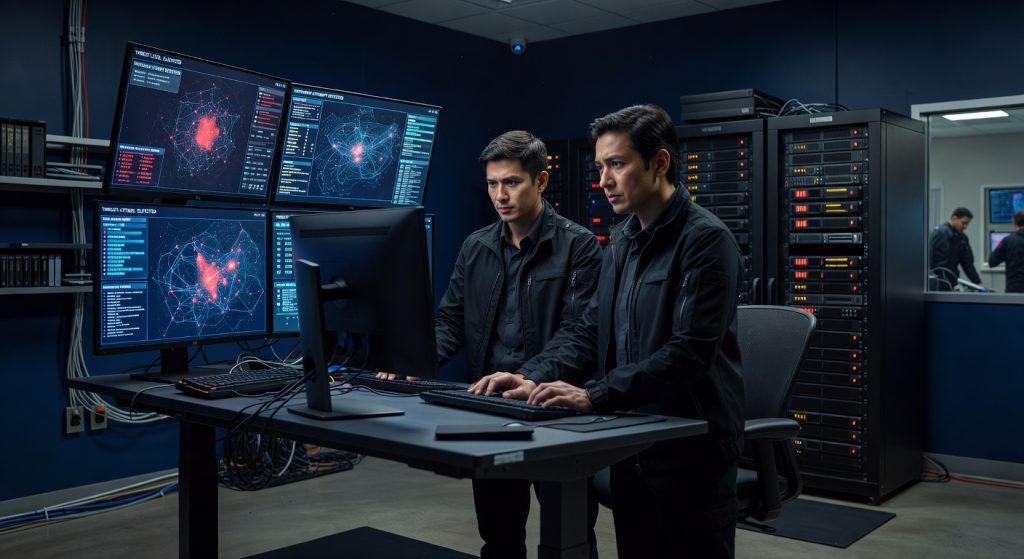
St. Michael’s Hospital in Toronto triggered a no-notice Code Orange drill, mobilizing every clinical and operational team—from emergency responders to surgery staff, communications, and administration. As a Level 1 trauma center, this unannounced simulation tested no-notice drills under real mass casualty conditions, exposing coordination gaps that scheduled exercises often miss. Cyber operations teams face identical risks: attackers strike without warning, exploiting network segmentation flaws or SIEM blind spots in minutes.
This hospital exercise underscores a critical truth for cybersecurity: training must mirror combat. No-notice drills force teams to respond with live tools—Wireshark for packet captures, Splunk for log triage, ELK Stack for anomaly hunting—without rehearsal buffers. In cyber terms, this means simulating ransomware propagation across Active Directory domains or DDoS floods overwhelming CDN edges, revealing human latencies that kill defenses.
Why No-Notice Drills Expose Flaws
Planned tabletop exercises build muscle memory but foster complacency. No-notice drills inject chaos: inject Beacon payloads via phishing simulations, force incident response (IR) activation, and monitor MTTR (mean time to response). Hospital teams discovered siloed comms channels; cyber squads similarly uncover MFA fatigue bypasses or unpatched CVE-2023-XXXX vectors.
- Real-time stress testing: Measure SOC triage speed under alert fatigue—average teams take 45 minutes to isolate lateral movement.
- Cross-team integration: Involve netops, devs, and execs, mimicking CISO escalation paths.
- Tool fidelity: Use production IDS/IPS like Snort or Suricata, not sanitized labs.
NIST’s cybersecurity incident handling guide emphasizes such realism, yet few enterprises run them quarterly.
Building Effective No-Notice Scenarios
Craft drills around crown jewel assets: OT networks in manufacturing or patient data vaults in healthcare. Start small—red team phishing a single VLAN—then scale to full purple team takedowns.
For IT pros, script via Atomic Red Team or MITRE Caldera frameworks:
- Phishing-to-pivot: Deliver Cobalt Strike beacons, track EDR evasion.
- Supply chain sim: Mimic SolarWinds-style compromises in CI/CD pipelines.
- Zero-day injection: Use Metasploit modules for zero-trust gaps.
Link this to emerging cybersecurity innovations from sectors like finance, where automated SOAR platforms cut response times.
Actionable Steps for Cyber Teams
Schedule unannounced runs monthly, debriefing with AAR (after-action reviews). Integrate AI-driven threat hunting tools like Microsoft Sentinel for baseline metrics.
Embed specialized OS environments for blue teams to practice in isolated sandboxes. Track progress: aim for sub-15-minute containment.
External benchmarks from SANS Institute papers show drilled teams halve breach dwell times.
What This Means for You
No-notice drills transform reactive SOCs into proactive fortresses, directly slashing dwell time from weeks to hours. IT leaders: audit your IR playbook today—pilot one drill next quarter using open-source C2 frameworks.
Forward momentum builds resilience: as threats evolve, teams drilled in chaos adapt faster, turning potential outages into contained incidents. Enterprises ignoring this risk business continuity failures amid rising ransomware tides.