Have you ever worked on a project where you had to make sure everything was clear before you could start?
There will be no changes to the plans, no last-minute changes, and no confusion about who is in charge of what. Some projects go more smoothly when everything is planned out ahead of time and done in order.
That’s where the Waterfall methodology still makes sense.
Agile is very popular these days, but Waterfall methodology is still a viable choice for projects that need structure, predictability, and clear approvals.
In this blog, we’ll go over the six phases of the Waterfall methodology and where this structured approach works best.
What is Waterfall Methodology?
Waterfall methodology is a step-by-step approach to project management in which each stage must be completed before the next can begin.
For example: Consider that you are building a house and you can’t paint the walls until the structure is complete.
The same logic applies here. Projects move in a fixed order: planning, design, development, testing, launch, and maintenance. It works best when everything needs to be neat and clear.
The 6 Phases of Waterfall Methodology
Let’s break down the six phases of waterfall methodology for project management in simple terms.
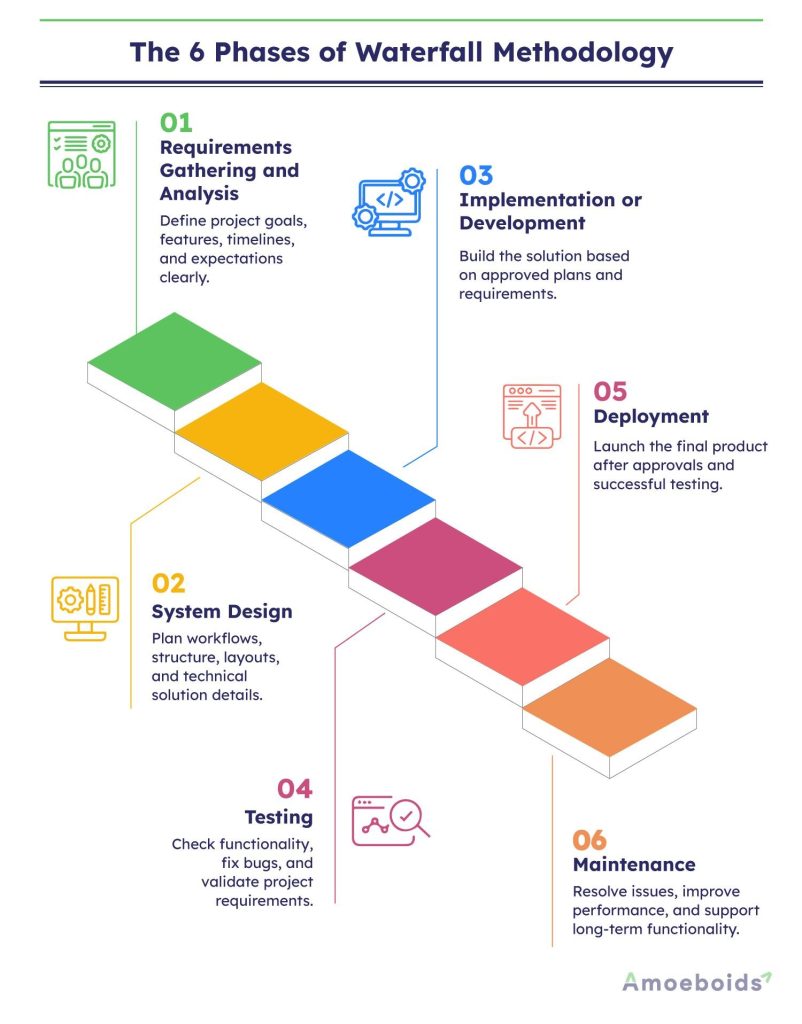
Requirements Gathering and Analysis
This stage is the project’s starting point. Before starting any real work, teams get all the information they need, like goals, features, timelines, and expectations. This phase is important in the waterfall methodology for project management because it helps to avoid future confusion.
Example: If a hospital needs a patient management system, the team first defines required data, user access, and essential system features.
System Design
The team decides how to build the final solution once they know what the requirements are. Layouts, workflows, structure, and technical planning all contribute to ensuring that everyone understands how the final product should look.
Example: This step for a SaaS dashboard might include wireframes, user roles, reporting layouts, and planning the database.
Implementation or Development
Here’s where the real work starts. Developers, engineers, or teams begin building the system using the approved plan and design created in the previous stages.
Example: The build phase is when the team starts to create the dashboard, add features, and link the data for an internal reporting tool.
Testing
After the project is finished, it is tested to make sure everything is working right. This phase helps teams identify bugs, fix problems, and make sure that the final product meets the original requirements.
Example: Before launching an employee portal, the team ensures that login, reporting, and access permissions are working properly. For streamlined workforce management, thorough testing is essential.
Deployment
The project is launched or delivered once testing is done and all approvals are in place. This is the phase in the waterfall methodology for project management when the final product officially goes live.
Example: The government service portal is moved to the live environment so that users can access it right away.
Maintenance
After the launch, the work doesn’t stop completely. The goal of the maintenance phase is to resolve problems, improve the system, and keep it running smoothly over time.
Example: When users report a bug in a live software platform, the team fixes it and updates it during maintenance.
Real Project Examples of Waterfall Methodology in Action
Waterfall Methodology works best when the requirements are clear and changes are minimal. Here are a few industries where it still feels natural.
Healthcare Technology
Healthcare projects must be initiated correctly, obtain the necessary approvals, and maintain proper documentation. Teams that make things like patient records or lab software usually can’t afford to make changes at the last minute or guess what will happen.
IT B2B SaaS Platforms
Some B2B SaaS tools have predefined goals, features, and workflows. Waterfall Methodology allows teams to stay organised and build things in a planned manner, whether for administrative systems, internal dashboards, or reporting tools.
Government Systems
Government projects frequently require approvals, compliance checks, paperwork, and strict procedures. That’s why Waterfall methodology is ideal for portals, internal systems, and digital services that require structure from the start.
Construction Projects
Construction follows a natural sequence. You design first, then construct, inspect, and finish. Skipping or rushing any step can quickly result in expensive and chaotic projects, much like evaluating commercial contractors reputation.
Best Practices for Managing Waterfall Projects Successfully
Teams need more than just a set process to make Waterfall projects go well. They also need to get into the right habits.
Define requirements clearly from the beginning: Waterfall methodology is most effective when everyone is aware of the exact tasks from the outset. Clear requirements help teams stay on track, avoid confusion, and avoid making expensive changes later.
Document every phase thoroughly: Proper documentation ensures that everyone is involved in the project. Making sure to record each step correctly from planning to testing makes it easier to keep track of decisions, approvals, updates, and responsibilities.
Set realistic timelines and approvals: A strong plan requires realistic deadlines, not rushed ones. Giving each phase adequate time for reviews, approvals, and execution allows the project to progress more smoothly.
Track progress carefully across each stage: Even with a plan in place, it’s crucial to monitor projects closely. By monitoring their progress at every step, teams can identify delays early, maintain their course, and ensure smooth operations.
Conclusion
Not every project requires constant back-and-forth, unexpected changes, or multiple revisions. A clear path, fewer moving parts, and a process that everyone understands are sometimes all that a team requires. Waterfall Methodology is still a good way to do things there.
If your projects are frequently delayed, confusing, or more difficult to manage than they should be, is a more structured approach the missing piece?
Start by looking over your current process. Projects that go more smoothly usually start with a better plan, not just faster work.