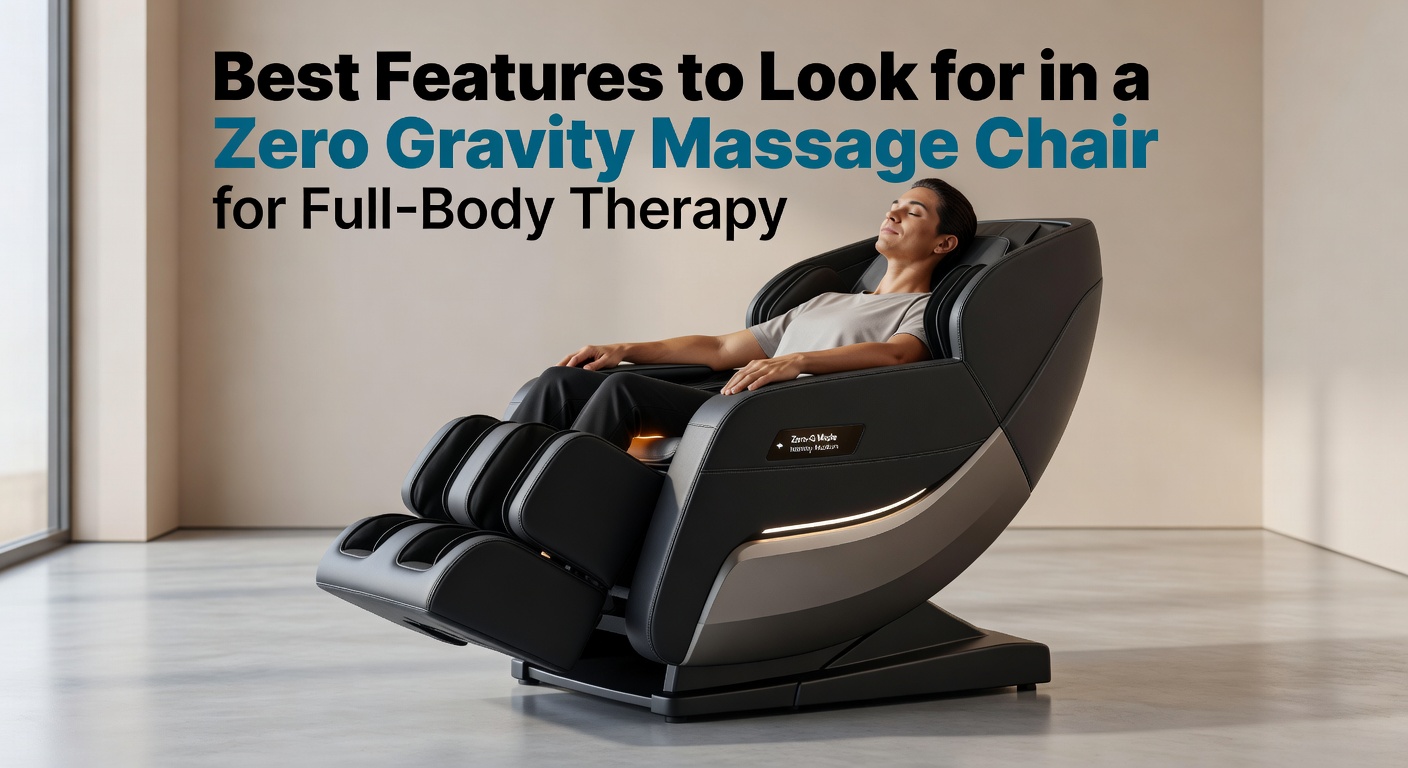
They assume any padded recliner with a vibration motor qualifies as therapeutic. It doesn’t, not even close. A genuine zero gravity massage chair operates on a fundamentally different plane than your standard living room lounger.
It draws from NASA-inspired biomechanics, pairs that with precision roller engineering, and layers in targeted recovery technology to produce something that actually moves the needle on physical wellness.
If you’re hunting for the best massage chair features that go beyond marketing language, this guide lays it all out, from roller mechanics to smart body scanning, so you walk into any purchase with real clarity.
Here’s what the numbers say: a 2026 market overview found that over 68% of consumers buy zero-gravity massage chairs specifically for musculoskeletal relief, while 54% rank full-body coverage as a top priority. These aren’t comfort shoppers. They want measurable physical results from a full-body massage chair, and the market is responding.
Understanding Zero Gravity Positioning, Why It Changes Everything
Zero gravity positioning isn’t a gimmick. It’s the biomechanical foundation that makes every other feature on this list actually perform. Understand this first, and you’ll evaluate the rest far more critically.
The concept traces back to NASA research on astronaut body positioning during launch. When you recline so your legs sit at or near heart level, spinal pressure drops, blood flow improves, and your muscles begin to release built-up tension. That’s what a zero gravity recliner massage delivers, true spinal decompression across your entire back, not just a slight lean.
If you’re looking to shop OSIM zero gravity chair options, this is the core feature worth prioritizing. A standard recliner simply can’t match this, no matter how many massage motors it claims to have
Key Zero Gravity Variations Worth Comparing
Control depth varies considerably between models. Entry-level chairs often offer one fixed recline angle, functional but limited. Premium options provide dual or multiple positions: one calibrated for light relaxation, another optimized for deeper therapeutic work.
Independent adjustment of the backrest and footrest is a meaningful step up from single-touch presets. And for households with more than one regular user? Saved memory profiles aren’t a luxury; they’re genuinely practical.
The Ergonomic Details That Separate Good from Great
Recline angle alone won’t save you from an uncomfortable session. Without proper lumbar and thoracic contouring, the lower back sags, a phenomenon sometimes called “hammocking”, and suddenly your therapeutic experience becomes a source of new discomfort.
Head and neck support matters equally. In deep recline, a poorly designed headrest lets the chin drop toward the chest, which isn’t relaxing for anyone. Pay attention to seat pan tilt too, particularly if you deal with tight hip flexors or persistent lower back pain.
Core Massage Technologies That Do the Actual Work
Zero gravity amplifies a massage chair’s effectiveness. But it doesn’t manufacture that effectiveness; your roller system, track design, and compression technology do. Get these wrong, and zero gravity positioning is just a comfortable way to recline.
Worth noting: zero gravity chairs now represent more than 30% of the total massage chair market share, driven squarely by demand for ergonomic comfort and verified stress-relief benefits. The market isn’t growing because of aesthetics; it’s growing because the technology performs.
2D vs. 3D vs. 4D Rollers, Which One Do You Actually Need?
Two-dimensional rollers move along a flat plane: up and down, left and right. Adequate for light surface massage, nothing more. Three-dimensional rollers add depth; they press into muscle tissue, creating genuine kneading action.
Four-dimensional rollers take it further by varying both speed and pressure mid-stroke, closely mimicking a trained therapist’s natural rhythm. If you’re an athlete, managing chronic pain, or simply someone with dense muscle tissue, a 4D system is where you want to be.
One red flag to watch for: rollers that only vibrate with no depth adjustment are a dead giveaway of an underpowered system. For deeper insights, check out best professional massage chairs.
S-Track, L-Track, and SL-Track, Coverage That Actually Counts
The track determines how far rollers travel along your body. An S-track follows your spine’s natural curvature from neck to lower back.
An L-track extends down through the glutes. The SL-track, genuinely the gold standard for a therapeutic massage chair, runs from the base of your neck all the way to the upper hamstrings.
For taller users, especially, verifying the maximum supported height before purchasing isn’t optional. It’s essential. Compare these with options in professional massage chairs.
Airbag Compression Zones That Work With Your Rollers
Airbag count is almost irrelevant. What matters is placement and coordination. Quality coverage hits the shoulders, arms, lumbar region, calves, and feet, and those airbags should work in concert with your roller patterns, not as a separate, isolated feature.
Simultaneous compression-plus-roller programs consistently outperform chairs that run each system independently. If a spec sheet leads with airbag quantity as a selling point, that’s worth a second look.
Body Scanning and AI-Driven Personalization
Modern body scan technology maps your shoulder height, spinal curvature, and pressure distribution before the first roller moves.
During a zero gravity recliner massage, the spine’s alignment shifts as your body reclines; rollers must track that new position accurately, or you lose therapeutic precision.
AI-enhanced scanning that adapts mid-session offers the most reliable personalization, particularly for multi-user households or users with asymmetrical tension patterns.
Essential Comfort and Wellness Features Worth Evaluating
| Feature | Why It Matters | Best For |
|---|---|---|
| Lumbar heat therapy | Loosens deep tissue faster | Chronic stiffness, pre-sleep |
| Foot and calf rollers | Addresses lower-leg fatigue | Standing workers, runners |
| Spinal stretch programs | Decompresses the spine passively | Desk workers, sciatica relief |
| Quiet motor technology | Enables late-night sessions | Shared spaces, home offices |
Heat therapy deserves its own moment here. Infrared heating elements embedded in the lumbar zone penetrate deeper than surface pads and meaningfully accelerate muscle relaxation; the difference is noticeable within a single session.
Foot and calf therapy rounds out lower-body coverage, an area many chairs skip entirely despite its relevance to anyone logging long hours on their feet or at a desk.
Spinal stretch programs work differently; they actively lengthen tight muscles rather than just applying pressure, creating a powerful synergy with zero gravity recline that’s hard to replicate through manual stretching alone.
Practical Design Factors You Cannot Afford to Overlook
A feature-rich spec sheet means nothing if the chair won’t fit through your doorway or accommodate your body properly.
Wall-hugging “zero wall” designs address the clearance problem by sliding the seat forward during recline rather than pushing backward into your wall. Measure your space carefully, both doorway width and required recline radius, before finalizing any order.
Body fit is equally non-negotiable. Review the recommended height range, seat width, and weight capacity for any model you’re seriously considering. An extendable footrest and an adjustable headrest make a single chair workable for multiple users without compromise.
For build quality indicators, look at the frame material, stitching consistency, and how cleanly the panels align. These details predict longevity far more reliably than any spec sheet claim.
Frequently Asked Questions
1. What should I look for in a full-body massage chair?
Focus on roller type, 3D or 4D, track length, with SL-track providing the most comprehensive coverage, airbag placement across major muscle groups, heat zone quality, body scanning precision, and the chair’s zero gravity recline mechanism. These elements consistently separate genuinely therapeutic chairs from vibrating furniture.
2. How often should I use a zero gravity massage chair for noticeable results?
For stress management, 15–20 minutes daily tends to work well. For muscle recovery or chronic tension, two to three deeper sessions per week, roughly 30 minutes each, typically produce more consistent, compounding improvement over time.
3. Is a zero gravity recliner massage safe for people with high blood pressure?
Generally speaking, yes, but always consult your physician before regular use. The reclined positioning influences circulation, and intensity should be kept low initially. Anyone managing cardiovascular conditions, implanted devices, or acute injuries should obtain medical clearance first.
Choosing the Right Chair
The right zero gravity massage chair isn’t the one with the longest feature list; it’s the one where the right features are executed with genuine precision. SL-track systems, 3D or 4D rollers, multi-zone heat therapy, and accurate body scanning form the non-negotiable foundation.
Everything else, aromatherapy, app control, and ambient lighting, adds value only when built on that solid base. Define your must-haves before you shop, test in-store whenever possible, and scrutinize warranty terms before committing. A well-chosen chair delivers real, daily physical recovery. That’s an investment worth getting right.