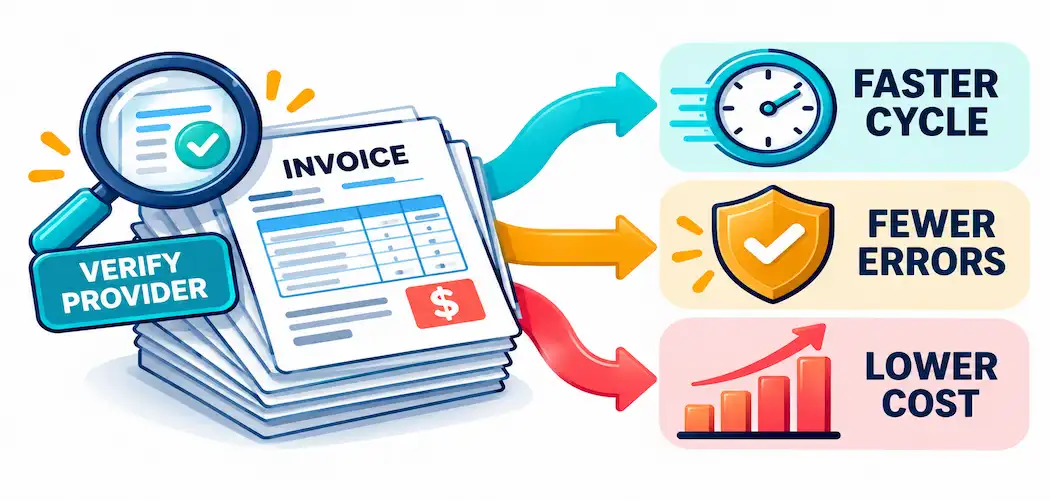
Invoice processing looks simple from a distance — an invoice comes in, someone checks it, someone approves it, someone pays it. In practice, at any real volume, it becomes one of the more quietly expensive parts of running a finance operation. The paperwork piles up, errors creep in, approvals stall, and the cost of all that friction rarely shows up as a single line item anywhere, which is exactly why it tends to go unaddressed longer than it should.
Outsourcing invoice processing to a dedicated provider is one of the more straightforward ways businesses have found to get that friction under control. Here’s why it works, where the real savings come from, and what to watch for before choosing a provider.
The Three Kinds of Cost Hiding in Invoice Processing
Most businesses underestimate what invoice processing actually costs because they’re only counting one piece of it.
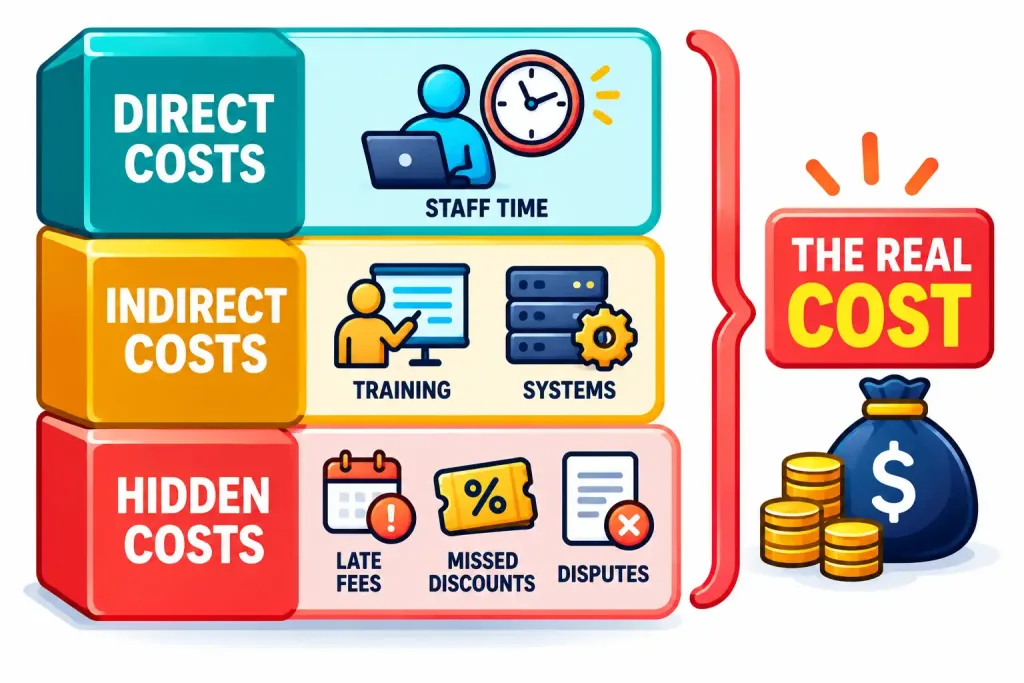
Direct costs are the obvious ones: staff time spent entering, checking, and routing invoices for approval. Indirect costs are the staffing overhead around that work — training, management, the software and systems needed to support the process. Hidden costs are the ones that don’t show up on any invoice-processing budget line at all: late-payment penalties, missed early-payment discounts, vendor relationships strained by payment delays, and the time spent chasing down disputes caused by data-entry errors in the first place.
A skilled outsourcing provider, with staff who process invoices as their core function rather than as one task among many, can generally bring all three cost categories down over time — not because outsourced labor is inherently cheaper, but because specialization and standardized workflows reduce the error rate and processing time that drive the indirect and hidden costs up.
Human Error Is Unavoidable — So Standardize Around It
No invoice-processing system, in-house or outsourced, eliminates human error entirely. What changes is how much a standardized process limits the damage a single mistake can do. A dedicated outsourcing team working from consistent intake and validation procedures catches more inconsistencies before they become approval delays — mismatched purchase order numbers, missing line items, duplicate submissions — which speeds up the time from invoice receipt to approval rather than just shifting the same error-prone process to a different set of hands.
Faster Payment Cycles, Better Cash Flow
A shorter invoice-to-payment cycle has a direct effect on cash flow and liquidity — money that isn’t tied up waiting on a stalled approval is money a business can actually use. Faster, more consistent processing also tends to improve relationships on both ends: vendors get paid closer to terms, which supports better terms and pricing over time, and internal teams spend less time firefighting payment disputes and more time on higher-value work.
Real-Time Visibility Into What’s Owed and What’s Been Paid
One underrated benefit of a well-run outsourced process is visibility. Date-stamped invoices, clear tracking of where each invoice sits in the approval chain, and up-to-date vendor-payment liability data give finance teams a real-time picture of what’s outstanding — rather than discovering a backlog only when a vendor calls asking where their payment is.
Problems a Good Outsourcing Provider Reduces
A handful of recurring problems tend to disappear, or at least shrink substantially, once invoice processing moves to a team built around doing it well:
- Invoices arriving with wrong or missing vendor contact information
- Missing or incomplete line-item data
- Nonstandard, inconsistently formatted invoices that are hard to process automatically
- Data-entry errors that compound into downstream approval delays
- The same mistakes recurring because no one owns fixing the underlying process
The Real Risks of Outsourcing — Worth Weighing Honestly
Outsourcing isn’t risk-free, and a fair assessment has to include the downsides:
- Loss of direct control and visibility. Handing the process to an external team means trusting their reporting rather than watching the work happen directly, which requires good tooling and communication to offset.
- Data exposure. Invoices often contain sensitive vendor and financial information, so any outsourcing relationship needs real data-security practices in place — not just a claim of compliance, but documentation a business can actually verify.
- Dependence on the provider. Once a process is outsourced, bringing it back in-house (or switching providers) carries real transition costs, which makes the initial choice of provider worth getting right.
- Duplicate-submission risk. This matters especially with providers that charge per invoice processed, since the incentive structure can occasionally work against catching duplicates as aggressively as a business would like.
What to Actually Look for in a Provider
Choosing an outsourcing partner is worth treating as seriously as any other vendor decision with access to financial data:
- Project scope fit — does the provider actually handle the volume and complexity of invoices a business generates, or are they better suited to a different scale entirely?
- Team size and expertise — a provider should be able to speak specifically to how their team is trained and how quality is checked, not just that it is.
- Cost efficiency — not just the headline rate, but the total cost once error rates, turnaround time, and any per-invoice fee structures are factored in.
- Compliance and data security — certifications (ISO 27001 for information security is a common one in this space) are a starting point, not proof on their own. Ask for documentation and, where possible, verify certifications directly with the issuing body rather than taking a vendor’s word for it.
- Infrastructure — what systems does the provider actually use, and how do they integrate with existing accounting or ERP software?
- Communication and culture fit — especially relevant for providers operating across time zones, since response time and escalation paths matter when something goes wrong.
As an example of the kind of provider that exists in this space, firms like Oworkers operate as multilingual business process outsourcing (BPO) companies, listing invoice and document processing among a broader set of back-office services alongside customer support and data operations. Providers like this can be a reasonable starting point for research — but as with any vendor, claims about pricing, error rates, and certifications are worth verifying independently rather than taken at face value from their own marketing. Request a proof-of-concept period, ask for client references, and confirm security certifications directly with the certifying body before signing a contract.
The Bottom Line
Invoice processing is one of those operational tasks that’s easy to underinvest in precisely because its costs are spread across several categories rather than concentrated in one obvious place. Outsourcing it to a provider that specializes in the work — properly vetted, with verified credentials and a clear understanding of the risks involved — is a legitimate way to recover time, reduce errors, and speed up payment cycles. The businesses that get the most out of outsourcing tend to be the ones that treat the provider selection process with the same diligence they’d apply to any other vendor handling sensitive financial data.
Invoicing is only one back-office function worth evaluating this way. If HR is the next function on the list for a software or outsourcing decision, our look at how the right HR software affects productivity walks through the same kind of cost-versus-benefit thinking for that side of the business.
Frequently Asked Questions
What’s the biggest hidden cost of in-house invoice processing?
Usually the costs that never show up as a line item: late-payment penalties, missed early-payment discounts, and staff time spent resolving disputes caused by data-entry errors. These tend to be larger in total than the direct labor cost of processing invoices.
Does outsourcing invoice processing eliminate errors entirely?
No — human error is unavoidable in any process. What a good outsourcing provider offers is a more standardized workflow that catches and limits errors before they cause approval delays, rather than eliminating the possibility of mistakes altogether.
What’s the biggest risk of outsourcing invoice processing?
Data exposure and loss of direct control are the two most significant risks. Invoices often contain sensitive financial and vendor information, so verifying a provider’s actual security practices — not just their marketing claims — matters more than almost any other factor in the decision.
Should I trust a provider’s claims about certifications and error rates?
Not without verification. Ask for documentation and confirm certifications directly with the issuing body where possible. A provider’s own website is marketing material, not independent proof.