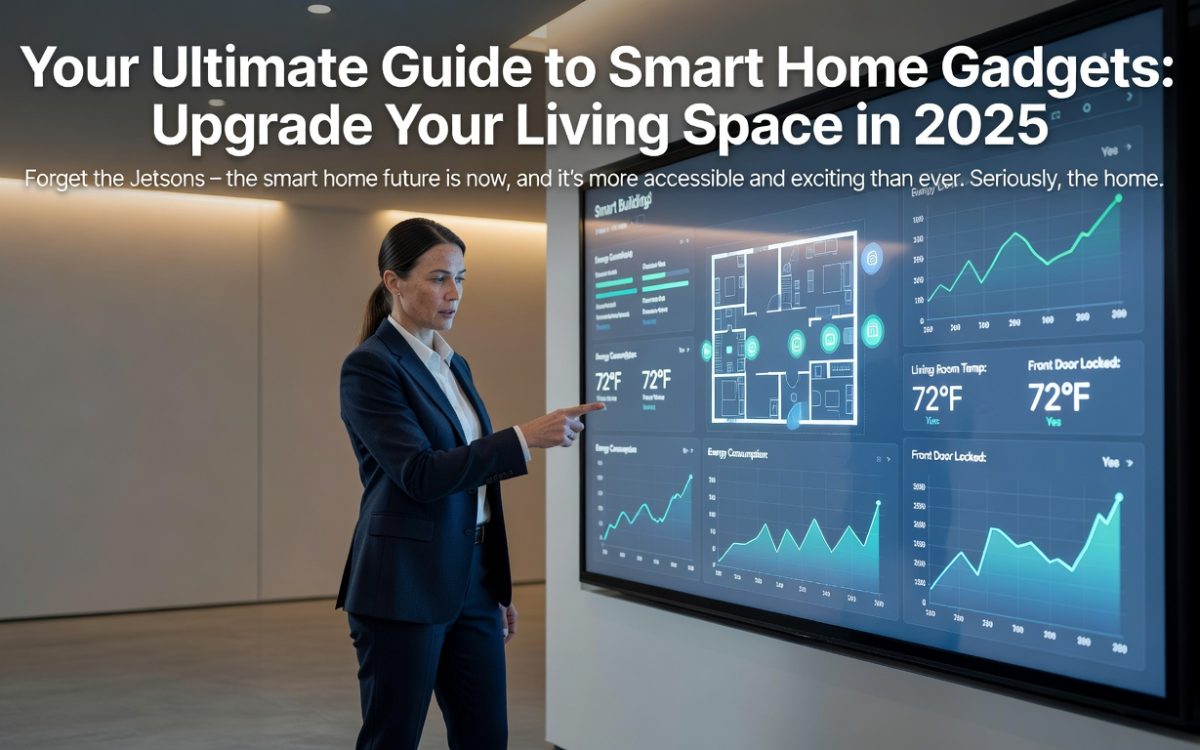
Smart home gadgets now control over 70% of U.S. households’ lighting and climate systems, according to a 2026 Statista report, slashing average energy bills by 15-20% for users who integrate them fully.
This surge reflects a market projected to hit $174 billion globally by 2025, per Grand View Research. Your Ultimate Guide to Smart Home Gadgets: Upgrade Your Living Space in 2025 equips you with actionable steps to join this transformation, from picking top devices to securing your setup.
Whether revamping a kitchen or boosting home security, these tools deliver convenience, savings, and peace of mind. Dive in to discover how they elevate everyday living.
Understanding the Evolution of Smart Home Gadgets
Smart home technology traces back to the 1970s with X10 protocols enabling basic remote control of lights. By the 2010s, platforms like Nest and Philips Hue popularized connected thermostats and bulbs, growing the market from $58 billion in 2019 to over $130 billion by 2026, reports McKinsey.
The shift accelerated with voice assistants. Amazon Echo launched in 2014, followed by Google Home, creating ecosystems where devices interoperate seamlessly.
Key Milestones Shaping Modern Smart Homes
- 2014: Amazon introduces Alexa, sparking voice-controlled ecosystems.
- 2016: Matter standard emerges to unify protocols, reducing compatibility headaches.
- 2023: Apple HomeKit gains Thread support for faster, mesh networking.
- 2026: AI integration hits mainstream, with predictive automation via models like Google’s Gemini.
Today, as of May 2026, over 2.5 billion smart devices operate worldwide, per IoT Analytics, evolving from isolated gadgets to interconnected hubs.
Essential Smart Home Gadgets for Every Room
Select devices based on interoperability—opt for Matter-certified products to ensure future-proofing. Here’s a curated list of must-haves transforming living spaces.
Smart Lighting and Climate Control
Philips Hue bulbs adjust color and brightness via app or voice, cutting energy use by 20%, claims Signify’s internal study. Pair with Ecobee smart thermostats, which save users $50-150 annually on heating, per Energy Star ratings.
Pro Tip: Use motion sensors like Aqara for automated entry lighting, enhancing security without constant manual input.
Smart Kitchen Innovations
Smart refrigerators from Samsung monitor inventory via internal cameras, reducing food waste by 30%, according to a 2025 University of California study. Thermomix TM6 cooks 80,000+ recipes autonomously, blending chopping and heating.
Voice-activated faucets from Moen dispense precise water volumes, ideal for bakers. These smart kitchen tools streamline meal prep dramatically.
“Smart kitchens aren’t novelties—they’re efficiency engines, saving families 10 hours weekly on chores,” says Forrester analyst Sarah Johnson.
Smart Bathroom and Grooming Gadgets
Kohler Numi 2.0 toilets feature bidets, heated seats, and foot warmers, controlled via app. Withings U-Scale tracks body composition with 50g accuracy, syncing to health apps.
Motion-activated mirrors like HiMirror analyze skin health, recommending products. These bathroom grooming gadgets elevate routines into personalized spas.
Top Smart Home Hubs and Ecosystems in 2026
Hubs centralize control. Amazon Echo hubs dominate with 35% market share, per Canalys 2026 data, while Google Nest offers seamless Android integration.
| Hub | Strengths | Weaknesses | Price Range |
|---|---|---|---|
| Amazon Echo (4th Gen) | Alexa skills library, affordability | Privacy concerns | $50-100 |
| Google Nest Hub Max | AI facial recognition, display | Limited third-party support | $200-250 |
| Apple HomePod Mini | Siri privacy, HomeKit security | Ecosystem lock-in | $100 |
| Samsung SmartThings | Broad compatibility, no hub needed | App glitches reported | $70-120 |
Choose based on your phone ecosystem—iOS users favor Apple for end-to-end encryption.
For robust home connectivity, ensure gigabit speeds support multiple devices without lag.
Pros, Cons, and Real-World Case Studies
Smart home gadgets offer convenience but demand upfront investment. A Parks Associates study shows 40% of users recoup costs within 18 months via energy savings.
Advantages and Drawbacks
- Pros: 24/7 remote access, automation saves 15% on utilities (U.S. Department of Energy), enhanced security deters 60% more break-ins (ADT data).
- Cons: Initial costs average $500-2000, 25% face compatibility issues (Consumer Reports 2026), cybersecurity risks if unpatched.
Practical Examples from Users
In a Seattle case study by CNET, a family integrated Ring doorbells and Nest cameras, reducing false alarms by 80% and insurance premiums by 10%. Another from Wired: An elderly couple used smart locks and fall-detection sensors, enabling independent living longer.
Compare to traditional setups—smart systems outperform by automating routines, unlike manual timers that fail 30% of the time, per a MIT study.
Installation and Setup Best Practices
Start with Wi-Fi assessment—devices need 2.4GHz bands for range. Use mesh systems like Eero for coverage.
- Map your space: Identify dead zones with apps like WiFi Analyzer.
- Test compatibility: Verify Matter or Zigbee support.
- Secure setup: Enable two-factor authentication, update firmware monthly.
- Integrate gradually: Begin with lights, expand to security.
Link smart TVs into the mix for unified control, as detailed in our guide on how smart TVs function within home networks.
For hybrid homes, services like reliable cell home plans provide backup when Wi-Fi falters.
Security and Privacy Considerations for Smart Homes
Cyberattacks on IoT devices rose 150% in 2025, warns Cybersecurity and Infrastructure Security Agency (CISA). Use VPNs and segment networks—keep smart gadgets on guest Wi-Fi.
Expert advice: “Prioritize zero-trust models; assume breaches,” recommends Krebs on Security founder Brian Krebs.
Enable auto-updates and avoid default passwords. Apple’s Private Cloud Compute exemplifies privacy-forward design.
Future Trends and Predictions for Smart Homes
By 2030, 80% of homes will feature AI-driven predictive maintenance, forecasts Gartner. Edge computing reduces cloud dependency, cutting latency by 50%.
Emerging: Biometric locks with vein scanning, AR interfaces for setup, and sustainable gadgets using recycled materials. Matter 2.0 expands to EVs and appliances.
Energy harvesting—devices self-powering via solar—gains traction, per IDC 2026 report.
Upgrade now to leverage the built-in advantages of new construction homes wired for smart tech, or enhance existing spaces seamlessly.
Conclusion: Transform Your Home Today
Your Ultimate Guide to Smart Home Gadgets: Upgrade Your Living Space in 2025 reveals how these devices deliver efficiency, security, and luxury. Key takeaways: Prioritize Matter compatibility, secure your network, and start small for big wins.
Implement one category—kitchen or security—and track savings. Ready to modernize? Inventory your space, budget $300-500 initially, and consult pros like contact a real estate professional for smart-home-ready properties. Find the best top-performing agent or explore options with Wishbone Properties to elevate your living space.