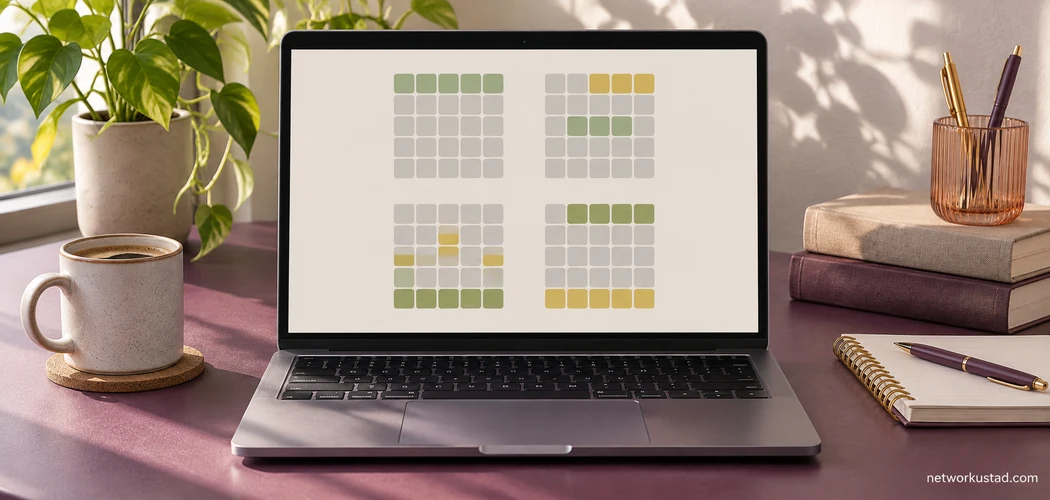
Sedecordle gives you 16 five-letter words to solve in 21 guesses. Every guess goes to all the boards, and each board gives clues for its own answer. A word you enter to solve one board can give you the letter you need on another.
The tricky part is deciding when to gather more clues and when to commit to an answer. Start in Practice if you want to get used to moving between boards before you try the daily game.
How to Play Sedecordle
- Open the official Sedecordle site and choose Daily game or Practice under Sedecordle.
- Type a valid five-letter word and submit it. The same guess appears across the puzzle.
- Read the tile clues on each board. Switch between boards to see where your guess helped most.
- Use the remaining guesses to solve all 16 boards. The 21-guess limit is shared across the whole round.
Start with the original mode while you learn the rules. The site also offers Sedec-order, which reveals the next unsolved board after you solve the current one, and Savior, which starts with four guesses already chosen for you. Those modes change the decisions you make early in a round.
Read Each Board’s Clues Separately
| Tile colour | What it tells you about that board |
|---|---|
| Green | The letter belongs in that exact position. |
| Yellow | The letter is in the answer, in a different position. |
| Grey | The letter is absent, or that particular copy is extra if you guessed it more than once. |
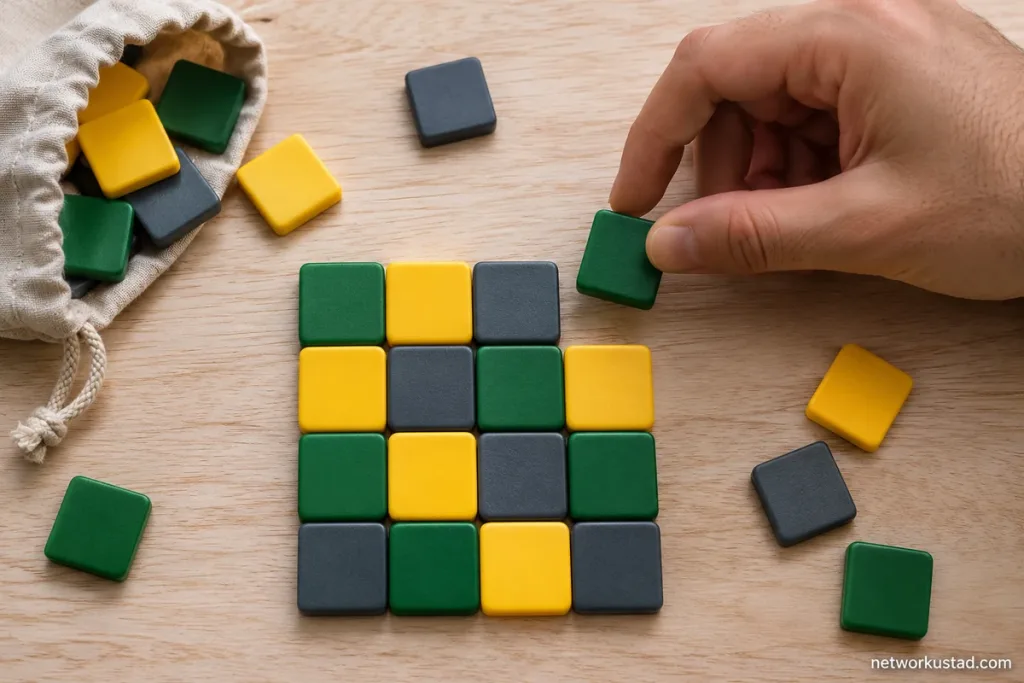
Imagine you enter CRANE. On a practice board with CRISP as its answer, C and R would be green. On a board with PEARL as its answer, A would be green and R and E would be yellow. The R clue differs because each board evaluates the guess against a different word.
When the same letter appears twice in a guess, look at both tiles together. A green or yellow copy can confirm that the answer contains the letter even if the other copy is grey. Keep each board’s evidence separate. A grey tile on one board gives you no reason to rule out that letter on the others.
Make Early Guesses Work Across Several Boards
An opening word with five different letters can give you a broad set of clues. If several boards are still hard to read after the first guess, a second word with mostly fresh letters may help. Scan the boards before committing to a third. You may already have enough information to solve one, and that answer will test another set of letters elsewhere.
You can start with a pair of words such as SLATE and CRONY in Practice to see how much information two guesses can reveal. They test ten distinct letters. If the first word gives you a strong candidate on a board, you can try that candidate instead of using the second starter automatically.
Track Your Remaining Guesses
Compare the number of guesses left with the number of unsolved boards. If you have eight guesses and six boards left, you have room for two guesses that solve nothing, assuming each of the other guesses solves a board. With six guesses and six boards left, every remaining guess has to solve a board.
Use that margin to decide whether a clue-gathering guess is worth it. Suppose one board could be LIGHT, MIGHT, or NIGHT. Before trying each one, look for a strong answer elsewhere that contains L, M, or N. You might solve that board and narrow the possibilities on the first board with the same guess. Recheck the clues before returning to the uncertain word.
Build a Routine in Practice
After each guess, look first for boards with several green tiles or a combination of green and yellow tiles that points to a clear answer. Solve those when you have enough evidence. On a board with fewer clues, write down the fixed positions and the letters you still need to place. A short note can save you from rereading the same rows each time you return to it.
When the round ends, review one guess you would change. If you spent three guesses testing the same ending with different first letters, look for a moment when solving another board could have tested one of those letters. The next time that pattern appears, check the other boards before spending another guess on it.