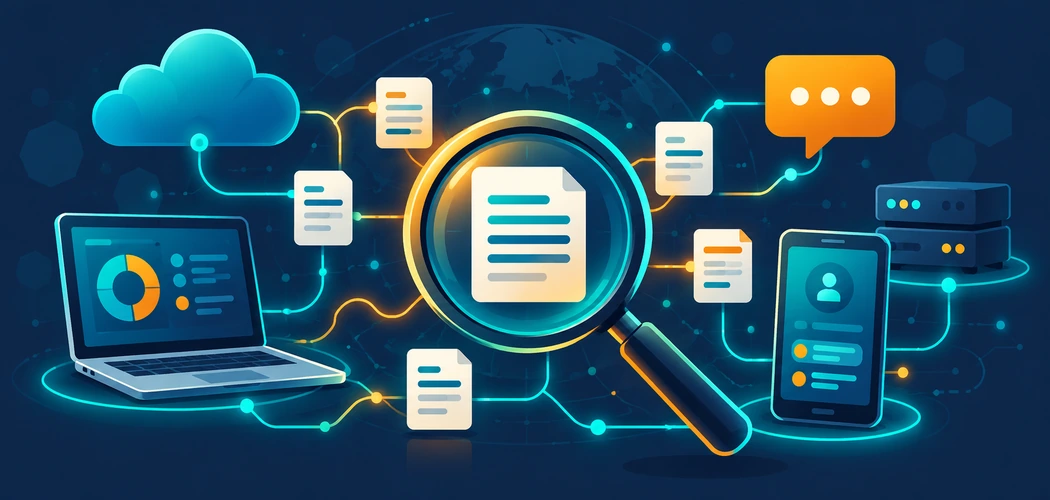
The corporate investigation has changed shape entirely. A decade ago, “investigating” an insider threat, a fraud case, or an IP theft allegation mostly meant interviews, paper trails, and a forensic specialist examining a single laptop. Today, the evidence lives across endpoints, mobile devices, cloud storage, and a dozen different messaging platforms simultaneously — and the software built to handle that shift looks nothing like older forensic tools. Here’s what the category actually covers, and what separates a genuinely capable tool from a vendor’s marketing claims.
Why the Evidence Landscape Changed
Insider threats, data breaches, fraud, and IP theft now generate most of their evidence digitally rather than on paper — a slack message, a file copied to a personal cloud drive, a deleted conversation on a messaging app, or activity logs from company cloud infrastructure. A corporate investigation tool that can only examine a single hard drive in isolation misses most of where the actual evidence lives in a modern case.
What a Genuinely Capable Investigation Tool Needs
- Multi-source data acquisition — pulling evidence from endpoints (laptops, desktops), mobile devices, and cloud accounts (Microsoft 365, Google Workspace, iCloud) in a forensically sound way that preserves the integrity of the original data, since evidence that can’t withstand a legal challenge to its collection method is worthless in any formal proceeding.
- Broad artifact parsing across messaging platforms — Slack, Microsoft Teams, WhatsApp, Signal, and similar platforms each store conversation data differently, and a tool limited to only a few of these misses evidence depending entirely on which platform employees happened to use.
- Chain-of-custody documentation — a defensible, timestamped record of exactly how evidence was collected, handled, and analyzed, which matters enormously if a case ends up in litigation or regulatory review, where opposing counsel will specifically look for gaps in that chain to challenge the evidence’s admissibility.
- Timeline and relationship visualization — the ability to map out when events happened and how different pieces of evidence connect to each other, since a pile of individually-collected artifacts is far less useful than a reconstructed sequence showing what actually happened and in what order.
- Export formats compatible with legal review workflows — RSMF (Relativity Short Message Format) has become a standard export format specifically for short-form messages (texts, chat apps) feeding into eDiscovery review platforms, since litigation review teams need evidence in a format their existing legal tech stack can actually ingest.
- Compliance-aware handling of regulated data — GDPR, HIPAA, and various financial compliance regimes impose real constraints on how personal and regulated data can be collected, stored, and reviewed during an internal investigation, and a tool built without this in mind can create new compliance exposure in the course of investigating an unrelated problem.
The AI-Assisted Review Question
Several vendors in this category now market AI-assisted review features — tools that claim to summarize large volumes of messages or flag relevant content faster than manual review. This is a genuinely useful direction given how much data a modern investigation touches, but a few things are worth asking before relying on one:
- Does it actually reduce review time, or just reduce the apparent volume by hiding things a human reviewer should still see? AI summarization is only as good as its ability to avoid false negatives — missing something relevant is far costlier in an investigation than a slower but more thorough manual review.
- Where does the data go during AI processing? A tool that claims to “operate entirely offline” is making a specific, verifiable technical claim about its data storage and handling — worth confirming independently rather than taking a vendor’s marketing page at face value, especially given how sensitive investigation data typically is.
- Is the AI assistance auditable? If an AI tool flags or summarizes evidence that ends up supporting a disciplinary action or legal case, being able to show exactly how it reached that conclusion matters for defensibility in the same way chain-of-custody documentation does.
The Vendor Landscape
Several established products compete in this space, each with different strengths:
- Magnet AXIOM — widely used across both corporate and law-enforcement digital forensics, known for broad artifact support across devices and cloud sources.
- OpenText EnCase — one of the longest-established names in digital forensics, historically strong in enterprise and legal/eDiscovery-integrated workflows.
- X-Ways Forensics — known for a lighter-weight footprint and granular low-level control, often favored by specialists who want more direct control over the analysis process.
- Belkasoft — a forensics platform marketing broad artifact-type support (vendor states over 1,500 types) and an integrated AI assistant (BelkaGPT) for accelerating review, among its feature set.
- Autopsy — a widely used open-source digital forensics platform, a relevant option for organizations wanting to evaluate core forensic capability without a commercial license cost before deciding whether a paid tool’s additional features justify the expense.
The right tool for a given organization depends on the specific evidence sources that matter most (which messaging platforms employees actually use, which cloud services are in play), the volume of cases the team handles, and whether existing legal/eDiscovery infrastructure favors a particular export format or integration. Evaluating more than one option against an organization’s actual evidence sources — rather than taking any single vendor’s feature list as the complete picture of what the category offers — is the only way to know which tool genuinely fits.
The Bottom Line
Modern corporate investigations are fundamentally digital-evidence problems now, spanning endpoints, mobile devices, cloud platforms, and messaging apps simultaneously — and the software built for this needs multi-source acquisition, defensible chain-of-custody handling, and export compatibility with legal review workflows to actually hold up if a case escalates. Several capable products exist in this category (Magnet AXIOM, EnCase, X-Ways, Belkasoft, and the open-source Autopsy among them), each with different strengths, and the right choice depends on an organization’s specific evidence sources and existing legal-tech workflow rather than any single vendor’s marketing claims.
Frequently Asked Questions
What makes a corporate investigation tool “forensically sound”?
It means evidence is collected and handled in a way that preserves its integrity and can be demonstrated through a documented chain of custody — critical if the evidence needs to hold up in litigation, a regulatory review, or an internal disciplinary proceeding where its validity might be challenged.
Why does messaging app support matter so much for corporate investigations?
Employees communicate across many different platforms (Slack, Teams, WhatsApp, Signal, and others), each storing data in its own format. A tool that only supports a few of these platforms misses evidence entirely depending on which app employees happened to use for a given conversation.
Should a company rely on a vendor’s AI-assisted review claims without verification?
No — claims like “operates entirely offline” or specific time-savings figures are vendor marketing statements, not independently verified facts. Worth testing directly, especially given how sensitive investigation data typically is, before building a workflow that depends on them.
Is open-source forensics software like Autopsy a viable alternative to commercial tools?
It can be, particularly for organizations wanting to evaluate core forensic capability before committing to a commercial license. Whether it’s sufficient depends on the complexity of cases an organization typically handles and whether it needs the additional features (broader artifact parsing, integrated AI review, dedicated support) that commercial tools offer.