
A brain injury caused by the negligence or wrongdoing of a third party or an accident caused by the fault of another person is accompanied by medical and legal implications. Rehabilitation after a brain injury caused by an accident is a critical process that aims to help individuals regain lost abilities, help them receive appropriate compensation, maximize their independence, and improve their overall quality of life. Visit a brain injury attorney in Las Vegas to learn about your legal options after such an injury.
In 2026, traumatic brain injuries (TBIs) remain a significant public health concern. According to the Centers for Disease Control and Prevention (CDC), there are approximately 2.8 million TBIs sustained annually in the United States, leading to over 214,000 hospitalizations and around 69,000 deaths each year. Globally, the incidence has risen to about 20 million new cases, with many stemming from accidents involving negligence, such as vehicle crashes or workplace incidents. These statistics underscore the importance of timely and comprehensive rehabilitation, which can significantly reduce long-term disabilities affecting over 5.3 million Americans living with TBI-related impairments.
This article is your complete guide to rehabilitation after a brain injury, especially the one caused by an accident involving negligence.
Understanding Brain Injuries
Before diving into rehabilitation, it’s essential to grasp the nature of brain injuries. TBIs are classified as mild (concussions), moderate, or severe, often resulting from blows to the head or penetrating wounds. Common causes include falls (leading cause in older adults), motor vehicle accidents, sports injuries, and assaults—many preventable through safety measures but exacerbated by negligence.
Symptoms vary widely: physical (headaches, dizziness), cognitive (memory loss, confusion), emotional (depression, irritability), and sensory (blurred vision, tinnitus). In negligence cases, such as a faulty helmet or unsafe road conditions, the injury’s severity can influence legal claims. Recent 2026 research from the National Institute of Neurological Disorders and Stroke (NINDS) emphasizes that even mild TBIs can lead to chronic symptoms persisting for years, affecting up to 45% of patients four years post-injury.
Early diagnosis via CT scans, MRIs, or advanced biomarkers is crucial. In 2025, new classification criteria from UCSF researchers have improved accuracy, leading to better-tailored rehab plans. This understanding sets the foundation for effective recovery, blending medical intervention with supportive therapies.
Medical Evaluation and Stabilization
Immediately after the accident, the first priority is to assess and stabilize the individual’s medical condition. This may include surgeries, medication, or other interventions to prevent further damage.
Later comes the acute care phase, in which the focus is on monitoring the individual’s condition, preventing complications, and ensuring that the brain injury is stable.
To ensure holistic treatment and effective rehabilitation, a multidisciplinary team comes into action. This may involve-
- Neurologists and neurosurgeons
- Physical therapists
- Occupational therapists
- Speech-language pathologists
- Neuropsychologists
- Social workers
- Rehabilitation nurses
- Case managers
In 2026, this team often incorporates telehealth for remote monitoring, reducing hospital stays by up to 20% according to recent studies. Initial assessments now include AI-driven tools for predicting outcomes, such as machine learning models analyzing EEG data to forecast recovery trajectories. For severe cases, interventions like craniotomy or intracranial pressure monitoring are standard, with new anti-inflammatory drugs showing promise in reducing swelling.
Stabilization also addresses secondary issues like infections or seizures, which affect 10-20% of TBI patients. A table below outlines key phases:
| Phase | Focus | Duration |
|---|---|---|
| Acute | Stabilization, surgery | Days to weeks |
| Subacute | Monitoring complications | Weeks to months |
| Rehabilitation | Skill rebuilding | Months to years |
This structured approach maximizes neuroplasticity—the brain’s ability to rewire itself—leading to better long-term outcomes.
Physical and Mental Rehabilitation
Accidents and brain injuries might cause problems that are beyond physical. Therefore, the treatment must also consist of several facets of the injury and focus on rehabilitation as well. Counseling and therapy can help individuals and their families cope with these changes.
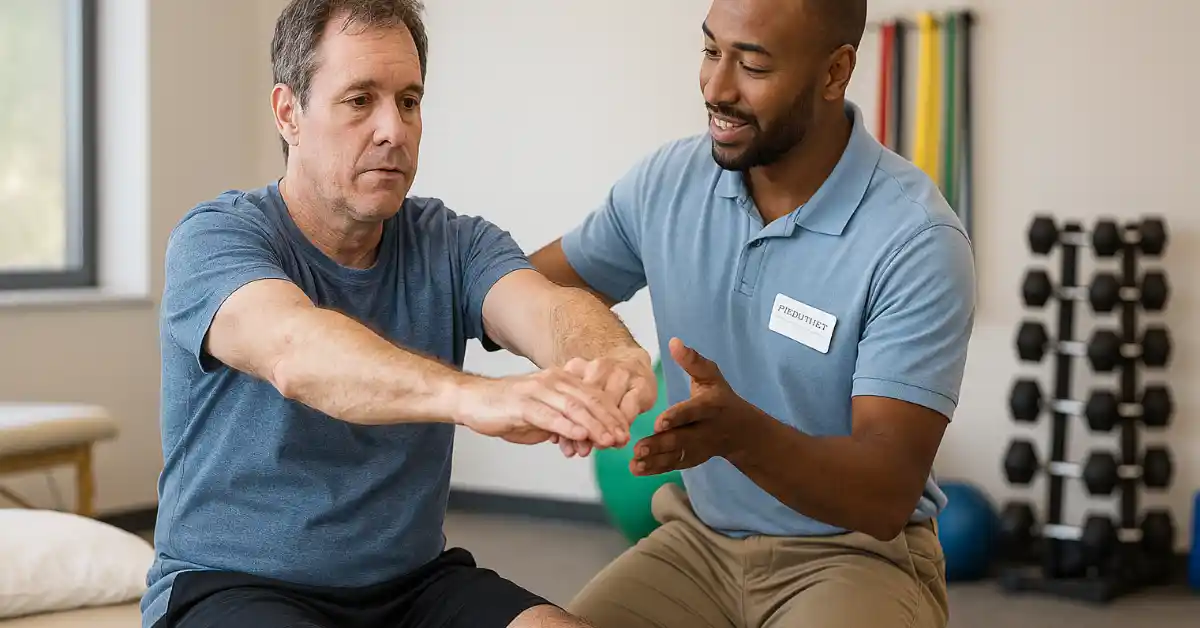
This therapy is vital to improve mobility, strength, balance, and coordination in a child. It can help individuals relearn how to walk, transfer, and perform daily activities. Occupational therapists, on the contrary, work on helping individuals regain the ability to perform daily activities such as dressing, grooming, cooking, and driving. They may also assess the need for assistive devices.
Expanding on this, physical rehabilitation in 2026 often includes evidence-based protocols like constraint-induced movement therapy for hemiparesis, shown to improve function in 70% of cases per Journal of Head Trauma Rehabilitation studies. Mental rehabilitation addresses cognitive deficits through cognitive behavioral therapy (CBT) and mindfulness, reducing anxiety in 50-60% of patients.
For children, pediatric-specific programs focus on developmental milestones, incorporating play-based therapy. Adults might benefit from vocational rehab to return to work, with success rates improving to 90% for those with minimal symptoms. Challenges include fatigue and motivation; strategies like goal-setting and progress tracking via apps help overcome them.
Examples: A patient post-car accident might start with bed exercises, progressing to treadmill training with body-weight support. Mental health support includes group therapy for emotional regulation, vital since 30% of TBI survivors experience depression.
Emerging Technologies in Rehabilitation
As we advance into 2026, neurorehabilitation is transformed by innovative technologies. Virtual reality (VR) systems simulate real-world tasks, enhancing motor skills with engagement rates 30% higher than traditional methods. Robotics, like exoskeletons, assist gait training, aiding recovery in 80% of stroke-related TBIs.
AI personalization analyzes patient data to adjust therapies in real-time, predicting progress with 85% accuracy. Brain-computer interfaces (BCIs) allow thought-controlled devices, promising for severe impairments. Light therapy, from 2025 trials, reduces chronic symptoms by modulating brain activity.
Tele-rehabilitation, boosted post-pandemic, enables home-based sessions, increasing accessibility. Wearables track vitals, integrating with IoMT for seamless care. These tools complement traditional therapy, accelerating recovery while minimizing costs.
Family and Caregiver Support
Rehabilitation extends beyond the patient. Families face emotional and financial strain; support groups reduce caregiver burnout by 40%. Education on injury management, like recognizing mood changes, is key.
Resources include respite care and online forums. In negligence cases, counseling addresses trauma from the accident, fostering resilience.
Nutrition and Lifestyle in Recovery
Diet plays a pivotal role. Omega-3-rich foods support brain repair, while antioxidants combat inflammation. Hydration and balanced meals aid cognitive function.
Exercise, like yoga or swimming, promotes neuroplasticity. Sleep hygiene—7-9 hours nightly—is crucial, as poor sleep hinders recovery. Avoiding alcohol and smoking accelerates healing.
Long-Term Management and Prevention
Long-term, monitoring for complications like epilepsy (affecting 5-10%) is essential. Adaptive strategies, like memory aids, maintain independence.
Prevention: Helmets, seatbelts, and workplace safety reduce risks. In 2026, AI apps predict high-risk scenarios, lowering incidence.
Legal Considerations
Another important thing that one must not forget about is the legal considerations of the accidents. This also includes financial matters, such as insurance claims and compensation for medical expenses.
You must contact a competent attorney to seek legal help for yourself or anyone else you know, who has suffered such an injury. An attorney will help you get justice and the compensation you deserve for your losses, which include loss of time, health, or any other materialistic element that was lost during this crucial time.
In 2026, legal landscapes include updated statutes on negligence, with emphasis on proving causation via advanced medical evidence like biomarkers. Compensation often covers emerging therapies, averaging $100,000-$1M for severe cases.
Parting Words
Rehabilitation after a brain injury demands a holistic approach blending medical care, therapy, and legal support. In 2026, with advancing technologies and awareness, recovery is more achievable. Seek justice and professional help promptly for optimal outcomes—your path to independence starts today.
FAQs
What is the first step in rehabilitation after a brain injury?
The initial step involves medical evaluation and stabilization, including surgeries or medications to prevent further damage. A multidisciplinary team assesses the injury’s severity, focusing on acute care to monitor complications and ensure stability before transitioning to therapy. This phase typically lasts days to weeks.
How does physical therapy help in brain injury recovery?
Physical therapy improves mobility, strength, balance, and coordination through exercises like walking retraining and transfers. It aids daily activities and may include assistive devices. In 2026, it often incorporates robotics and VR for better engagement and outcomes, reducing long-term disabilities.
What role does mental health play in brain injury rehabilitation?
Mental health support addresses emotional changes like depression or anxiety via counseling and CBT. It helps patients and families cope, improving overall quality of life. Therapy fosters resilience, with 50-60% seeing reduced symptoms, essential since 30% of survivors experience ongoing mental health issues.
Why is legal help important after a negligence-caused brain injury?
Legal assistance secures compensation for medical costs, lost wages, and pain. An attorney proves negligence, handles insurance, and ensures justice. In 2026, claims often cover advanced therapies, averaging significant settlements to support comprehensive recovery without financial burden.
What emerging technologies aid brain injury rehab in 2026?
Technologies like AI-personalized plans, VR simulations, robotics, and BCIs enhance therapy. They promote neuroplasticity, predict progress, and enable tele-rehab. Studies show 30% higher engagement and faster recovery, making rehab more accessible and effective for home-based patients.
Disclaimer: This article provides general information on brain injury rehabilitation and is not intended as medical or legal advice. Consult qualified healthcare professionals and attorneys for personalized guidance. Outcomes vary by individual; always seek professional evaluation for injuries.
About This Content
