
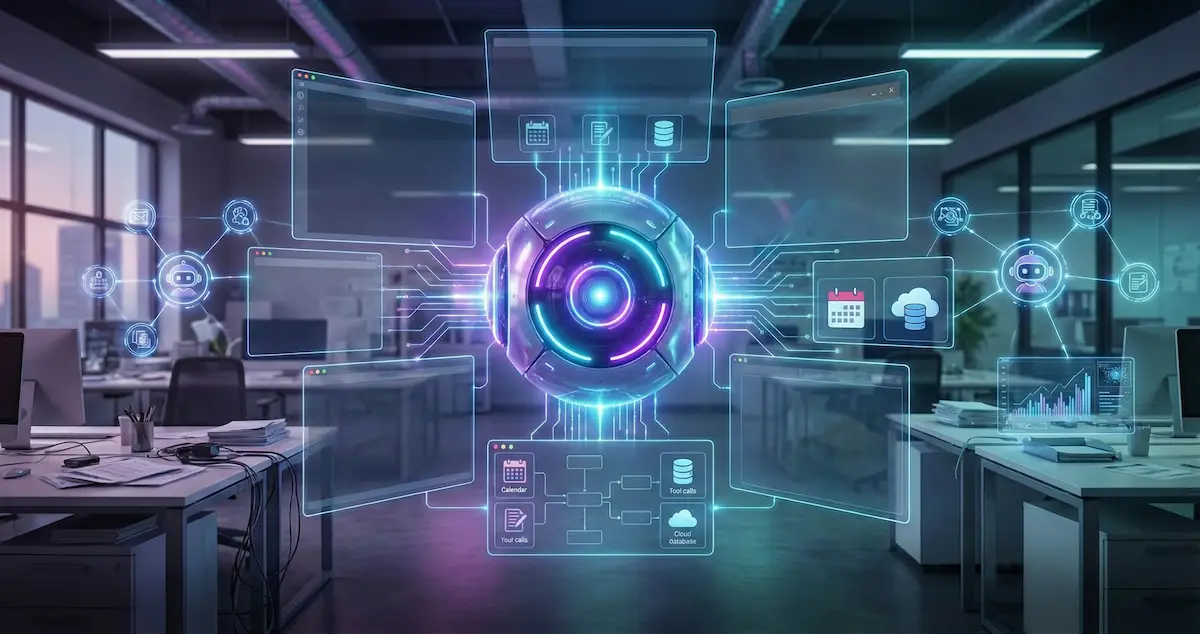
As of late January 2026, agentic AI—autonomous AI agents that plan, reason, execute multi-step tasks, and adapt without constant human input—has surged as one of the hottest tech trends worldwide. No longer just chatbots or simple assistants, these agents act independently: booking travel, managing workflows, debugging code, or even running small business operations. With breakthroughs from OpenAI, Anthropic, Google DeepMind, and startups like Adept and MultiOn, agentic AI is shifting from hype to real-world deployment, promising massive productivity gains while raising questions on jobs, ethics, and control.
Industry reports (e.g., from McKinsey, Gartner, and explodingtopics.com) highlight agentic AI as a top long-term trend for 2026, with search interest exploding alongside related tools like AI video generators, image enhancers, and AI for education/professionals. Experts predict agentic systems could add trillions to global GDP by automating complex knowledge work, but with risks of misalignment and over-reliance.
Why Agentic AI is Exploding in 2026
2025 laid the foundation: models gained reasoning (e.g., o1-style chain-of-thought), tool use (browsers, code execution, APIs), and memory. In 2026, the leap is autonomy—agents now break down goals, self-correct, collaborate (multi-agent systems), and operate over days/weeks.
Key drivers:
- Enterprise Adoption: Companies deploy agents for sales outreach, customer support, data analysis, and DevOps—reducing costs by 30-50%.
- Consumer Tools: Personal agents handle calendars, shopping, research, and content creation via apps like ChatGPT’s advanced agents or Google’s Gemini ecosystem.
- AI Infrastructure Boom: Cheaper compute, better orchestration (e.g., LangChain, CrewAI), and open-source frameworks accelerate building custom agents.
- Economic Pressure: Amid affordability concerns and hybrid work, agents deliver ROI faster than traditional software.
Projections: Gartner forecasts 40% of enterprises using agentic AI by 2027; some analysts see it reshaping 30%+ of knowledge jobs.
How Agentic AI Works in Practice
Modern agents follow a loop:
- Goal Input → User sets objective (e.g., “Plan my Q1 marketing campaign”).
- Planning → Agent decomposes into subtasks, researches via tools.
- Execution → Calls APIs, browses web, writes code, sends emails.
- Reflection & Adaptation → Self-evaluates, retries failures.
- Output & Handover → Delivers results, asks for clarification if needed.
Examples: Devin (AI software engineer), Auto-GPT successors, or enterprise agents from Salesforce Einstein or Microsoft Copilot Studio.
Top Agentic AI Players & Tools in 2026
- OpenAI’s o-series & Agents: Advanced reasoning + tool integration; powering custom GPT agents.
- Anthropic Claude: Strong safety focus with computer-use capabilities.
- Google Gemini & Project Astra: Multimodal agents for real-world tasks.
- Startups: Adept (action models), MultiOn (browser agents), Lindy (personal agents).
- Open-Source: CrewAI, AutoGen for building multi-agent teams.
Integration with robotics (e.g., Figure, Tesla Optimus) hints at physical-world agents soon.
Benefits for Professionals & Businesses
- Productivity Leap: Automate repetitive + complex tasks—freeing humans for strategy/creativity.
- Scalability: One agent handles what used to require teams.
- Accessibility: Democratizes expertise (e.g., AI tutors, legal drafters).
- Hybrid Work Boost: Agents manage remote coordination, reducing burnout.
For network/IT pros: Agents optimize cloud resources, troubleshoot networks autonomously, or simulate cybersecurity scenarios.
Challenges: Hallucinations in long tasks, security risks (agents with access), job displacement fears, and ethical alignment (e.g., preventing misuse).
The Bottom Line: Embrace Agentic AI in 2026
Agentic AI isn’t futuristic—it’s here, reshaping how we work, create, and live. In 2026, the winners will be those who build, integrate, and govern these agents responsibly. Start experimenting: set up a simple agent workflow today to stay ahead of the automation wave.
Explore more in our Technology category or related guides like Cybersecurity Fundamentals 2026 (agent security risks), or Cybersecurity Mesh Architecture for AI-resilient networks.
Stay ahead—subscribe for the latest AI, tech, and networking trends!