
Imagine your IT team completes a routine network upgrade, boosting performance across the company. Everyone is happy. But weeks later, you discover that in the process of opening a new port for an application, they unknowingly created a gaping security hole that a hacker used to access your most sensitive customer data. This isn’t a far-fetched scenario; it’s a direct result of a hidden, yet common, business risk.
The financial stakes are higher than ever. In 2023, the average total cost of a data breach reached an all-time high of $4.45 million. While most business leaders are aware of cyber threats, they often miss where the true vulnerability lies. It’s not in having separate teams for network operations and cybersecurity—it’s in allowing them to operate with separate strategic plans.
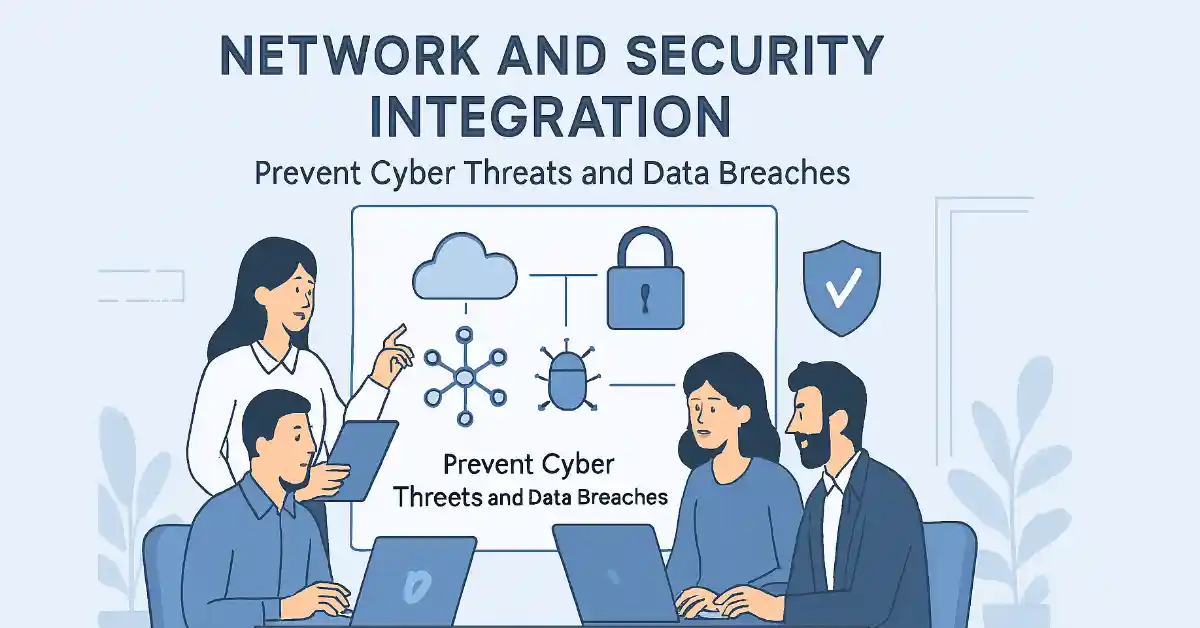
Many businesses treat network performance and cybersecurity as two distinct issues managed by different teams with different goals. This separation in planning creates hidden, costly risks that leave your organization exposed. This article will break down why a unified strategy isn’t just a technical best practice but an essential component of modern business resilience.
The Top 3 Risks of a Disconnected Strategy
When your network and security planning operate in silos, you’re not just creating inefficiency—you’re actively introducing risks that can cripple your business. Here are the three most significant dangers.
Risk 1: Invisible Security Gaps from “Benign” Network Changes
A well-intentioned network change can become a backdoor for an attacker when security isn’t part of the planning process. Think about adding a new server, opening a port for a new software tool, or migrating a service to the cloud. From an IT perspective, these are routine tasks designed to improve the business. Without a security review, they can also introduce critical vulnerabilities.
This often leads to “misconfiguration,” one of the most common and dangerous sources of data breaches. In fact, analysis of Verizon’s data breach reports shows that while 74% of breaches involve the human element, misconfiguration errors account for 21% of these.
To prevent these accidental vulnerabilities, leveraging specialized support ensures that your network is backed by professional security oversight. This approach integrates active monitoring and expert management into your infrastructure updates. By placing experienced engineers in charge of your defense strategy, you eliminate the “invisible IT gaps”, keeping your business data secure and your systems fully optimized.
Risk 2: Slower Incident Response and Greater Damage
When a cyberattack happens, every second counts. In a business with disconnected planning, the response is often chaotic and slow. The network team might see a server slowing down, while the security team detects unusual traffic patterns. Because they use different tools, speak different technical languages, and look at different metrics, they fail to connect the dots quickly.
This lack of a unified view leads to confusion and finger-pointing. The network team might blame a hardware failure while the security team investigates a potential malware infection, wasting critical time as the attacker digs deeper into your systems. This delay directly translates to greater damage, whether it’s more data stolen, longer operational downtime, or higher recovery costs.
For a business leader, the critical question is: “If we get attacked, can my teams collaborate instantly to contain the threat?” With a siloed approach, the answer is almost always no.
Risk 3: Wasted Resources and Higher Costs
A disconnected strategy doesn’t just hurt your security; it hurts your bottom line. When teams plan in isolation, they often work at cross-purposes, leading to significant financial waste and operational friction.
For example, the network team might invest in a cutting-edge technology to accelerate data flow, while the security team, unaware of this project, implements a new security tool that inspects that same data, slowing it right back down. This creates a “tool sprawl,” where each department buys its own solutions. The result is a fragmented, overly complex, and expensive technology stack that is difficult to manage and secure.
This complexity has a direct financial impact. According to IBM, organizations with high security system complexity faced an average breach cost of $5.28 million, over 30% higher than those with low complexity. A unified plan prevents redundant work, aligns technology purchases, and ensures your budget is allocated efficiently to solve overlapping problems just once.
How a Unified Strategy Protects Your Business
Shifting to an integrated network and security strategy isn’t just about reducing risk—it’s a business enabler that builds a more resilient and agile organization. By aligning these two critical functions, you unlock tangible benefits that go straight to the bottom line.
- Financial Savings: A cohesive strategy eliminates redundant tools and conflicting projects. This leads to a more efficient use of your IT budget and significantly lower potential breach costs.
- Operational Resilience: With shared visibility and a joint response plan, your teams can detect and contain threats faster. This means less downtime, minimal business disruption, and a quicker return to normal operations.
- Strategic Agility: When security is built into your network planning from the start, your business can adopt new technologies with confidence. You can move faster on initiatives like cloud adoption or remote work because the security foundation is already in place.
Recognizing these risks is the first step, but building a truly cohesive strategy that aligns network architecture with cybersecurity policy requires deep expertise in both domains. For many businesses, the most effective path forward is to engage a partner that specializes in strategic cybersecurity consulting to bridge this exact gap. As industry experts at Gartner predict, organizations that prioritize integrated threat management will suffer two-thirds fewer breaches by 2026.
Conclusion: Your First Step Toward a More Secure Future
Continuing to view your network operations and cybersecurity as separate, unrelated functions is one of the biggest unaddressed risks in modern business. This strategic gap creates invisible security holes, guarantees a slower and more damaging response to an attack, and wastes valuable financial resources.
A unified strategy is not a technical luxury; it’s a fundamental component of a resilient business. It ensures that the teams responsible for enabling your business and the teams responsible for protecting it are working in lockstep toward the same goal.
As you evaluate your own organization, ask yourself one final question: Are your network and security teams working from the same blueprint, or are they building two different halves of the same house?
FAQs
What is the average cost of a data breach in 2023?
The average total cost of a data breach reached $4.45 million in 2023, with high-complexity security systems facing costs of $5.28 million.
What percentage of data breaches involve human error?
74% of data breaches involve the human element, with misconfiguration errors accounting for 21% of these human-related security incidents.
How much can integrated threat management reduce breaches?
Organizations prioritizing integrated threat management will suffer two-thirds fewer breaches by 2026 according to Gartner industry experts.
What is the biggest risk of siloed IT teams?
Siloed teams create invisible security gaps from routine network changes, slower incident response, and wasted resources costing millions annually.
How does network and security integration save money?
Unified strategy eliminates redundant tools, prevents conflicting projects, reduces breach costs, and ensures efficient IT budget allocation.
About This Content
