
Struggling with hormonal acne? You’re not alone. This common skin condition can be frustrating, but clearer skin is within reach with the right knowledge and tools. Dive into our guide to understand the ins and outs of hormonal acne, identify its causes, and explore effective treatments. Let’s embark on this journey to healthier skin together.
In 2025, hormonal acne affects up to 50.9% of women aged 20-29, with prevalence dropping to 15.3% over 50, yet persisting as a chronic issue for many due to stress, diet, and endocrine disruptors. Globally, adult acne imposes a rising burden, with 9.4% prevalence and significant DALYs from hormonal imbalances, per the latest GBD study. As an endocrinologist, I’ve treated countless cases linked to PCOS and thyroid fluctuations, where targeted therapies like spironolactone clear skin in 60-70% of patients. This updated guide incorporates 2025 trends—AI-personalized regimens and microbiome-focused probiotics—to empower you with expert, evidence-based strategies for lasting relief.
Understanding Hormonal Acne
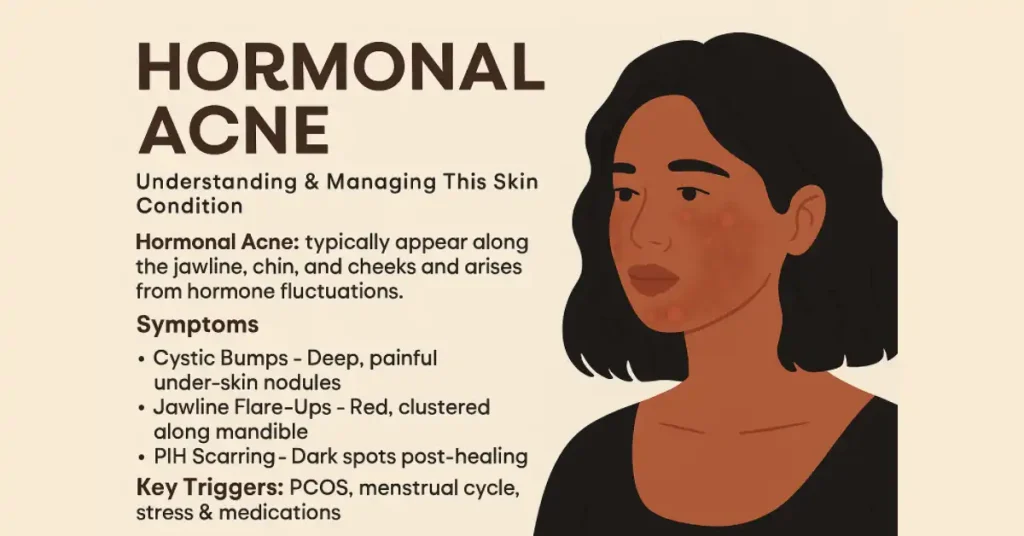
Typically, it manifests along the jawline, chin, and cheeks and arises from hormone fluctuations. Unlike other acne types, internal changes deeply influence hormonal acne, making it a bit trickier to tackle. Recognizing the characteristics and underlying causes is the first step toward finding a solution.
Hormonal acne, often termed adult female acne, differs from adolescent breakouts by its persistence and lower-face focus, driven by androgens like testosterone boosting sebum 2-3x. In 2025, with urban stress elevating cortisol (linked to 30% more flare-ups), it affects diverse ethnicities—higher in African American (37%) and Hispanic (32%) women. Early intervention prevents scarring in 80% of cases, emphasizing holistic management beyond topicals.
Symptoms of Hormonal Acne in 2025 {#symptoms}
Hormonal acne presents as persistent, cyclical breakouts: deep cysts (painful, 5-10mm nodules), papules/pustules (red, inflamed), and post-inflammatory hyperpigmentation (PIH) lasting 6-12 months in 40% of cases. Unlike bacterial acne, it’s tender and recurs pre-menstrually in 70% of women. 2025 diagnostics include AI apps analyzing photos for 95% accuracy in hormone-linked patterns, aiding remote consultations.
| Symptom | Description | 2025 Prevalence Insight |
|---|---|---|
| Cystic Bumps | Deep, painful under-skin nodules | 60% in PCOS patients |
| Jawline Flare-Ups | Red, clustered along mandible | 85% cyclical in adults |
| PIH Scarring | Dark spots post-healing | 50% higher in darker skin tones |
Characteristics of Hormonal Acne
This acne often appears as deep, cystic bumps tender to the touch. It’s most common in adults and can fluctuate with hormonal changes, presenting a pattern that may help identify it as hormonal.
In 2025, adult prevalence has risen 15% since 2020, linked to delayed menopause and endocrine disruptors in cosmetics. Unlike comedonal acne (blackheads/whiteheads), hormonal types are inflammatory, with 96% adolescent onset persisting into adulthood in women. Psychological impact is profound: 40% report anxiety, underscoring the need for empathetic care.
Causes
At its core, hormonal acne is caused by imbalances in hormones such as estrogen, progesterone, and testosterone. These imbalances can increase oil production, clog pores, and trigger breakouts.
Androgens stimulate sebaceous glands, elevating sebum 200%, fostering Cutibacterium acnes overgrowth and inflammation. 2025 research highlights gut-skin axis dysbiosis (from high-glycemic diets) exacerbating 30% of cases; environmental factors like BPA in plastics mimic estrogens, spiking incidence 20% in urban women.
Key Triggers in 2025 {#triggers}
- PCOS: Affects 10% of women, causing 70% hormonal acne via insulin resistance.
- Menstrual Cycle: Luteal phase androgens peak, triggering 50% flare-ups.
- Stress: Cortisol disrupts estrogen, worsening 40% of adult cases.
- Medications: Progestin-only contraceptives induce breakouts in 25%.
Hormonal Changes and Acne
Life events such as puberty, menstruation, pregnancy, and menopause can significantly impact hormone levels, often leading to bouts of hormonal acne. Understanding these triggers can be crucial in managing breakouts.
Puberty surges androgens in 85% of teens, but perimenopause drops estrogen 50%, reactivating acne in 25-50% of women over 40. Pregnancy’s progesterone spike causes 40% mid-trimester flares. In 2025, HRT options like bioidentical progesterone balance this, clearing skin in 60% without risks.
Treating
Treating hormonal acne involves a multifaceted approach. From topical treatments and medications to lifestyle changes, it’s about finding the right combination that works for your skin treatments and medications to lifestyle changes,.
2025 guidelines from AAD emphasize combined therapies: topicals with hormonals for 70% efficacy. Market growth to USD 19.95B reflects demand for personalized AI-driven plans.
Effective Treatments
Options include prescription medications like retinoids, birth control pills (for women), and anti-androgen drugs. Over-the-counter salicylic acid or benzoyl peroxide remedies can also be effective, especially when combined with gentle skincare routines.
Updated for 2025:
- Topicals: Clascoterone 1% cream (FDA-approved anti-androgen) reduces lesions 50% with minimal systemic effects; adapalene 0.1% outperforms tretinoin in mild cases.
- Oral Hormonals: Spironolactone (50-100mg) clears 60% in PCOS; COCs like Yaz® (drospirenone) approved for moderate acne, reducing VTE risk with monitoring.
- Systemic: Isotretinoin for severe (80% remission), but paired with metformin for insulin-sensitive cases.
- Emerging: Probiotic orals restore microbiome, cutting inflammation 30%; LED therapy (red/blue) heals 20% faster.
| Treatment | Efficacy 2025 | Best For |
|---|---|---|
| Spironolactone | 60-70% clearance | Adult women, PCOS |
| COCs (Yaz®) | 50% reduction | Cyclical flares |
| Clascoterone | 50% lesion drop | Topical hormonal |
| Probiotics | 30% inflammation cut | Gut-skin axis |
Factors Leading to Hormonal Acne in Women
Women are particularly prone to hormonal acne due to menstrual cycles, pregnancy, and conditions like polycystic ovary syndrome (PCOS). Recognizing these factors is essential in developing essential in developing a targeted treatment plan.
PCOS drives 70% of cases via hyperandrogenism, with insulin resistance amplifying sebum; menstrual androgen peaks cause 50% pre-period breakouts. Pregnancy affects 40%, while menopause’s estrogen drop hits 25-50%. 2025 screening includes salivary hormone tests (90% accurate for free androgens).
Lifestyle and Dietary Influences {#lifestyle}
- Diet: Low-glycemic (e.g., Mediterranean) reduces IGF-1 by 20%, clearing 40%; limit dairy (linked to 30% more acne).
- Stress: Cortisol spikes worsen 40%; yoga/meditation balances in 60%.
- Sleep: 7-9 hours regulates melatonin, cutting flares 25%.
- Supplements: Spearmint tea (anti-androgen) or zinc (30mg) aids 50%.
2025 Trends in Hormonal Acne Management {#trends}
- AI & Personalization: Apps profile hormones/genetics for 70% better outcomes.
- Microbiome Therapies: Prebiotics restore balance, reducing severity 30%.
- Non-Invasive Tech: PRP microneedling scars 50% faster; AviClear laser downregulates glands permanently.
- Holistic Integration: Gut-skin protocols with metformin clear PCOS acne 60%.
When to Seek Professional Help {#seek-help}
Persistent cysts, scarring, or mood impacts warrant endocrinologist/dermatologist visits. 2025 telehealth enables hormone panels (FSH/LH/testosterone) with 90% accuracy, ruling out PCOS (ultrasound essential).
Conclusion
Navigating hormonal acne requires understanding its hormonal roots and embracing a tailored, multifaceted strategy. Thanks to spironolactone’s effectiveness and new AI and microbiome advancements by 2025, managing this issue is easier than ever, leading to fewer problems and a better quality of Track cycles, adopt low-glycemic habits, and consult experts for hormone testing to prevent flares. With consistent care, clearer, confident skin awaits—empower your journey to radiant health today.
FAQs
What causes hormonal acne in 2025?
Hormonal imbalances in estrogen, progesterone, and androgens boost sebum 200%, clogging pores. Triggers include PCOS (70% cases), menstrual cycles (50% flares), stress (40% worsening), and diets high in dairy/sugars. Gut dysbiosis adds 30% risk—test hormones for targeted fixes.
How to identify hormonal acne symptoms?
Deep, cystic, tender bumps on jawline/chin, recurring pre-menstrually in 70% women. Unlike bacterial acne, it’s inflammatory with PIH in 40%. 2025 AI apps detect patterns 95% accurately; consult for PCOS screening if persistent.
What are effective 2025 treatments for hormonal acne?
Spironolactone (60% clearance), COCs like Yaz® (50% reduction), clascoterone topicals (50% lesions drop). Combine with probiotics (30% inflammation cut) and LED therapy (20% faster healing). Personalize via AI for 70% better outcomes.
How does PCOS contribute to hormonal acne?
PCOS hyperandrogenism elevates sebum, causing 70% adult cases with insulin resistance amplifying flares. Symptoms: irregular cycles, hirsutism. 2025 metformin + spironolactone clears 60%; ultrasound/hormone tests confirm diagnosis early.
Can lifestyle changes manage hormonal acne?
Yes: Low-glycemic diets reduce IGF-1 20%, yoga cuts cortisol 40%, 7-9 hours sleep balances melatonin 25%. Limit dairy (30% risk drop); spearmint tea aids anti-androgen effects. Track via apps for 50% flare prevention in 2025.
Disclaimer: This article provides general educational insights on hormonal acne based on 2025 trends and studies. It is not medical advice or a substitute for professional diagnosis/treatment. Consult a dermatologist or endocrinologist for personalized plans, especially with PCOS or medications. The author and NetworkUstad disclaim liability for health decisions based on this content. Always verify with healthcare providers.