
Cybersecurity
Network security, VPN guides, threat detection, and data breach prevention strategies.
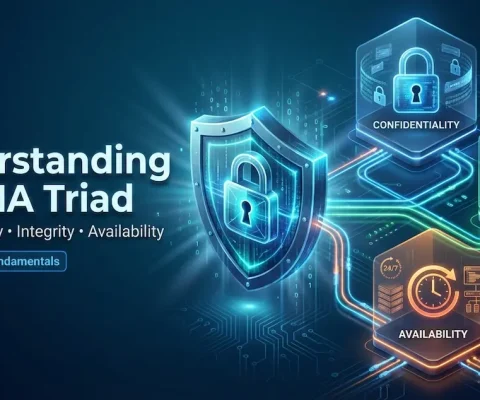
Understanding the CIA Triad: Confidentiality, Integrity, and Availability
Every day, billions of pieces of data travel across networks worldwide—from personal emails and banking transactions to corporate secrets and government intelligence. But what keeps this information safe? What prevents hackers from reading your private messages, altering your bank balance, or shutting down critical systems? The answer lies in three fundamental principles that form the...
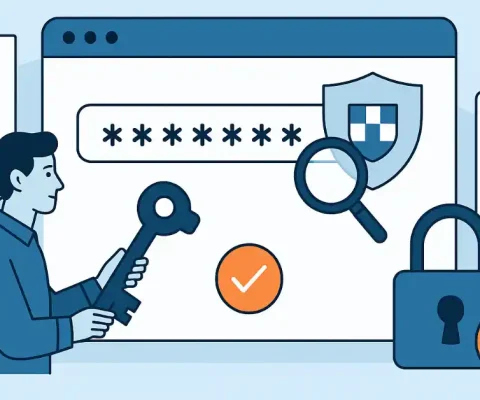
Password Tool Features for Compliance Audits
An auditor asks who could access the payroll login last quarter and whether access was removed when an employee transferred. A screenshot of the password manager’s settings answers only part of that question. You need records showing who had access, when that access changed, and whether anyone checked that the change worked. The most useful...
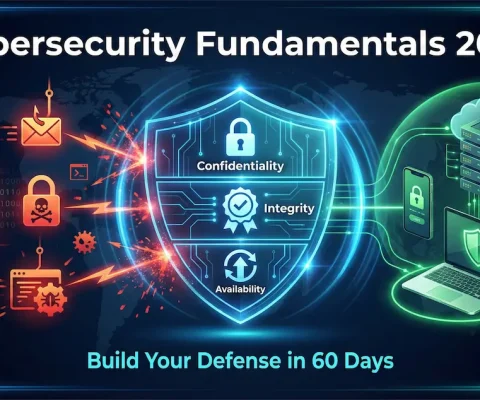
Cybersecurity Fundamentals 2026: Build Strong Defense in 60 Days
Cybercrime will cost the world $10.5 trillion in 2026. That’s more than the GDP of Japan. Every 39 seconds, a hacker attacks somewhere on the internet. Your business could be next. But here’s the good news: most attacks succeed because of weak fundamentals, not advanced hacking. Fix your basics, and you block 90% of threats....

Why Your Hybrid Team’s Home Office Is the Weakest Link in Your Corporate Security
The shift to hybrid work has been a game-changer for businesses, offering unprecedented flexibility, attracting top talent, and boosting productivity. But this new freedom has a hidden cost: it has fundamentally shattered the traditional concept of corporate security. Your company’s secure perimeter is no longer the four walls of your office; it now extends to...

Audit of Smart Contracts: Does Your Project Really Need It?
In a world powered by Web3 technology, there is no undo feature. Once transactions are executed on the blockchain through a smart contract, they cannot be reversed. Since the code of most smart contracts is publicly accessible (which also means hackers can inspect it), potential vulnerabilities become easier to discover and exploit. This makes Web3...

Cybersecurity Management for E-Commerce Businesses: A Complete Guide
As online shopping continues to expand, cybersecurity has become one of the most critical responsibilities for every e-commerce business. Whether you run a large digital storefront or a small boutique, protecting customer data and maintaining platform integrity are essential to long-term success. Modern cyber threats are sophisticated, and a single vulnerability can damage your reputation,...
Modern Business IT Management: Finding Your Way in the Digital Age
In 2025, the world moves quickly, and modern business IT management has changed from just being a support function to a strategic powerhouse that drives innovation, efficiency, and competitive advantage. As businesses deal with hybrid work models, rising cyber threats, and the use of artificial intelligence (AI), good IT management makes sure that everything runs...
Cyber-Security & Online Shopping: How to Protect Your Business on Shopify
The world of e-commerce has grown at an explosive pace, transforming how people shop and how businesses operate. Whether you’re a small independent creator or a large-scale retailer, online shopping platforms like Shopify have made it easier than ever to reach global customers, manage inventory, and automate nearly every aspect of your business. But as...
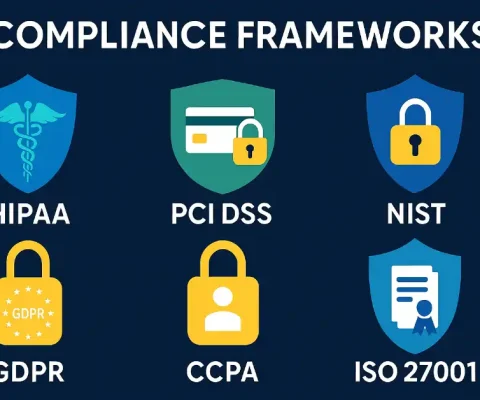
IT Compliance Standards: Which Requirements Apply to Your Business?
An online shop that sends customers to a hosted checkout faces a different set of obligations from a clinic that stores electronic health records. A manufacturer can have a third set of requirements if it receives controlled information from a government customer. They all need to protect information, but they need different evidence to show...
Master Email Security 2025: End-to-End Encryption Secrets Every Business Needs
Email remains the primary cybersecurity threat vector in 2025 because it is an ever-present, trusted communication tool that relies on human interaction, opening the door for attackers to exploit social engineering tactics such as phishing and to compromise sensitive data. It was not designed with security and privacy in mind to begin with. Email was...