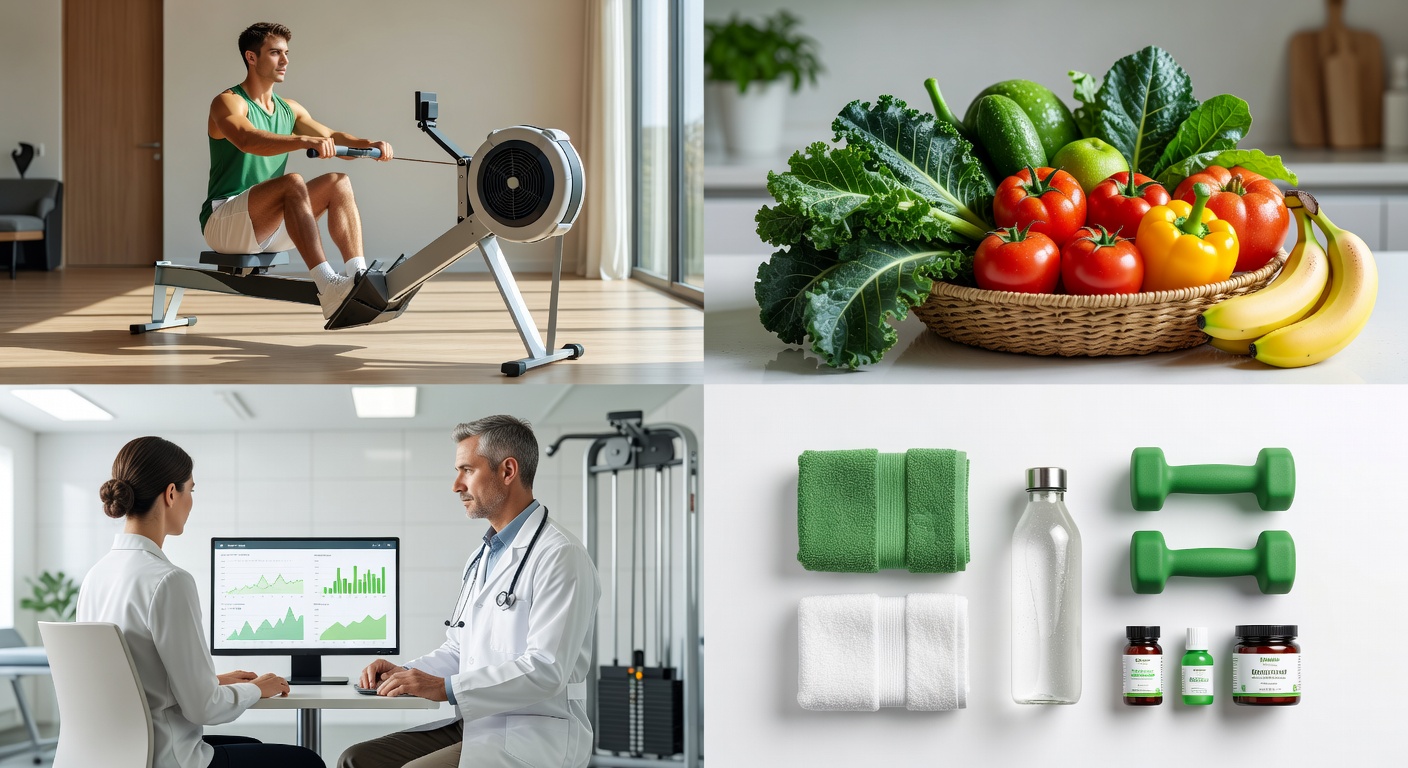
What if your most effective fitness tool could disappear into a closet when you’re done with it? Foldable rowing machines have quietly revolutionized home workouts, offering a full-body training experience without permanently consuming your living space. For fitness enthusiasts working with apartments, shared spaces, or simply cluttered home gyms, this compact powerhouse solves one of the most persistent problems in personal fitness: getting a serious workout without dedicating an entire room to equipment.
Rowing engages nearly every major muscle group simultaneously, making it one of the most time-efficient exercises available. Yet many people underestimate its strength-building potential, treating it purely as a cardio tool. This article explores how to unlock everything a foldable rowing machine has to offer. You’ll discover its multifaceted health benefits, learn how to use resistance settings for genuine muscle development, and find proven strategies for tracking your progress over time. Real user experiences offer perspective on what’s actually achievable, and a practical step-by-step action plan gives you a clear path forward — whether you’re just starting out or looking to push your current routine further.
The Multifaceted Benefits of a Foldable Rowing Machine
Few pieces of home fitness equipment deliver as much value per square foot as a foldable rowing machine. Beyond its obvious space-saving design, it functions as a genuine dual-purpose training tool — simultaneously developing cardiovascular endurance and building functional muscle strength. This combination is rare in the fitness world, where most equipment leans heavily toward one or the other. The foldable design removes the traditional barrier of dedicated gym space, meaning a consistent, high-quality workout is always accessible regardless of your living situation.

Cardiovascular Health and Endurance
Rowing is one of the most effective aerobic exercises available. Each session elevates your heart rate into productive training zones, strengthening the heart muscle over time and improving the efficiency of oxygen delivery throughout the body. Regular use builds stamina gradually, allowing you to sustain higher intensities for longer periods. From a calorie-burning perspective, a vigorous rowing session can rival running or cycling while placing significantly less stress on joints — making it a sustainable long-term option for cardiovascular conditioning.

Full-Body Engagement and Muscle Activation
A single rowing stroke recruits approximately 86% of the body’s muscles. The drive phase activates the quadriceps, hamstrings, and glutes as your legs push off. As the stroke continues, the core braces to transfer power, while the lats, rhomboids, and trapezius engage through the back. The biceps and forearms complete the pull. This sequential, full-chain activation means rowing builds functional strength across multiple muscle groups simultaneously, making it far more than a simple cardio machine.
Strength Training Unleashed: Rowing for Muscle Building
Rowing machines are frequently pigeonholed as cardio equipment, but that label undersells what they can genuinely accomplish for muscle development. When used strategically, a foldable rowing machine becomes a legitimate strength-training tool. The key lies in understanding how resistance settings work and applying the same progressive overload principles used in traditional weight training. Most foldable rowing machines — including models from brands like FitTransformer — offer magnetic or hydraulic resistance systems with multiple levels, giving you precise control over the mechanical load placed on your muscles during each stroke. Increasing resistance forces your legs, back, and arms to generate more force per repetition — the fundamental stimulus for muscle growth.
Interval training amplifies this effect considerably. Alternating between high-resistance power strokes and lower-intensity recovery periods mimics the structure of strength circuits, keeping muscles under tension while allowing partial recovery. Over weeks, this approach builds both muscular endurance and raw strength. Progressive overload — systematically increasing resistance or stroke intensity as your capacity improves — is the non-negotiable principle that separates genuine muscle development from simply maintaining fitness.
Key Muscle Groups Targeted for Development
Understanding which muscles rowing develops helps you train with intention. Your legs — quadriceps, hamstrings, and glutes — generate the majority of each stroke’s power, making rowing a surprisingly effective lower-body strength exercise. The posterior chain, including the erector spinae, lats, and rhomboids, works hard through the pull phase, building the kind of functional back strength that supports posture and daily movement. Your core acts as the central link, bracing constantly to transfer force between lower and upper body. Biceps, forearms, and rear deltoids complete the chain, receiving consistent resistance work throughout every session.
Adjusting Resistance for Progressive Strength Gains
Start by identifying your current comfortable resistance level — one where you can maintain good form for 10 to 15 minutes. Each week, increase resistance by one level while keeping stroke rate consistent, forcing your muscles to adapt to greater load. Incorporate dedicated power intervals: row at maximum resistance for 30 seconds, recover for 90 seconds, and repeat six to eight times. Track how many strokes you complete during each power interval, and aim to match or exceed that number the following week. This measurable, incremental approach ensures continuous strength progression rather than plateauing at a comfortable baseline.
Mastering Your Metrics: Strategies for Tracking Fitness Progress
Consistent progress in fitness doesn’t happen by accident — it happens when you measure what matters and respond to what the data tells you. A foldable rowing machine gives you two distinct layers of feedback: the hard numbers your console displays and the subtler signals your body sends. Using both together creates a complete picture of how your fitness is actually evolving, rather than relying on guesswork or vague impressions of whether workouts feel harder or easier than before.
Quantitative Tracking: Monitoring Data and Stats
Most foldable rowing machine consoles display distance, time, stroke rate, and watts — each offering distinct insight into your performance. Distance and time together reveal your pace, which should improve gradually as cardiovascular efficiency increases. Watts measure power output per stroke and serve as the most direct indicator of strength development; a rising average wattage over weeks confirms your muscles are generating more force. Keep a simple training log after each session, recording these metrics alongside resistance level and total strokes. Reviewing this data weekly reveals trends that single sessions obscure — a plateau in wattage, for instance, signals it’s time to increase resistance or adjust interval structure rather than continuing the same routine.
Qualitative Tracking: Listening to Your Body
Numbers tell part of the story, but perceived exertion, recovery speed, and daily energy levels complete it. After each session, rate your effort on a simple one-to-ten scale and note how quickly your heart rate returns to normal. Faster recovery at the same intensity level indicates genuine cardiovascular improvement. Pay attention to how your muscles feel 24 to 48 hours after strength-focused sessions — appropriate soreness in the legs and back confirms productive muscle activation, while persistent fatigue suggests insufficient recovery time. Tracking sleep quality and morning energy levels alongside workout data helps you identify whether your training volume is sustainable or needs adjustment, keeping long-term progress on track without risking burnout.
Hear from the Community: User Testimonials on Foldable Rowing Machines
Real-world experiences often reveal what spec sheets and workout guides can’t — how a piece of equipment actually fits into daily life and whether it delivers on its promises over months of consistent use. The foldable rowing machine community has grown steadily, and the stories emerging from it paint a consistent picture: meaningful fitness gains achieved in spaces where traditional gym equipment simply wouldn’t work.
Transformations and Success Milestones
Marcus, a software developer working from a one-bedroom apartment, started rowing three times per week with a primary goal of losing weight. After four months of consistent sessions combining moderate cardio with resistance intervals, he reported dropping 18 pounds while noticing visible definition in his back and shoulders — muscle development he hadn’t anticipated. A retired teacher named Patricia began rowing specifically for low-impact cardiovascular conditioning after knee surgery ruled out running. Within three months, her resting heart rate dropped noticeably and she was completing 30-minute sessions that initially exhausted her in ten. These outcomes weren’t accidental — both users tracked their metrics consistently and adjusted resistance progressively, applying the same principles that make structured gym programs effective.
Overcoming Initial Hesitations and Space Constraints
The most common hesitation new buyers report is skepticism about whether a foldable machine can feel as sturdy and effective as a full-sized rower. James, living in a shared house with limited personal space, admitted he expected the folding mechanism to feel flimsy. Instead, he found it locked securely during use and stored upright in a corner without issue — a practical solution that let him maintain a serious training habit without inconveniencing his housemates. Others initially worried about the learning curve, but most users report that basic technique becomes comfortable within two to three sessions, making the barrier to entry lower than expected.
Your Action Plan: Step-by-Step Guide to Enhancing Fitness
Knowing the benefits of a foldable rowing machine is one thing — building a sustainable routine around it is another. The following plan bridges that gap, giving you a structured weekly framework that develops both cardiovascular fitness and muscular strength without overwhelming beginners or under-challenging those with more experience. Consistency and proper form matter more than intensity at the start, so prioritize technique before pushing resistance levels.
Getting Started: Beginner-Friendly Workout Routines
Spend your first week focusing exclusively on stroke mechanics: legs push first, then the core leans back slightly, then the arms pull. Keep resistance low and aim for three sessions of 15 to 20 minutes, maintaining a steady stroke rate of 20 to 24 strokes per minute. In weeks two and three, extend sessions to 25 minutes and introduce one moderate-resistance interval — two minutes at increased resistance followed by three minutes at baseline. By week four, you’ll have the foundation to row with genuine intention. Always finish each session with two minutes of light, slow strokes to bring your heart rate down gradually, and check your posture throughout — a rounded lower back under load is the most common beginner error and the most preventable.
Advanced Techniques for Continued Improvement
Once baseline fitness is established, introduce structured HIIT sessions twice weekly: 40 seconds at maximum effort followed by 20 seconds of slow recovery, repeated for 15 to 20 minutes. On alternate days, run strength-focused intervals at high resistance with lower stroke rates — around 18 strokes per minute — emphasizing explosive leg drive and a controlled pull. This combination taxes both aerobic capacity and muscular power simultaneously. Rotate between these two session types across four to five weekly workouts, leaving at least one full rest day for recovery. Reassess your resistance levels every three weeks and adjust upward when sessions feel manageable rather than challenging.
Building a Stronger, Healthier You with Rowing
A foldable rowing machine is genuinely one of the most versatile investments you can make in your home fitness setup. It delivers cardiovascular conditioning, full-body muscle development, and practical space efficiency in a single piece of equipment — a combination that few alternatives can match. By engaging your legs, core, back, and arms through every stroke, rowing builds functional strength that carries over into daily life, not just gym metrics.
The strategies covered here — progressive resistance increases, structured interval training, and consistent metric tracking — transform rowing from a casual workout into a purposeful fitness program. Pairing hard data from your console with honest body awareness gives you the feedback loop needed to keep improving rather than stagnating at a comfortable plateau. The real-world experiences of users like Marcus, Patricia, and James demonstrate that meaningful results are achievable regardless of space limitations or starting fitness level.
The path forward is straightforward: start with sound technique, track what matters, and increase the challenge incrementally as your capacity grows. Whether you’re stepping onto a FitTransformer rowing machine for the first time or looking to push an existing routine further, the tools and principles are already in your hands. Pull the handle, commit to the process, and let consistent effort do the rest.