Picture a busy downtown street at rush hour. Painted wooden signs fade into the visual noise. Banners sag under their own weight. A hand-lettered board outside a café sits unread as hundreds of commuters scroll their phones, eyes glazed over the same static landscape they pass every single day. For business owners, this is not just an aesthetic problem — it is a revenue problem. Traditional signage, once the backbone of storefront marketing, is rapidly losing its ability to cut through the clutter of modern urban life.
Today’s consumers are conditioned by motion, color, and instant information. A static sign simply cannot compete with the sensory expectations of a digitally fluent audience. The result? Missed opportunities, dwindling foot traffic, and marketing budgets spent on materials that deteriorate before they deliver a return.
Glass wall LED screens are changing that equation entirely. By merging architectural transparency with vivid, dynamic display technology, they transform ordinary storefronts into powerful communication platforms. This article explores exactly why glass wall LED screens outperform traditional signage across every critical dimension — from visibility and engagement to durability and cost — and how business owners can harness this technology to attract more customers and stay ahead in an increasingly competitive marketplace.
The Evolution of Signage: From Static to Dynamic Displays
For most of human commercial history, signage meant something fixed — carved wood, painted metal, or printed vinyl. A Roman merchant hung a carved boot outside his cobbler shop. A Victorian apothecary stenciled gold letters onto frosted glass. For centuries, the formula barely changed: create a sign, mount it, and hope enough people noticed. These methods worked because the environment around them was equally static. When everything competes at the same visual frequency, nothing truly stands out.
Limitations of Traditional Signage
The cracks in traditional signage become obvious the moment you examine it through a modern lens. A painted board offers no dynamism — it says one thing, always, regardless of the time of day, the season, or what promotion is currently running. As daylight fades, most static signs fade with it, becoming invisible to the evening foot traffic that many businesses depend on. Weather compounds the problem relentlessly. UV exposure bleaches colors, rain warps substrates, and wind tears banners from their moorings. Beyond the physical deterioration, updating content means reprinting, repainting, or replacing — each cycle adding labor costs and downtime. For a restaurant changing its seasonal menu or a retailer rotating weekly promotions, the operational friction alone makes traditional signage a poor strategic fit.
The Digital Revolution in Advertising
The shift toward digital signage began quietly in the early 2000s, when flat-panel screens started appearing in airports and shopping malls. Early LED applications were rudimentary — scrolling ticker text, simple color changes — but they signaled something irreversible: audiences respond to movement. As LED technology matured, resolution improved dramatically while energy consumption dropped. Consumers, meanwhile, were being rewired by smartphones and streaming media into expecting rich, responsive visual experiences everywhere they looked. Businesses that recognized this shift early gained a measurable edge. Today, the demand for interactive, real-time customer experiences has made dynamic digital displays not just desirable but increasingly essential for any storefront competing in a high-traffic environment.
Understanding Glass Wall LED Screens and Related Technologies
What is a Glass Wall LED Screen?
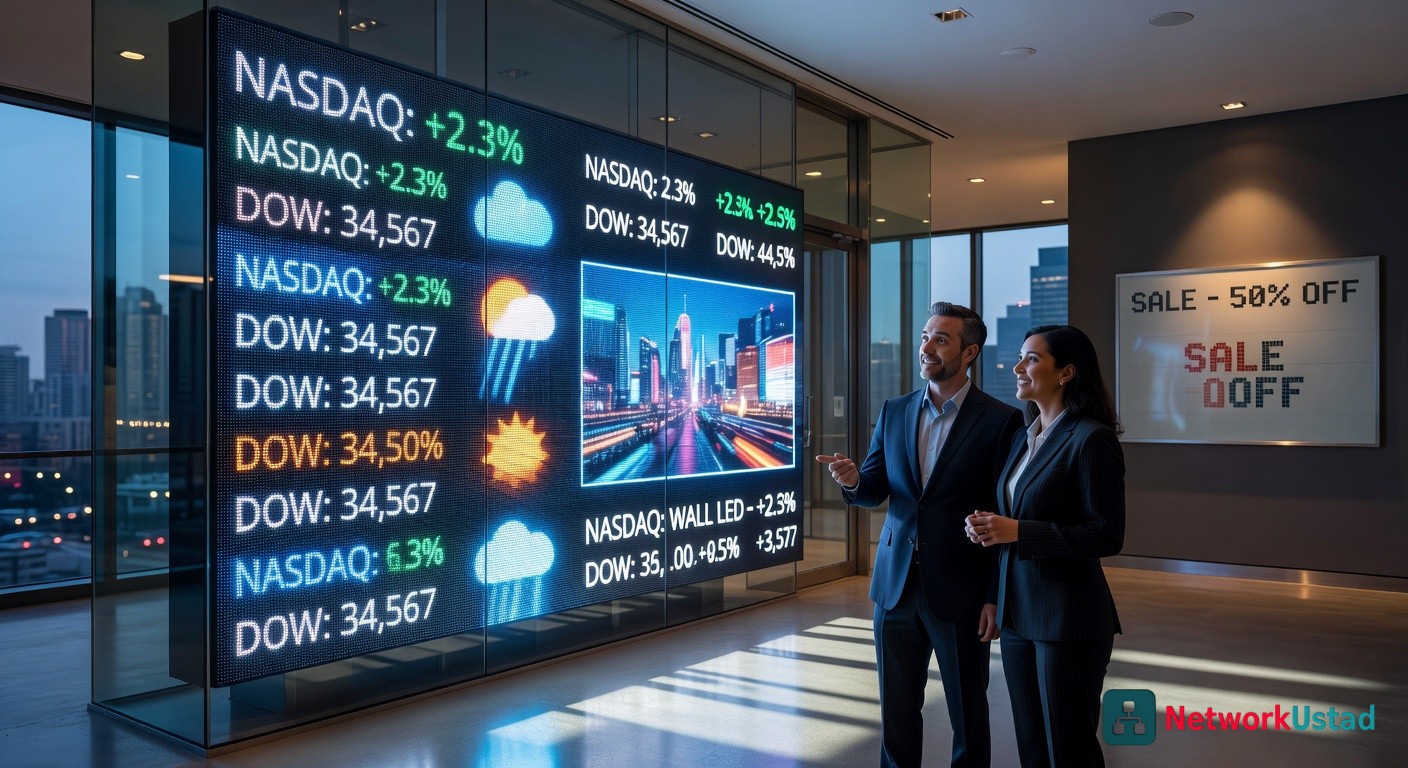
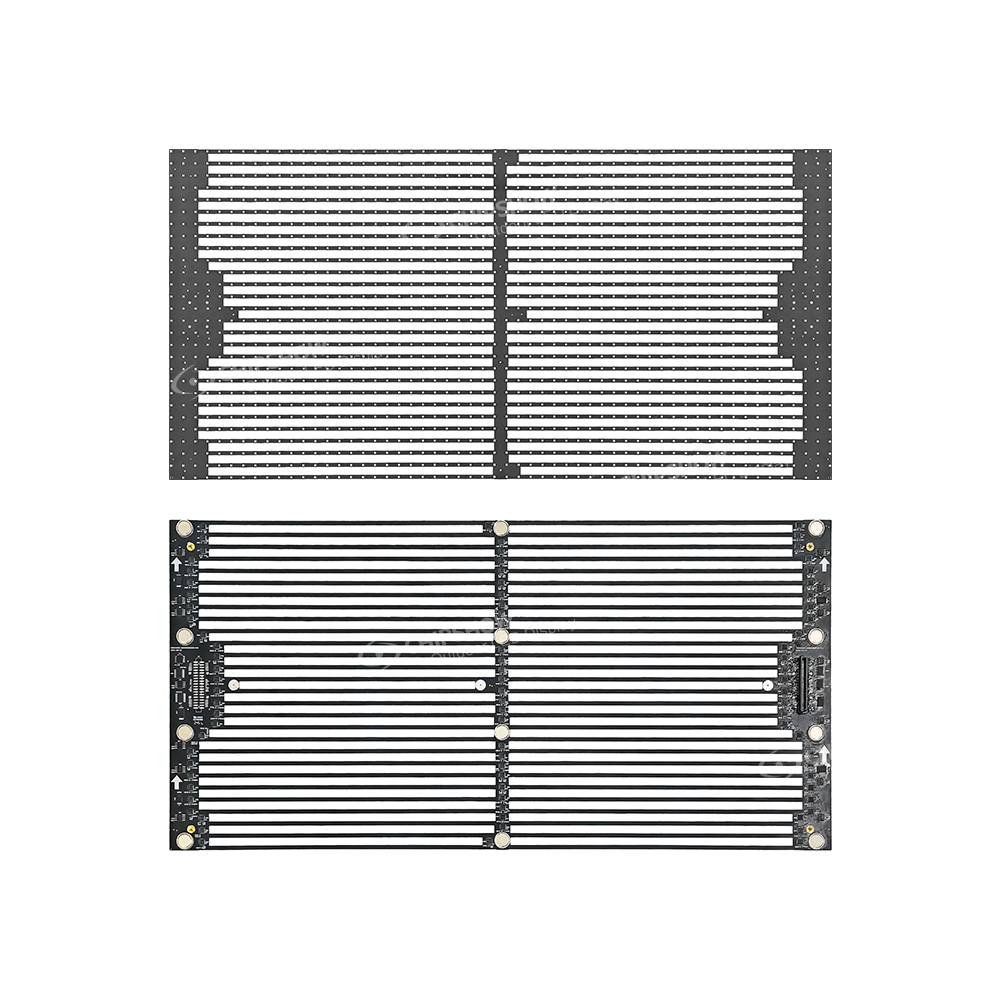
A glass wall LED screen is a display system engineered to mount directly onto or integrate within glass surfaces — storefronts, building facades, interior partitions — without blocking the view behind it. Unlike conventional LED panels that form an opaque barrier, these screens use a sparse arrangement of micro-LED modules on a transparent substrate, allowing natural light to pass through while simultaneously projecting vivid, high-resolution content. The result is a display that functions as both a communication tool and an architectural element. Retailers use them to turn entire shopfront windows into living advertisements. Corporate lobbies deploy them as branded feature walls that maintain visual openness. Hospitality venues install them to display menus, promotions, and ambiance content without sacrificing the aesthetic integrity of their space.
Exploring Variants: Transparent LED Display, Mesh LED Display, and Outdoor LED Display
Three distinct variants serve different business scenarios, and choosing correctly matters. Transparent LED displays prioritize the see-through effect, typically achieving 70–95% transparency. They are ideal for retail windows where maintaining sightlines into the store is commercially important — customers can still see merchandise while the screen layers promotional content over that view. Mesh LED displays take a different approach, using a flexible, open-weave structure that is exceptionally lightweight and allows air to pass freely through the panel. This makes them well-suited for large building wraps, festival installations, or any application where wind load and structural weight are engineering concerns. Outdoor LED displays, by contrast, are built for environmental resilience above all else. Weatherproof enclosures, anti-glare coatings, and high-brightness panels — often exceeding 5,000 nits — ensure readability in direct sunlight and reliable operation through rain, humidity, and temperature extremes. Manufacturers like Chipshow LED have developed outdoor-rated units across all three of these categories, giving businesses a range of purpose-built options rather than forcing a single solution onto every environment. A restaurant with a covered outdoor terrace, for instance, would benefit far more from a ruggedized outdoor display than a transparency-focused variant designed for climate-controlled interiors.
Key Advantages: Why Glass Wall LED Screens Are Superior
Unmatched Visibility and Customer Attraction
Brightness is the first battlefield, and glass wall LED screens win it decisively. Operating at luminance levels that traditional signage cannot approach, these displays remain fully legible in direct midday sunlight and just as commanding at midnight. A painted sign surrenders to darkness the moment artificial street lighting proves insufficient. An LED screen, by contrast, becomes the brightest object on the block after sunset — precisely when foot traffic from evening diners, late shoppers, and entertainment-seekers is at its peak. Beyond raw brightness, motion is the deeper advantage. The human visual system is hardwired to detect movement; a rotating product showcase or an animated promotional countdown will pull eyes away from a phone screen in a way that no static board ever could. In a streetscape where every surface competes for attention, dynamic content is not a luxury — it is the mechanism by which one storefront separates itself from every other.
Engaging and Flexible Content Delivery
The operational gap between traditional and LED signage becomes most apparent when a business needs to change its message. Reprinting a vinyl banner takes days and costs money. Updating a glass wall LED screen takes minutes and costs nothing beyond a few clicks in a content management dashboard. This flexibility unlocks genuinely powerful marketing capabilities: a café can display its breakfast menu at 7 a.m., switch to lunch specials at noon, and promote happy hour cocktails by 4 p.m. — all from a single screen, all without staff intervention. Real-time scheduling also enables event-driven content, such as weather-triggered promotions or countdown timers for flash sales, that creates urgency and drives immediate action. Some systems support touch interactivity, allowing customers to browse product catalogs or navigate menus directly on the display, deepening engagement before they ever step inside.
Durability, Efficiency, and Cost-Effectiveness
The long-term financial case for glass wall LED screens is straightforward once the full cost of traditional signage is honestly calculated. Vinyl banners need replacing every few months. Painted boards require periodic recoating. Illuminated box signs burn through fluorescent tubes and ballasts. Each replacement cycle adds material costs, labor fees, and operational downtime. LED technology, by design, is built for longevity — quality panels routinely deliver 50,000 to 100,000 hours of operational life with minimal degradation. Energy consumption is similarly favorable; modern LED modules draw a fraction of the power that neon or fluorescent alternatives require, reducing electricity bills meaningfully over time. Outdoor-rated units incorporate weatherproof enclosures and corrosion-resistant components that handle rain, humidity, and temperature swings without performance loss. When durability, energy efficiency, and content flexibility are weighed together, the total cost of ownership over a three-to-five-year horizon consistently favors LED over conventional alternatives.
Addressing Core Business Needs: Solutions for Retail and Restaurant Owners
Boosting Foot Traffic and Sales Conversion
For retail and restaurant owners, the ultimate measure of any signage investment is whether it moves people through the door. Glass wall LED screens address this directly by transforming a passive storefront into an active recruitment tool. A clothing boutique can cycle through seasonal lookbook imagery that stops pedestrians mid-stride. A restaurant can display a rotating reel of its most photogenic dishes at eye level, triggering appetite before a potential customer has even consciously decided to stop. Time-sensitive promotions — a lunch special ending at 2 p.m., a limited-edition item dropping today only — create the kind of urgency that static signage structurally cannot. Research consistently shows that dynamic digital displays generate significantly higher recall rates than printed alternatives, and recall is the first step toward conversion. When a passerby remembers your storefront hours later and chooses your restaurant over a competitor they cannot picture as clearly, the screen has already paid for itself.
Providing Compelling Digital Signage for Brand Storytelling
Beyond driving immediate foot traffic, glass wall LED screens give businesses a medium capable of communicating identity, not just information. A static sign can display a logo. A dynamic screen can tell the story behind it — origin footage, behind-the-scenes production clips, customer testimonials, or the chef preparing tonight’s signature dish. This depth of content builds the kind of emotional connection that transforms first-time visitors into loyal regulars. For brands with strong visual identities, the screen becomes an extension of that aesthetic rather than an interruption of it, seamlessly blending promotional content with the architectural character of the space and creating an immersive first impression that lingers long after the customer walks away.
Practical Implementation: Steps to Integrate Glass Wall LED Screens
Step 1: Assessing Your Storefront and Objectives
Before purchasing any hardware, spend time honestly evaluating what you need the display to accomplish. Measure your available glass surface area and note the orientation — a south-facing window in direct afternoon sun demands a much higher brightness specification than a north-facing interior partition. Identify your primary goal: are you trying to pull foot traffic from the street, communicate menu changes to existing customers, or build brand awareness over time? Each objective shapes a different content strategy and, by extension, a different hardware requirement. Establish a realistic budget that accounts not just for the screen itself but for installation, content creation, and ongoing management — costs that first-time buyers frequently underestimate.
Step 2: Selecting the Right Display Type
Match the display variant to your specific environment rather than defaulting to the most visually impressive option. If your storefront relies on merchandise visibility, a transparent LED display preserves sightlines while layering promotional content over the window. If you are wrapping a large exterior facade or an outdoor structure exposed to wind, a mesh LED display reduces structural load significantly. Businesses operating in uncovered outdoor environments — a street-facing terrace, a roadside kiosk, or an exterior hoarding — should prioritize a ruggedized outdoor LED display rated for the local climate. Indoor applications with controlled lighting can work with lower-brightness panels, keeping energy costs down without sacrificing image quality.
Step 3: Installation, Content Creation, and Management
Engage a certified installer familiar with both the electrical requirements and the structural constraints of glass mounting — improper installation voids warranties and creates safety risks. Once the screen is live, build a content schedule before launch rather than improvising. Develop a library of assets — promotional clips, brand videos, menu graphics — that can be rotated systematically. Most modern systems, including those supported by Chipshow LED’s cloud-based platform, include content management software that allows remote scheduling and real-time updates from a smartphone or laptop, eliminating the need for on-site technical intervention every time messaging needs to change. Review performance regularly and refine content based on which displays correlate with measurable increases in foot traffic or sales.
Making the Switch: The Future Belongs to Dynamic Storefronts
The case against traditional signage is no longer a matter of preference — it is a matter of competitive survival. Painted boards, vinyl banners, and static displays were built for a world that no longer exists. Today’s consumers move fast, expect richness, and respond to motion. Glass wall LED screens meet that expectation head-on, delivering brightness that dominates any lighting condition, content flexibility that keeps messaging perpetually relevant, and a durability that outlasts every conventional alternative by years.
For retail and restaurant owners specifically, the business logic is compelling. More eyes on your storefront means more people through your door. More relevant messaging means higher conversion. Lower maintenance and energy costs mean a healthier bottom line over time. These are not theoretical benefits — they are measurable outcomes that businesses adopting this technology are already experiencing.
The storefronts that will define the next decade of retail and hospitality are not the ones with the biggest budgets. They are the ones that communicate most effectively with the people walking past right now. Glass wall LED screens are the clearest path to that outcome. The question is not whether to make the transition — it is how soon you can afford not to.