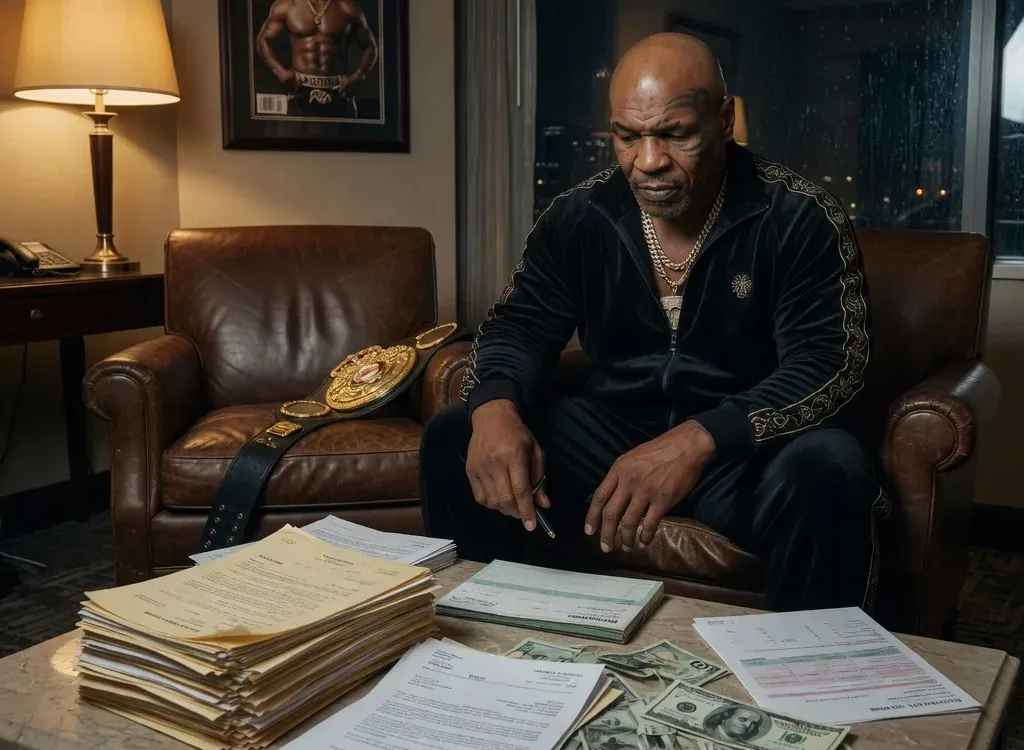
Mike Tyson earned over $400 million in the ring during his career, then filed for bankruptcy in 2003 with $23 million in debt. That paradox — generating generational wealth and losing it entirely before rebuilding — makes the question of Mike Tyson Net Worth 2026: Career Earnings, Crisis & financial resurrection one of the most instructive case studies in sports finance. As of mid-2026, multiple financial tracking sources including Celebrity Net Worth and Wealthy Gorilla estimate his net worth at approximately $10 million, a figure that reflects not just earnings but the cost of survival.
The Actual Numbers Behind Mike Tyson Net Worth 2026: Career Earnings, Crisis & Recovery
Tyson’s career purses totaled roughly $430 million in inflation-adjusted dollars. His 1997 rematch with Evander Holyfield alone generated a $30 million guarantee. The 2002 Lennox Lewis fight added another $35 million. These are publicly confirmed figures from Nevada State Athletic Commission filings.
Yet the current Mike Tyson Net Worth 2026: Career Earnings, Crisis & financial reality sits closer to eight figures. The gap between $430 million earned and $10 million retained is not unusual among athletes who build substantial net worth only to see it erode. What distinguishes Tyson’s case is the speed of the collapse — and the unlikely second act that followed.
According to Tyson’s 2003 bankruptcy filing in U.S. Bankruptcy Court for the Southern District of New York, he listed assets of $10 million to $50 million against liabilities exceeding $27 million, including a $13.4 million tax debt to the IRS and $4 million to the British tax authority.
Where the $400 Million Actually Went
The popular narrative blames Tyson’s financial collapse on tigers and mansions. The reality is more mundane — and more instructive. Court documents from the bankruptcy proceedings show his spending followed predictable patterns that financial advisors see across sudden-wealth cases.
The Three Categories That Drained the Fortune
First, entourage costs. Tyson employed over 200 people at his peak, including bodyguards, drivers, chefs, and personal assistants. Monthly payroll alone exceeded $500,000 according to bankruptcy trustee reports. This mirrors the pattern seen in inherited fortunes that vanish through mismanagement — the assumption that cash flow is permanent.
Second, legal settlements and divorces. His 2003 divorce from Monica Turner cost $6.5 million in a lump-sum settlement plus ongoing child support. Earlier legal settlements with Desiree Washington and various assault allegations drained millions more in legal fees and payouts before cases ever reached trial.
Third, Don King’s promotional contracts. A forensic audit by bankruptcy trustee Gregory O. Hammond found that King’s promotional company took 30% to 50% of Tyson’s purses — far above the industry standard of 10% to 15%. The audit estimated King and his entities extracted over $100 million from Tyson’s career earnings through management fees, promotional percentages, and contractual loopholes.
The Cannabis Empire That Rebuilt the Foundation
In 2016, Tyson launched Tyson Complete Holdings, a cannabis company operating a 420-acre ranch in California’s Coachella Valley. The venture includes cultivation facilities, a research lab, and the “Tyson Ranch” brand of flower and edibles. Industry analysts at MJBizDaily estimate annual revenues between $5 million and $8 million as of 2025.
This pivot matters for understanding Mike Tyson Net Worth 2026: Career Earnings, Crisis & current standing. Unlike endorsement deals that depend on celebrity relevance, the cannabis business generates recurring revenue independent of Tyson’s public profile. The operation employs roughly 50 workers and ships to dispensaries across California and Nevada.
The ranch also hosts a music festival and sells branded merchandise — a diversification strategy that insulates the business from commodity price swings in cannabis wholesale markets. For high-earning athletes like Virat Kohli, post-career diversification determines whether wealth compounds or contracts.
The Exhibition Circuit and Podcast Revenue Streams
Tyson’s 2020 exhibition against Roy Jones Jr. generated $80 million in pay-per-view revenue, according to Triller executives. Tyson’s personal cut was estimated at $10 million by Forbes. The 2024 bout against Jake Paul — streamed on Netflix to 60 million households — reportedly earned Tyson $20 million despite an eight-round decision loss.
These exhibitions represent a new revenue model for retired fighters. Unlike sanctioned professional bouts, exhibitions require no sanctioning fees, no ranking organization dues, and reduced medical testing requirements. The economics favor the athlete in ways traditional boxing never did.
His podcast, “Hotboxin’ with Mike Tyson,” runs on YouTube with over 1.2 million subscribers as of June 2026. Social Blade analytics estimate monthly ad revenue between $8,000 and $45,000, not including sponsorship deals from brands like Manscaped and DraftKings that pay premium rates for the show’s demographic reach.
What Separates Tyson’s Recovery From Other Athlete Bankruptcies
Most athletes who go bankrupt never return to meaningful net worth. The NBA Players Association reports that 60% of NBA players face financial distress within five years of retirement. The NFL Players Association reports similar figures. Tyson’s recovery to a stable $10 million net worth required specific conditions that are not replicable for most.
The difference is intellectual property value. Tyson’s name, voice, and likeness carry licensing value that persists regardless of his physical condition. The animated series “Mike Tyson Mysteries” ran for four seasons on Adult Swim. His cameo in “The Hangover” (2009) revitalized his cultural relevance. Digital creators like Kai Cenat now monetize attention directly, but Tyson built enduring IP that outlasted his athletic prime.
His 2013 memoir “Undisputed Truth” became a New York Times bestseller, spawning a one-man Broadway show that toured internationally. Book royalties, speaking fees ranging from $50,000 to $75,000 per engagement, and licensing deals for Tyson-branded products create income streams that do not require him to step into a ring.
The Tax Liability That Still Shadows the Estate
The IRS debt from the 2003 bankruptcy was discharged through the Chapter 7 process, but California’s Franchise Tax Board pursued state tax claims separately. Public records show Tyson resolved his California tax obligations through a payment plan completed in 2023. This clearance freed his cannabis business from liens that had complicated early investment rounds.
Tax compliance now forms the backbone of his financial management. His current business manager, Adam S. Goldman of Octagon Sports Consulting, structured Tyson Complete Holdings as an S-corporation with quarterly estimated tax payments — a mundane detail that represents the difference between sustainable wealth and another collapse.
Mike Tyson Net Worth 2026: Career Earnings, Crisis & What the Numbers Actually Mean
The $10 million figure matters less than the structure supporting it. Tyson owns his cannabis operation outright, with no outside investors diluting his equity. His podcast and licensing income flow through a personal services corporation that limits liability. The Connecticut mansion he purchased in 2023 for $2.5 million is held in a trust, protected from personal creditors.
Compare this to his 1990s portfolio: a 52-room Connecticut mansion (sold at a $1.4 million loss), multiple Bentleys and Ferraris (repossessed), and a jewelry collection that auctioned for pennies on the dollar. The assets that remain are income-producing, not depreciating.
The lesson embedded in Mike Tyson Net Worth 2026: Career Earnings, Crisis & eventual stabilization is not about redemption narratives. It is about asset classification. Tyson’s first fortune was built on a wasting asset — his physical prime as a heavyweight. His second fortune, smaller but more durable, rests on intellectual property and an operating business with recurring revenue. That shift — from depreciating asset to cash-flowing enterprise — is the only reason his net worth exists at all in 2026.