Something interesting happens when you add game mechanics to a non-game product.
People come back more often. They stay longer. They complete actions they would have abandoned without the mechanic. They invite friends. They compete. They progress. They feel something — and feeling something is what drives the habitual engagement that every mobile app in every category is trying to create.
Gamification is not a new concept. But the sophistication with which it’s being applied to mobile apps in 2026 is genuinely new — and the commercial results it’s producing are changing how product teams think about engagement, retention, and monetization across every app category from healthcare to eCommerce to financial services.
Austin’s technology community has been leading in this shift. The city’s creative-technical culture, its deep gaming heritage, and its concentration of mobile-first businesses have made it one of the most active markets for gamification-driven product innovation in the country.
TekRevol mobile app development company Austin teams building in this space are seeing the same pattern repeat across industries, gamification applied with strategic intent produces engagement outcomes that conventional product design consistently fails to match.
The expertise that TekRevol mobile game developers bring to dedicated game builds is increasingly being applied to non-game apps with results that are changing what product teams consider possible outside of gaming contexts.
Here’s what’s happening, and why it matters for every mobile product.
How Is Gamification Transforming Mobile Apps?
Gamification is transforming mobile apps by applying the psychological engagement mechanics of game design, progression systems, reward structures, competition, achievement, and social dynamics, to non-game contexts where these mechanics create habitual usage patterns that conventional product design cannot produce.
The transformation is happening across every app category simultaneously.
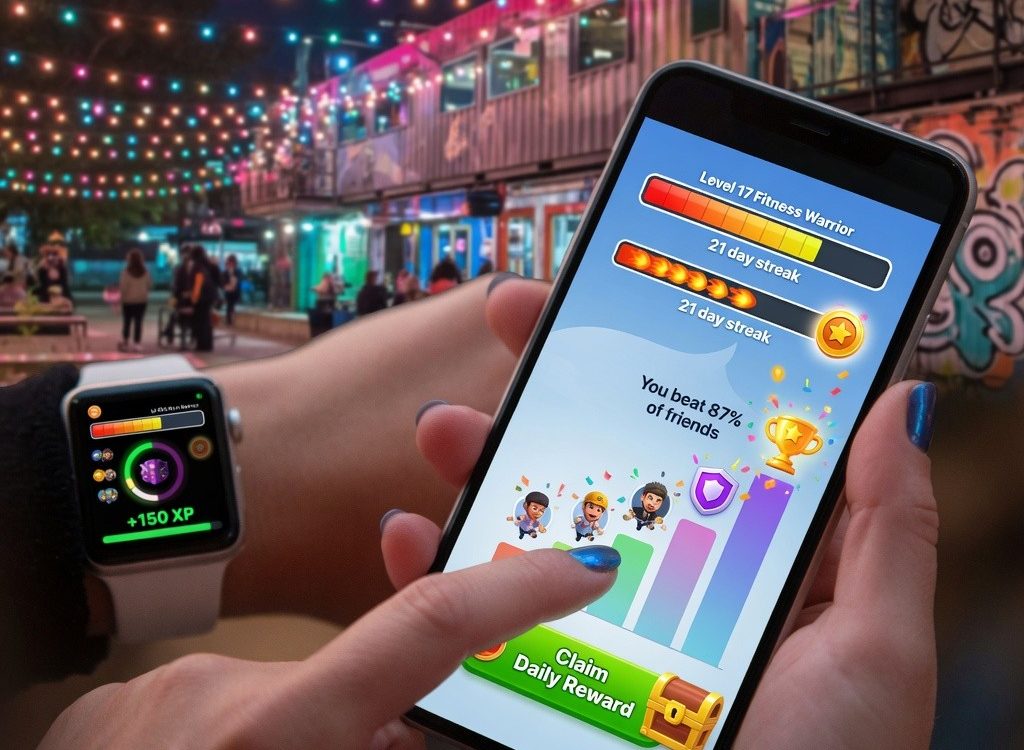
● Progression systems in non-game apps — fitness apps with leveling systems, financial apps with savings milestones, and learning apps with skill trees are all applying the fundamental game mechanic of visible progress toward a meaningful goal to contexts where that mechanic had never previously been used
● Reward unpredictability — variable reward schedules borrowed directly from game design creating the engagement pull that makes certain apps feel compulsively returnable in ways that predictable reward structures never achieve
● Achievement and badge systems — milestone recognition that celebrates user accomplishments in ways that activate the same psychological reward mechanisms that make game achievements so motivating
● Streak mechanics — daily engagement streaks that make consistent usage feel worth protecting, turning irregular app visits into habitual daily behavior that drives the retention curves every product team is chasing
● Leaderboards and social competition — competitive dynamics between users that activate the social engagement motivations — status, recognition, belonging — that game designers have always understood and non-game product teams are finally starting to build for
● Quest and challenge systems — these are special challenges with a time limit that not only make users feel the pressure but also help them concentrate on particular app behaviors and eventually reward their persistence in the app with real the ones that are meaningful outcomes.
This type of mechanics works because human psychology remains the same. The deep reasons behind the attractiveness of games are the same reasons why gamified products are attractive.
Why Does Gamification Continue to Work Over Time Rather Than Losing Its Appeal?
Gamification delivers lasting results when it taps into intrinsic motivation rather than relying on superficial rewards. The most effective systems create meaningful engagement, not short-term novelty.
Poor gamification often fails because it relies on badges, points, or leaderboards that offer little real value. Without connecting to what users genuinely care about, these mechanics quickly lose their appeal.
● Intrinsic Reward Alignment: Gamification works best when tied to goals users already care about, such as health, financial progress, skill development, or social connection, creating engagement that lasts beyond novelty.
● Meaningful Progression: Levels and milestones should reflect genuine achievement and growth rather than arbitrary point accumulation that quickly loses value.
● Community-Driven Social Mechanics: Competition and collaboration features are most effective when they foster real interaction and a sense of belonging among users.
● Adaptive Challenge Design: Challenges should adjust to user ability, keeping the experience engaging without becoming too easy or overly frustrating.
● Strategic Reward Systems: Well-designed reward schedules maintain motivation and anticipation without relying on repetitive or predictable incentives.
● Narrative and Identity Integration: Gamification becomes more compelling when it supports a clear user journey and reinforces a meaningful sense of progress and identity.
TekRevol mobile app development company Austin teams designing gamification systems apply these principles from the product brief stage — understanding that gamification architecture is a design discipline as much as a development discipline.
How Are Austin Brands Using Gamification to Drive Mobile App Retention?
Austin brands are using gamification to boost app retention by creating compelling reasons for users to return daily, transforming one-time transactions into ongoing brand engagement.
The city’s tech-savvy consumer base is especially receptive to well-designed gamification, combining a strong interest in technology with a demand for meaningful user experiences.
● Daily Challenge Systems: Austin brands are using daily challenges to encourage repeat app visits through achievement-driven engagement rather than promotions alone.
● Community Competition Features: Neighborhood and interest-based competitions tap into Austin’s strong community culture and shared identity.
● Local Achievement Systems: Gamification tied to Austin-specific landmarks, events, and cultural moments creates stronger local relevance and engagement.
● Streak Protection Mechanics: Austin users respond well to features that help maintain usage streaks, reinforcing long-term habits.
● Seasonal and Event-Based Challenges: Brands use events like SXSW and Austin City Limits to create timely, high-engagement challenge experiences.
Retention is where gamification delivers its highest commercial return. An Austin brand with a well-designed gamification system retains customers through competitive pressure and price disruptions that non-gamified brands consistently lose users to.
What Business Results Does Gamification Produce for Mobile Apps?
Gamification drives measurable business outcomes, including higher user engagement, stronger retention, increased session frequency, better feature adoption, and greater organic growth through deeper, more rewarding user experiences.
Results are what separate a gamification strategy from a gamification activity.
● Daily Active User Growth: Streaks and challenges encourage regular engagement, leading to higher daily active user rates.
● Stronger Retention: Progress, achievements, and streaks give users a reason to return, improving day-30 and day-90 retention.
● Longer Sessions: Gamification encourages users to spend more time exploring features and interacting with the app.
● Faster Feature Adoption: Challenges and quests introduce users to underutilized features more effectively than traditional onboarding.
● Organic User Acquisition: Leaderboards and social challenges encourage sharing and referrals, driving low-cost organic growth.
How Should Brands Approach Gamification Investment in Their Mobile App?
Brands should approach gamification investment by starting with a precise understanding of the user behavior they’re trying to change, identifying the specific motivation gaps that conventional product design hasn’t addressed, and engaging development partners with genuine game design expertise rather than teams applying gamification as a surface-level feature addition.
Gamification designed without game design expertise produces a failure mode that gives the strategy an undeserved bad reputation.
● Behavior change objective first: defining exactly which user behavior the gamification system is designed to create or sustain, before any mechanic is selected or designed
● Motivation research before mechanic selection: understanding what genuinely motivates the specific user base, rather than assuming universal appeal for mechanics that work in different contexts
● Progressive complexity introduction: starting with simple, immediately rewarding mechanics and introducing additional complexity as users develop familiarity, rather than overwhelming new users with a full gamification system on first interaction
● Ongoing balance and tuning commitment: gamification systems require continuous monitoring and adjustment as user behavior data announces which mechanics are sustaining engagement and which are losing effectiveness over time
The Game Has Changed
Mobile apps that feel like work get deleted. Mobile apps that feel like play get opened daily.
That’s the commercial reality driving the gamification transformation happening across every app category right now. The psychology hasn’t changed. The tools to apply it correctly at scale have.
TekRevol mobile game developers bring the game design expertise that makes gamification systems genuinely effective rather than superficially applied, understanding the balance, progression, and social dynamics that determine whether a gamification investment transforms retention or simply adds mechanics that users ignore after the first week.
When TekRevol mobile app development company Austin capabilities combine with game design depth, the result is mobile products that don’t just function well, they create the kind of voluntary daily engagement that every brand in every category is working to build.
The game mechanics are the strategy. Build them like it.