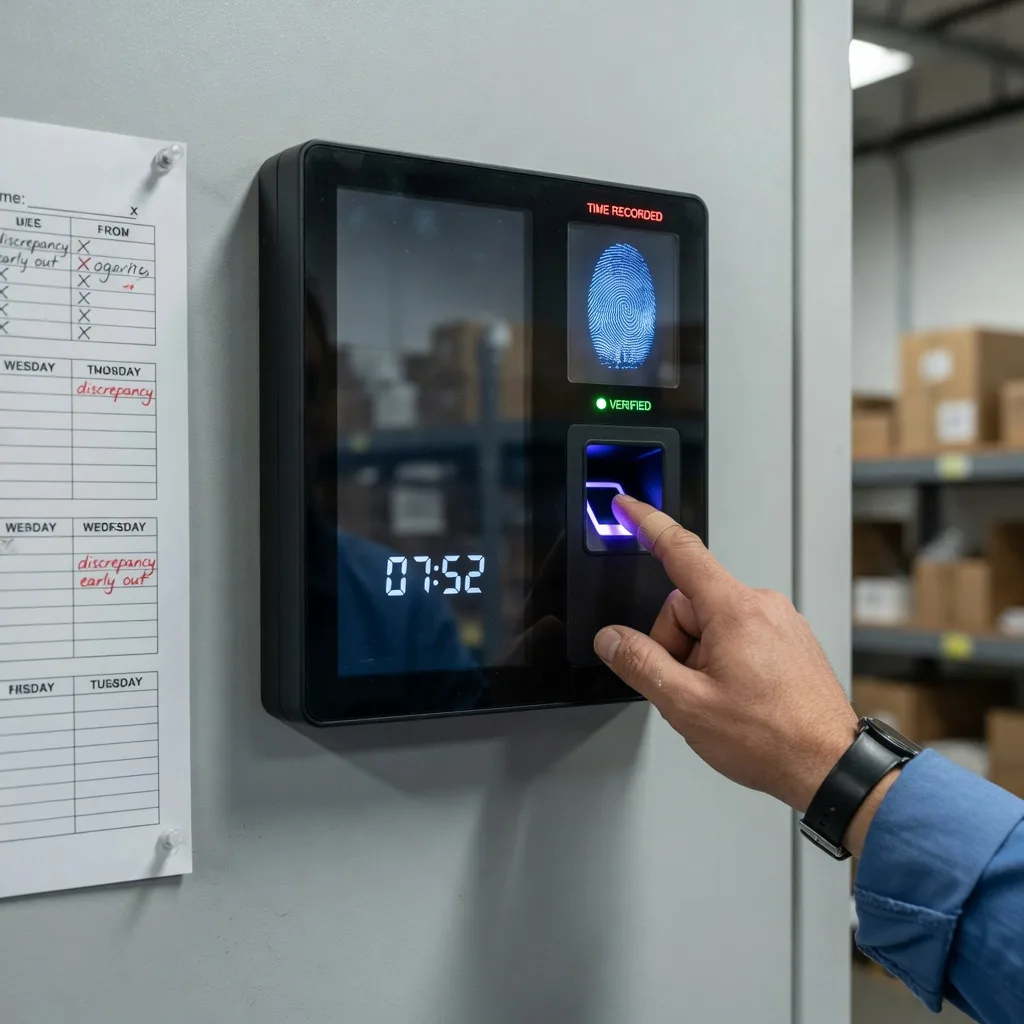
Every pay period, small businesses across the country lose money they never see disappear. It doesn’t vanish through theft of inventory or embezzlement—it leaks out slowly through inaccurate time tracking. Buddy punching, where one employee clocks in for an absent coworker, inflated hours from early punch-ins, and extended breaks that never get recorded all contribute to a payroll creep that can cost thousands annually. For most small business owners, the problem feels invisible until the numbers stop adding up.
A modern clock in machine for small business changes this equation entirely. By using biometric verification, cloud connectivity, and intelligent software, today’s time clocks don’t just record hours—they guarantee that every minute logged is legitimate. This article explores how these systems use advanced technology to eliminate time theft and deliver precise attendance tracking you can trust. Whether you’re managing a retail team of five or a warehouse crew of fifty, you’ll find actionable guidance to choose, implement, and benefit from the right solution for your operation.
The High Cost of Inefficient Attendance Tracking for Small Businesses
The American Payroll Association estimates that buddy punching alone costs U.S. employers hundreds of millions of dollars each year, and small businesses absorb a disproportionate share of that loss. When a single employee clocks in just ten minutes early each day or a coworker punches a badge for someone running late, those stolen minutes compound quickly—potentially adding up to weeks of unearned wages per employee annually. Multiply that across a team, and a business with twenty workers could be hemorrhaging the equivalent of a full salary in phantom labor costs.
Beyond outright theft, manual timesheets introduce honest but expensive errors. Transposed numbers, forgotten entries, and inconsistent rounding practices create payroll discrepancies that take hours of managerial time to reconcile each pay cycle. That administrative burden pulls business owners and supervisors away from revenue-generating work. For owners focused on reducing employee time theft and enhancing accuracy in attendance tracking, the status quo isn’t just inconvenient—it’s a measurable financial liability that erodes margins and undermines trust between management and staff.
Beyond the Punch Card: The Evolution of the Modern Time Clock
Time tracking started with handwritten logs—simple, but easily falsified and nearly impossible to audit at scale. Mechanical punch cards brought standardization in the early twentieth century, yet they remained vulnerable to buddy punching and physical tampering. Digital PIN-based systems improved record-keeping but still relied on shareable credentials that any coworker could enter on someone else’s behalf.
Today’s biometric time clock represents a fundamental shift in philosophy. Rather than verifying what an employee knows (a PIN) or what they carry (a badge), these systems verify who they are. Fingerprint scanners, facial recognition cameras, and cloud-based platforms work together to create a time record that is virtually impossible to forge. Combined with real-time data syncing and intelligent reporting, modern systems don’t just log punches—they actively prevent the fraud and errors that older methods could never address. For small businesses still relying on outdated tools, this evolution offers the first realistic path to airtight accountability.
How a Modern Clock-In Machine Solves Core Business Problems
Eliminating Time Theft and Buddy Punching
When every clock-in requires a fingerprint scan or a facial recognition match, proxy punching becomes physically impossible. An employee can share a PIN or hand off a badge, but they cannot lend their face or fingerprint to a coworker. This single technological shift closes the most exploited loophole in workforce management. The system ties each punch event to a unique biological identifier, creating an indisputable record that the correct person was present at the recorded time. For businesses that have struggled with habitual offenders or shift-start gray areas, biometric verification removes ambiguity entirely—either the employee was there, or they weren’t.
Ensuring Pinpoint Accuracy in Payroll
Automated time capture eliminates the rounding errors, forgotten entries, and transposed digits that plague manual systems. Every punch is logged to the exact second, and that data flows directly into payroll calculations without human transcription. This precision ensures employees receive exactly what they’ve earned—no more, no less—which reduces disputes and builds workforce trust. Accurate records also strengthen compliance with labor regulations governing overtime thresholds, mandatory breaks, and recordkeeping requirements, shielding the business from costly audits or legal challenges.
Simplifying Administrative Overhead
Modern time clocks generate exportable reports automatically, summarizing hours worked, overtime accrued, and attendance anomalies without requiring a manager to compile spreadsheets. Direct integration with popular payroll software means data moves from the clock to the paycheck with minimal intervention. Supervisors reclaim hours previously spent chasing down missing timesheets or correcting errors, redirecting that energy toward coaching teams, serving customers, and growing the business. The result is a leaner administrative workflow that pays for itself in recovered productivity.
Key Features to Look for in a Small Business Time Clock
Biometric Verification: Fingerprint and Facial Recognition
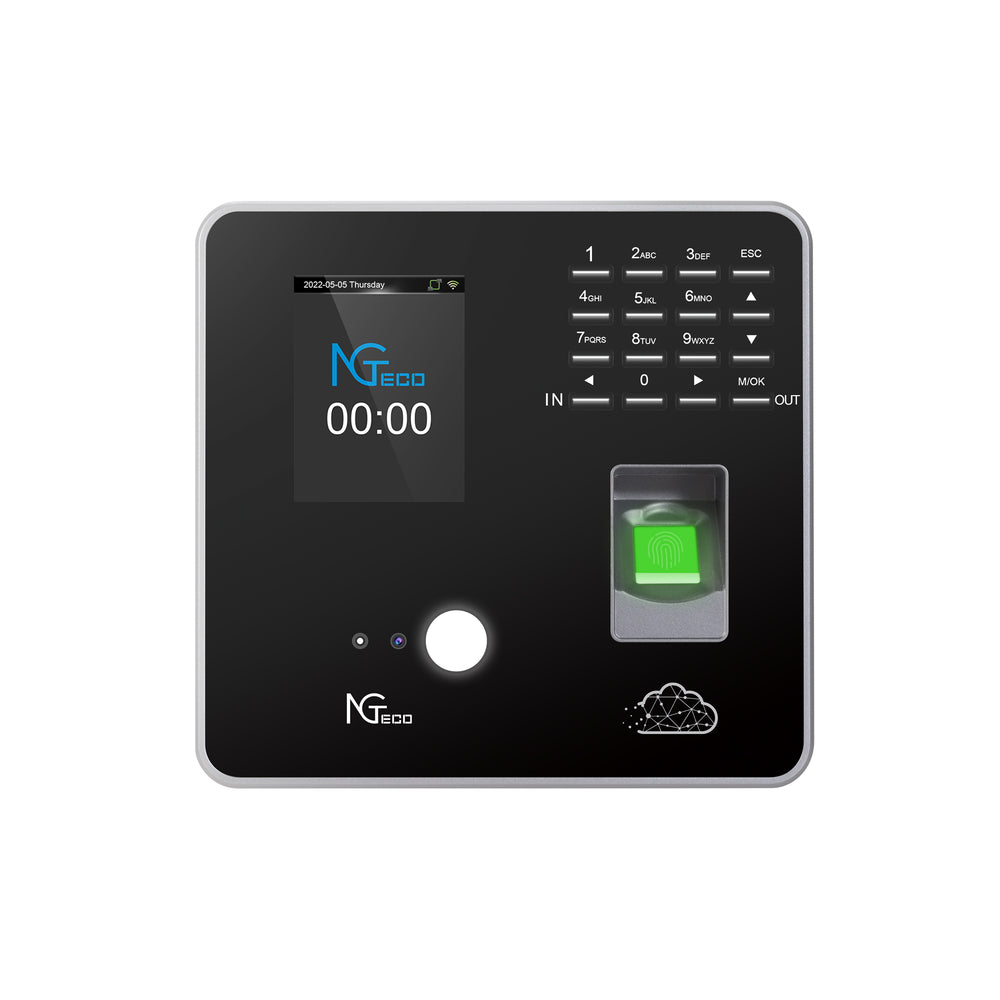
Fingerprint scanners remain the most widely adopted biometric option for small businesses—they’re fast, familiar, and deliver consistent results for teams that work in clean environments. However, employees in industries involving grease, dust, or frequent hand washing may experience read failures, making facial recognition the stronger choice. Hardware manufacturers like NGteco have developed facial recognition terminals that authenticate in under a second without physical contact, which also carries hygiene advantages. For small teams, user acceptance often comes down to perceived convenience: facial recognition feels effortless, while fingerprint scanning feels more private to some employees. Evaluating your work environment and team preferences will guide the right pick.
The Importance of Anti-Spoofing Technology
Anti-spoofing technology uses infrared depth sensing, liveness detection, and algorithmic analysis to distinguish a real person from a photograph, video replay, or silicone mask. Without these safeguards, a biometric time clock could potentially be fooled by a high-resolution image held up to the camera. When evaluating systems, confirm that the device tests for three-dimensional presence and micro-movements like blinking—these layers ensure the integrity of every recorded punch and justify the investment in biometric hardware.
Reliable Attendance Tracking and Reporting
The hardware captures the punch, but the software transforms raw data into management intelligence. Look for a dashboard that displays real-time attendance tracking—who’s clocked in, who’s late, and who’s approaching overtime—at a glance. Customizable reports should let you filter by department, date range, or individual employee and export directly to CSV or PDF for recordkeeping. Automated alerts for anomalies like missed punches or excessive overtime allow managers to intervene proactively rather than discovering issues at payroll close.
Cloud Accessibility and Mobile Integration
Cloud-based platforms free business owners from being physically present to monitor attendance. Whether you’re traveling, managing a second location, or simply working from home, browser-based dashboards provide full visibility into workforce activity. Mobile apps extend this further by enabling remote employees to clock in with GPS-verified timestamps and allowing managers to approve time-off requests or correct entries on the fly. This flexibility is especially valuable for businesses with field crews, delivery drivers, or hybrid schedules where a wall-mounted terminal alone cannot cover every scenario.
Choosing and Using the Right System: A Step-by-Step Guide
Step 1: Assess Your Business Needs and Budget
Start by documenting your specific requirements. How many employees need to clock in daily, and do they work at one location or several? Identify whether your team operates in conditions that favor facial recognition over fingerprint scanning. List the payroll and HR software you already use, then confirm which time clock systems offer direct integration. Finally, establish a realistic budget that accounts for hardware, any ongoing software subscriptions, and potential installation costs—remembering that the system only needs to prevent a few hours of weekly time theft to pay for itself.
Step 2: Research and Compare Solutions
With your requirements defined, shortlist systems that match your feature checklist—particularly biometric verification, anti-spoofing capability, and cloud-based reporting. Read user reviews from businesses of similar size and industry, paying attention to comments about reliability and customer support. Request live demos or free trials whenever possible so you can test punch speed, software usability, and report clarity with real team members before committing.
Step 3: Plan the Rollout and Communicate with Employees
A successful implementation depends on team buy-in. Announce the change well before installation, explaining that the system protects honest employees by ensuring everyone is paid fairly. Hold brief training sessions where staff can enroll their biometric data and practice clocking in. Address privacy concerns openly—clarify that fingerprint templates are encrypted mathematical representations, not stored images, and that facial data is used solely for verification. Setting clear expectations and offering support during the first two weeks minimizes resistance and accelerates adoption.
Invest in Accurate Time Tracking to Protect Your Bottom Line
The shift from outdated tracking methods to a modern clock in machine for small business isn’t merely a technology upgrade—it’s a fundamental change in how you protect revenue and treat your workforce. Buddy punching disappears when biometric verification makes proxy clock-ins physically impossible. Payroll errors shrink to near zero when automated systems capture every punch to the second and feed that data directly into your payroll platform. Administrative hours once lost to chasing timesheets and correcting mistakes flow back into activities that actually grow your business.
Taken together, these benefits compound over time. Accurate records build employee trust, reduce compliance risk, and give you clear visibility into labor costs—insights that inform smarter scheduling and staffing decisions. Rather than viewing a biometric time clock as an expense, consider it a strategic investment in fairness, transparency, and operational efficiency. The sooner you close the gaps that outdated systems leave open, the sooner every dollar on your payroll reflects real, verified work.