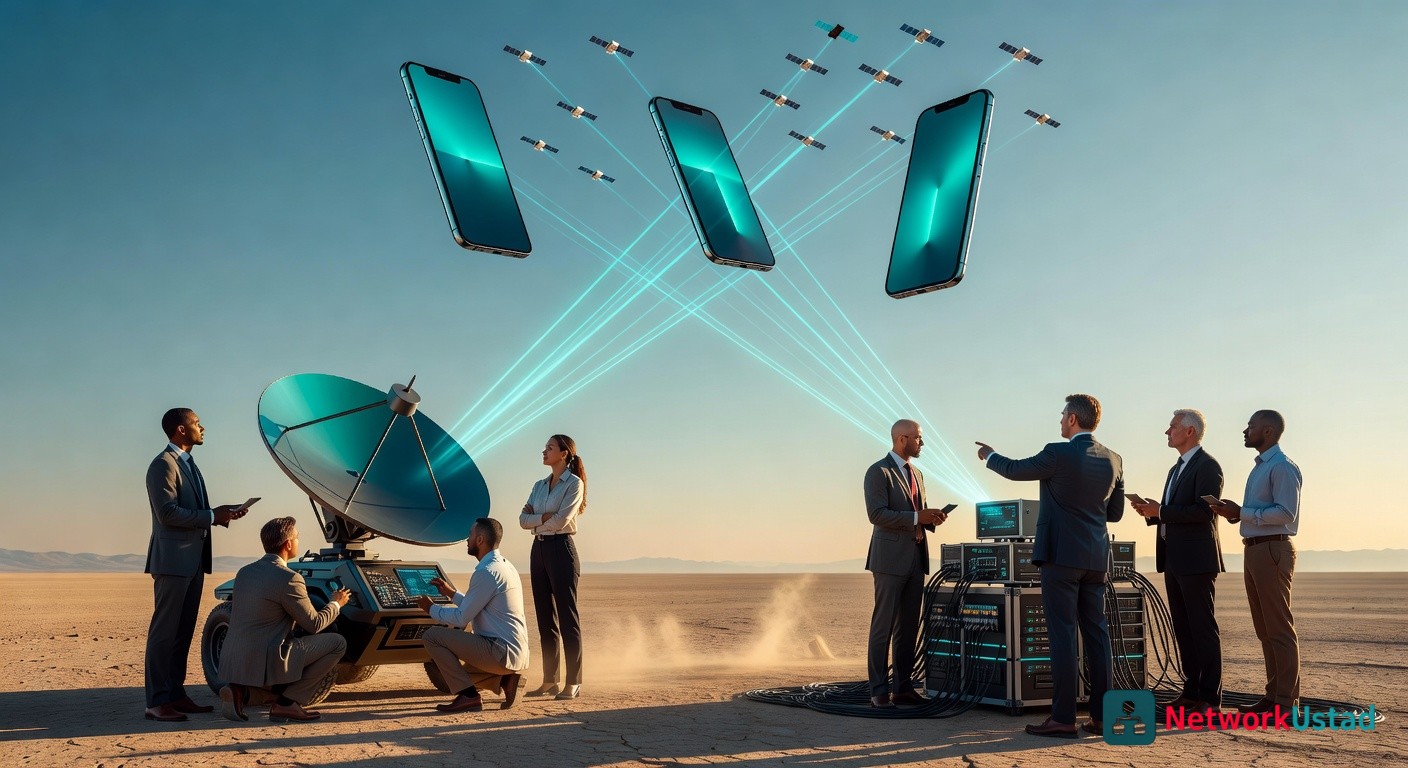
Apple and Amazon Partnership Targets Starlink
Apple and Amazon announced a collaboration on April 13, 2026, aimed at developing satellite connectivity features for smartphones. The move directly addresses Starlink’s efforts to integrate direct-to-cell satellite services into mobile devices. Executives from both companies confirmed the partnership during a joint press briefing in San Francisco.
The agreement focuses on combining Apple’s hardware expertise with Amazon’s satellite network through Project Kuiper. This initiative seeks to provide global internet access via satellites, positioning the duo against SpaceX’s Starlink, which has tested satellite links with major carriers. Industry observers note that Starlink’s smartphone ambitions include partnerships with T-Mobile and others to enable texting and data in remote areas.
Details of the Collaboration
Under the terms, Apple will integrate custom modems into future iPhone models to connect with Amazon’s planned constellation of over 3,000 satellites. Amazon’s Project Kuiper, approved by the FCC in 2020, aims to launch initial satellites by late 2026. The partnership includes joint research on low-Earth orbit technology to ensure compatibility with existing cellular networks.
Financial aspects remain undisclosed, but sources indicate shared development costs exceeding $1 billion. Apple contributes chip design and software integration, while Amazon handles satellite deployment and ground infrastructure. Testing phases are set to begin in mid-2027, with commercial rollout expected in 2028.
This effort builds on Apple’s prior work with Globalstar for emergency satellite SOS features in iPhones since 2022. Amazon, meanwhile, has invested heavily in Kuiper, securing launch contracts with United Launch Alliance and Blue Origin.
Background on Starlink’s Push
Starlink, operated by SpaceX, has expanded beyond broadband to mobile connectivity. In 2024, it demonstrated voice calls via satellites using unmodified smartphones. The service targets underserved regions, with coverage projected to reach 100 countries by 2026.
Elon Musk, SpaceX CEO, stated in a recent interview that Starlink aims to eliminate dead zones for mobile users. This has prompted regulatory scrutiny over spectrum allocation and competition. The FCC has approved Starlink’s direct-to-cell licenses, giving it a head start.
Apple and Amazon’s entry escalates the race. Analysts point to the growing demand for reliable connectivity in rural and disaster-prone areas. Global smartphone shipments reached 1.5 billion units in 2025, per IDC data, with satellite integration seen as a key differentiator.
Concerns over tech partnerships often arise in competitive fields like telecommunications, where rapid advancements can lead to market distortions.
Reactions from Involved Parties
Apple CEO Tim Cook described the alliance as a step toward “universal access.” Amazon founder Jeff Bezos, via a company statement, emphasized Kuiper’s role in bridging digital divides. SpaceX has not commented directly, but Musk posted on X about the need for multiple providers to foster innovation.
Telecom experts, including those from the GSMA, welcome the competition. “Diverse satellite options will lower costs and improve service quality,” said a GSMA representative. However, challenges include interference risks and high latency compared to terrestrial networks.
Future Implications
The partnership could reshape mobile broadband. Rollout timelines depend on satellite launches, with Amazon targeting 578 satellites in orbit by 2026. Apple plans to support the feature across iOS devices, potentially extending to third-party hardware.
Regulatory hurdles persist, as the ITU coordinates global spectrum use. Pending approvals may delay expansions. For consumers, this means broader options for off-grid communication, though pricing details are pending.
In related developments, streamlining tech integrations in partnerships like this requires careful financial oversight. The collaboration underscores shifting dynamics in the satellite industry, with Apple and Amazon challenging Starlink’s lead.
Market shares may shift, as investors react to the news. Apple’s stock rose 2% on April 14, while Amazon gained 1.5%. Starlink’s valuation, estimated at $200 billion, faces new pressure.
This development highlights the convergence of consumer tech and space exploration. As satellite constellations proliferate, global connectivity edges closer to seamlessness.