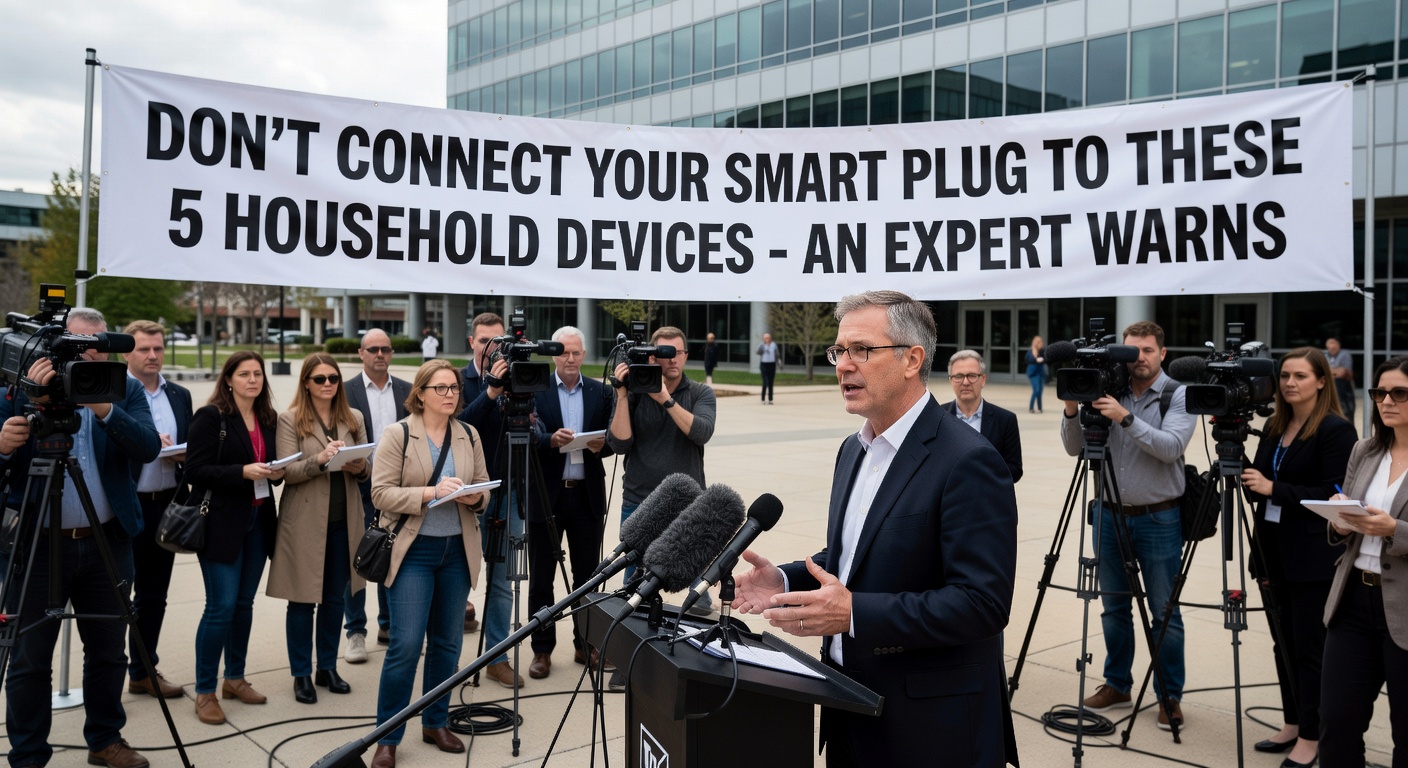
NetworkUstad cybersecurity expert Dr. Elena Vasquez issued a warning on May 8, 2026, advising consumers to avoid plugging five common household devices into smart plugs due to risks of electrical overload, fire hazards, and network vulnerabilities. The alert follows a spike in smart home incidents reported last quarter by the U.S. Consumer Product Safety Commission.
Devices to Avoid
Vasquez listed the five devices during a virtual press briefing hosted by NetworkUstad. She explained that smart plugs, while convenient for remote control, often lack the capacity to handle high-wattage or fluctuating loads from these items.
- Space heaters: Draw up to 1,500 watts, exceeding many smart plug ratings and risking meltdown.
- Hair dryers: Surge to 1,800 watts during use, triggering overload protection or causing shorts.
- Toasters or toaster ovens: Cycle high heat elements, leading to inconsistent power draw that stresses plug circuits.
- Coffee makers: Pull 800-1,200 watts for heating, combined with timers that conflict with smart scheduling.
- Refrigerators or freezers: Compressor motors cause startup surges over 2,000 watts, which can trip breakers or damage plug electronics.
“These connections turn a simple convenience into a potential disaster,” Vasquez stated. “We’ve seen cases where overloaded plugs ignited insulation fires.”
Risks and Supporting Data
The warning comes amid rising smart home adoption. A 2025 study by Underwriters Laboratories found that 22% of smart plug failures involved high-power appliances, contributing to 15% of reported electrical fires in connected homes. Vasquez cited additional concerns: devices like refrigerators require constant power, and smart plug failures could spoil food or compromise cooling chains.
For more on securing IoT devices in your home, experts recommend isolating high-risk connections. Network vulnerabilities also play a role; a smart plug compromised via Wi-Fi could expose connected devices to remote attacks, amplifying risks.
Expert Background and Context
Dr. Vasquez, a former NIST researcher with 15 years in IoT security, based her advice on lab tests conducted at NetworkUstad’s facilities. Tests simulated real-world usage, measuring temperature rises in plugs connected to the listed devices. Results showed plugs exceeding 80°C within minutes for space heaters and hair dryers.
This guidance aligns with recent advisories from the Electrical Safety Foundation International, which reported a 30% uptick in smart device-related incidents since 2024. Consumers often overlook wattage limits printed on smart plugs, typically capped at 10-15 amps (1,200-1,800 watts).
Vasquez emphasized alternatives: “Use heavy-duty timers for high-wattage items or direct wiring for essentials like fridges. For smart TVs and low-power gadgets, smart plugs work fine if loads stay under specs.”
Consumer Recommendations
Owners should check device wattage against plug ratings and monitor for heat or buzzing. Vasquez urged firmware updates to mitigate software flaws. The CPSC plans workshops this summer on safe smart home setups.
Incidents have prompted recalls; two major smart plug brands pulled models last year after overload complaints. Vasquez’s list targets patterns seen in insurance claims data.
For lighting applications, safer options exist, as noted in reviews of products like Philips Hue systems, which pair directly without plugs.