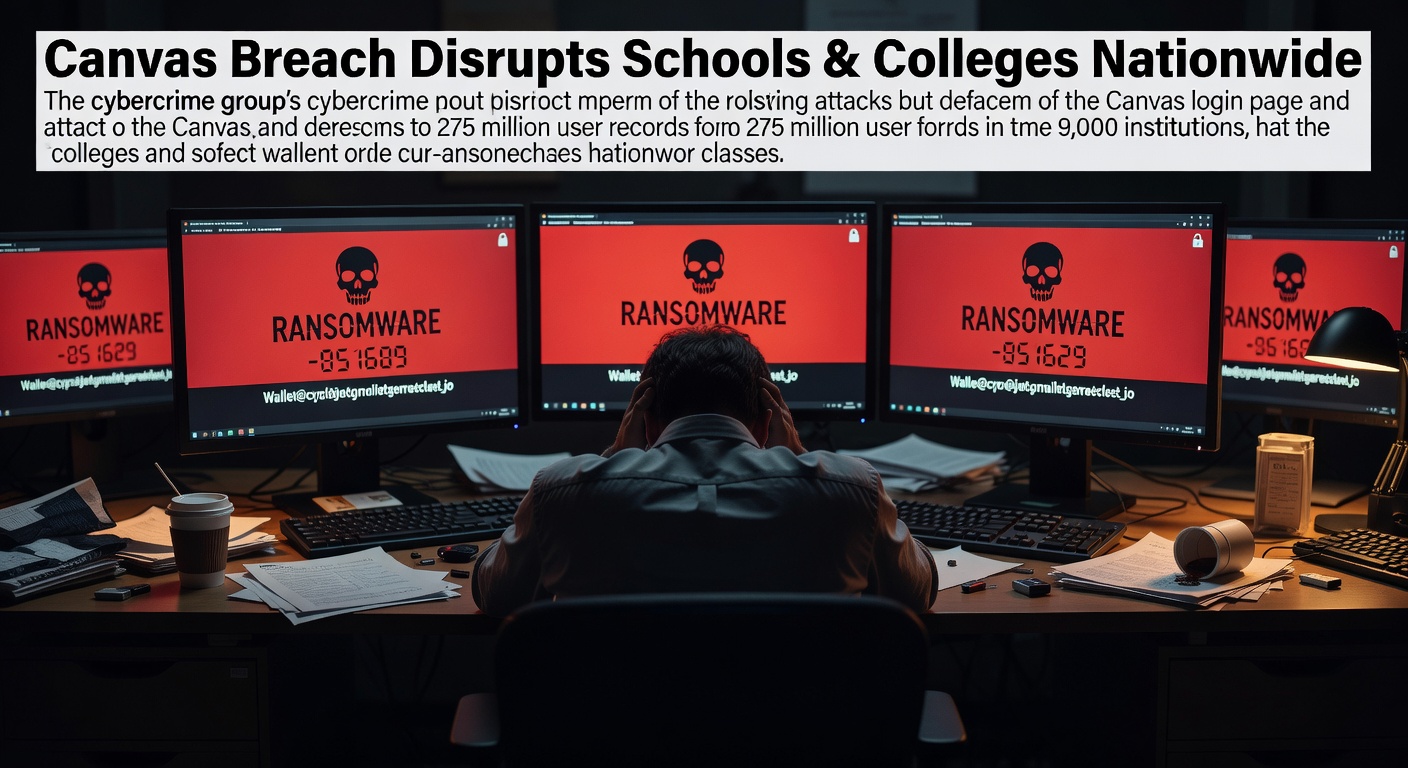
A cybercrime group carried out a data extortion attack on Canvas, a popular education technology platform. The attackers defaced the login page with a ransom demand. This action took place on Friday, May 8, 2026. The demand threatened to release stolen data unless payment was made. Schools and colleges noticed the changes when users tried to access the service. The defacement halted normal logins and disrupted online classes across the country.
Scope of Impact
The breach affected nearly 9,000 educational institutions nationwide. Data from 275 million students and faculty members was at risk of exposure. Canvas serves school districts and universities throughout the United States. The extortion message claimed access to sensitive records from these users. Classes and coursework came to a stop as instructors and students could not log in. The scale forced many institutions to pause online learning activities.
Company Response
Instructure, the company behind Canvas, confirmed the incident in an official statement. The firm took the login page offline to address the defacement. Teams worked to restore access and investigate the breach. Company officials advised users to monitor accounts closely. No details on ransom payment appeared in public communications. Restoration efforts focused on securing the platform before resuming service.
What Users Should Do
- Change passwords immediately on Canvas and any linked accounts.
- Enable two-factor authentication where available.
- Watch for phishing emails claiming to relate to the breach.
- Review account activity for unusual logins or changes.
- Avoid clicking links from unknown sources about the incident.
- Contact institution IT support for guidance on recovery.
Background
Canvas operates as a learning management system used by thousands of schools and colleges. It handles coursework, grades, and student interactions online. Past security issues have occurred in the education sector, though specifics on prior Canvas events remain limited. This attack highlights ongoing risks to edtech platforms. Similar extortion tactics have targeted other services in recent years. Institutions often rely on such tools for daily operations, making breaches particularly damaging.
Experts note that education platforms store vast amounts of personal data, drawing cybercriminals. The incident underscores the need for strong defenses in this area. As recovery continues, affected users await full restoration. Further updates will follow as details emerge.